The global demand for high-density, smokeless BBQ charcoal is shifting from artisanal production to industrial-scale, automated manufacturing.
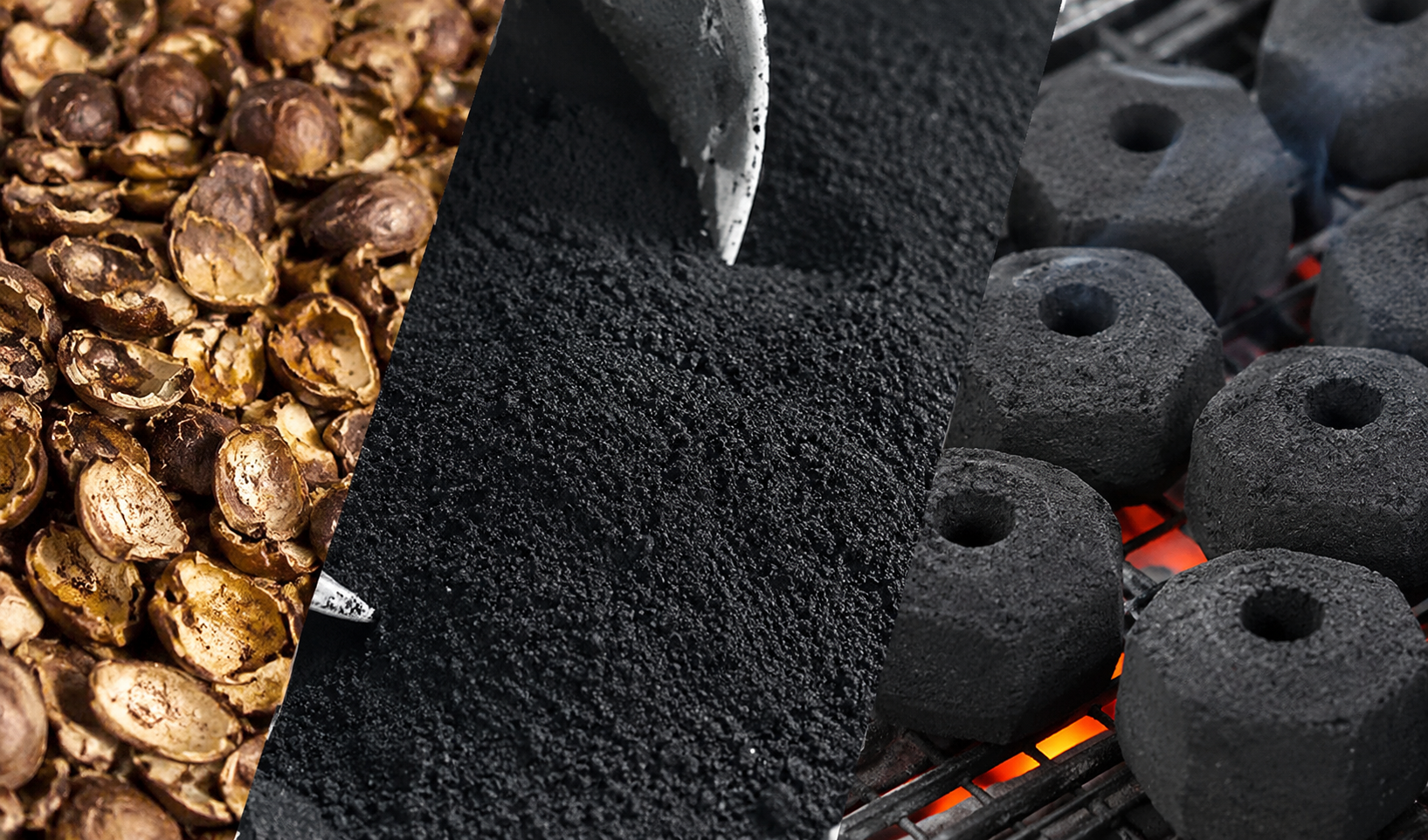
Guoxin Machinery provides integrated EPC (Engineering, Procurement, and Construction) solutions that transform low-value biomass waste—such as wood chips, coconut shells, and fruit tree trimmings—into export-grade barbecue briquettes. Our systems are engineered to bridge the gap between waste recovery and high-margin energy commodity production.
In the B2B sector, the viability of a project is dictated by the chemical transformation of the feedstock and the resulting market value.
| Metric | Raw Biomass (Average) | Carbonized BBQ Charcoal |
| Fixed Carbon Content | 15% – 25% | 75% – 85% |
| Caloric Value (Low/High) | 3,200 – 4,000 kcal/kg | 6,800 – 7,500 kcal/kg |
| Volatile Matter | 70% – 80% | < 15% |
| Ash Content | Varies by material | < 5% (Grade A Export) |
Raw Material Acquisition Cost: Typically $20 – $60 per ton (for industrial waste or agricultural residue).
Production Cost (OpEx): Approximately $120 – $180 per ton (including labor, power, and binders).
Export FOB Price (Finished Briquettes): $650 – $950 per ton, depending on the material (Coconut shell charcoal commands the highest premium).
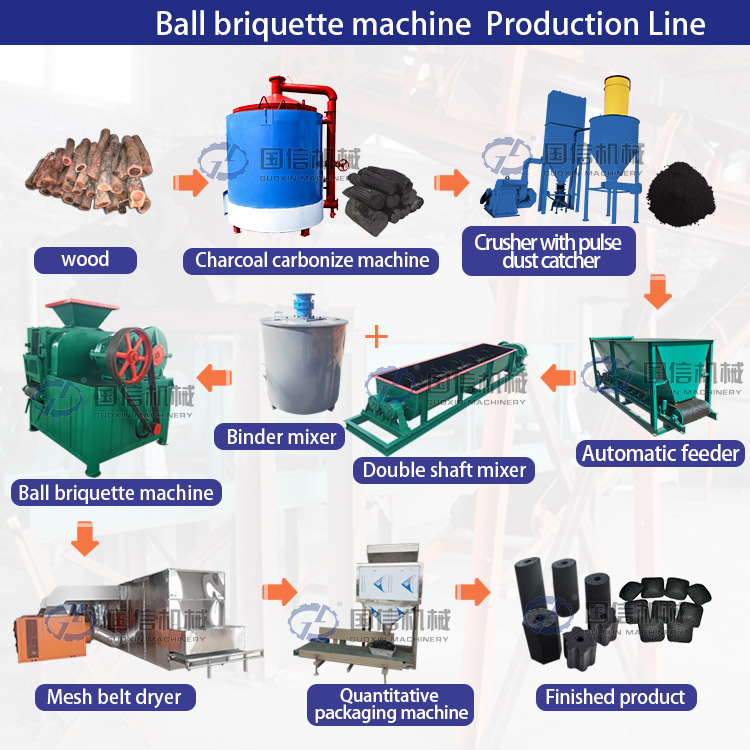
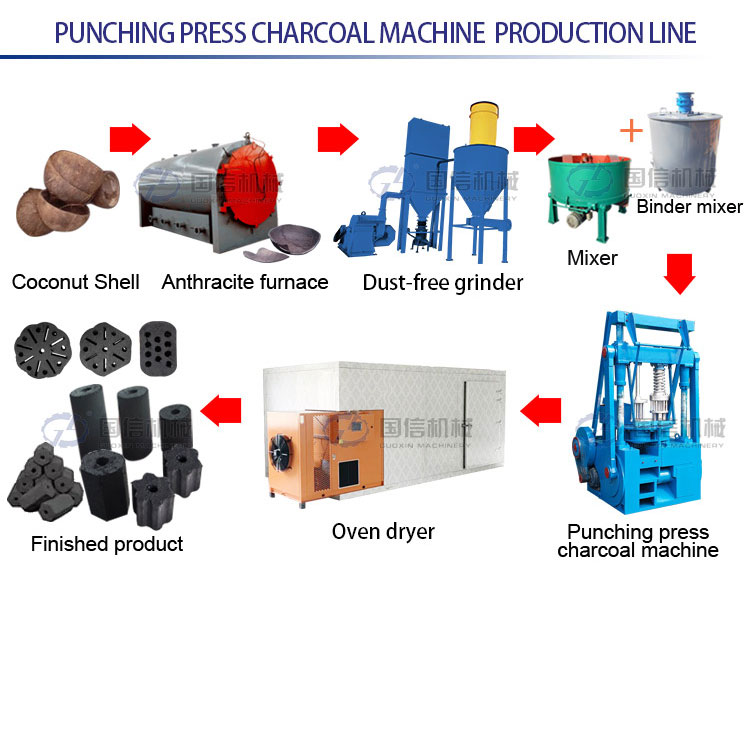
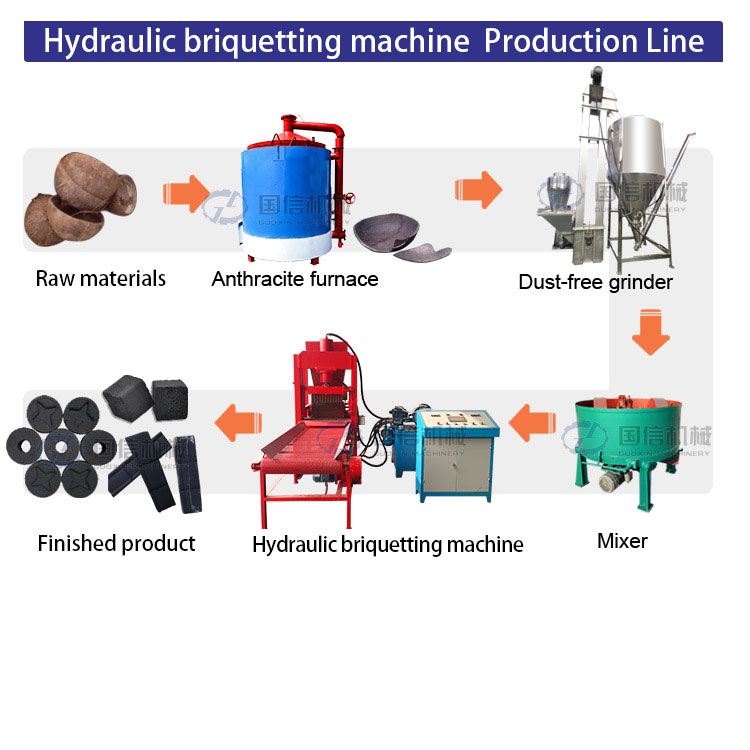
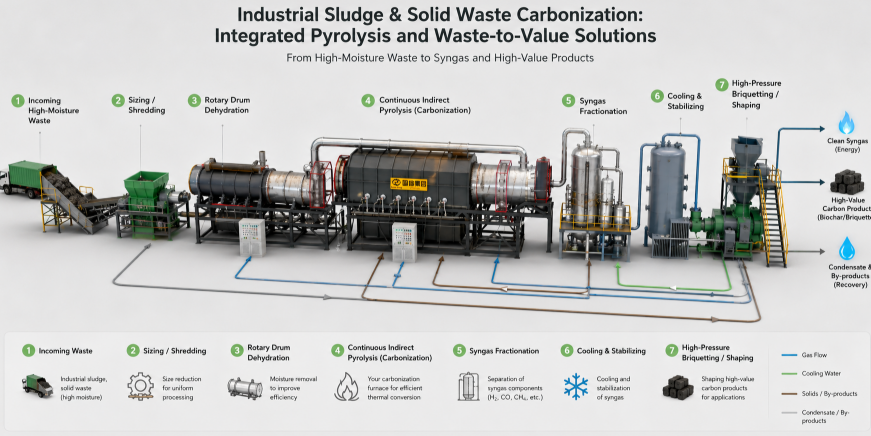
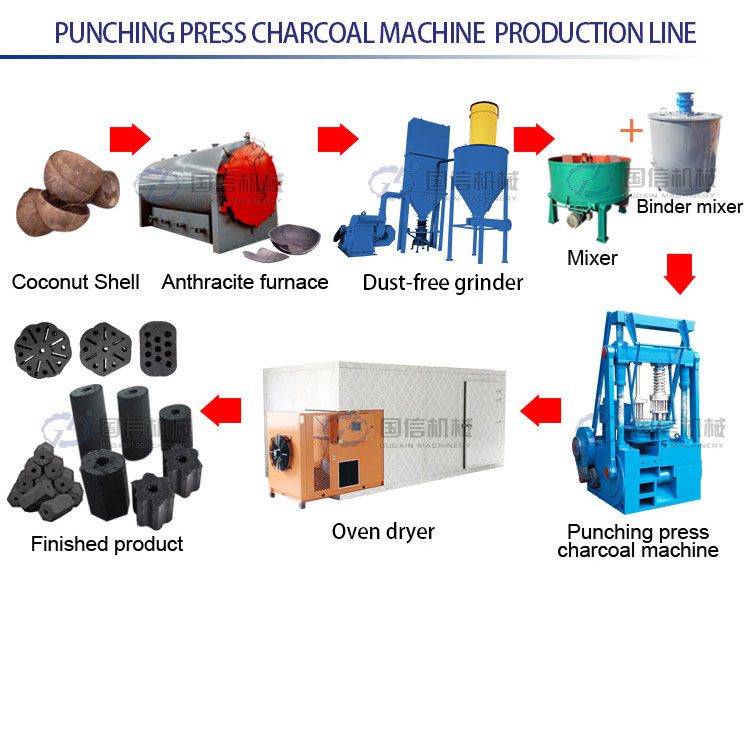
Our integrated line utilizes a closed-loop thermal system to maximize energy recovery and ensure consistent product density.
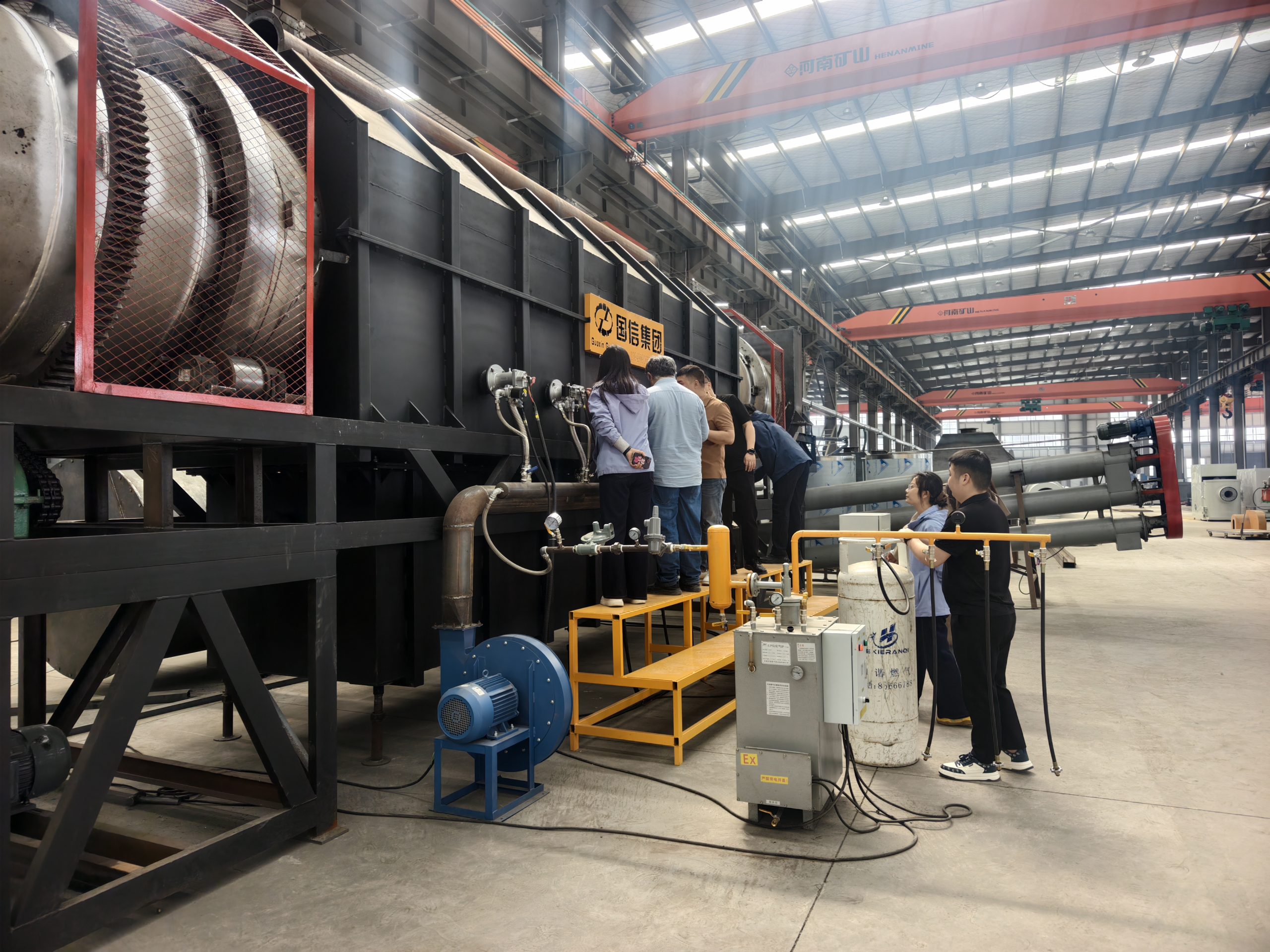
Raw material is fed into a Continuous Rotary Drum Furnace. Utilizing oxygen-free pyrolysis, the system maintains a stable temperature range of $450 – 750$°C. Combustible syngas generated during the process is purified and redirected back to the burner, reducing external fuel reliance by up to 30%.
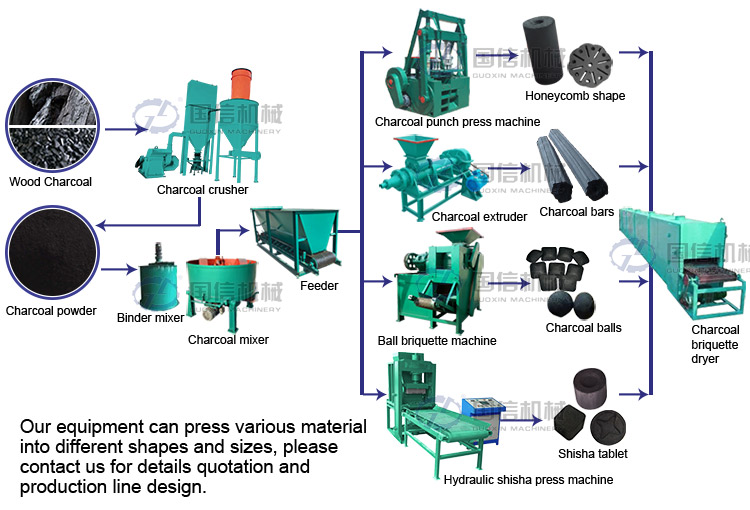
The charcoal powder is blended with food-grade binders in a high-torque double-shaft mixer and then fed into the High-Pressure Roller Press.
Molding Pressure: 20 – 50 tons, ensuring a finished density of 1.2 – 1.4 g/cm³.
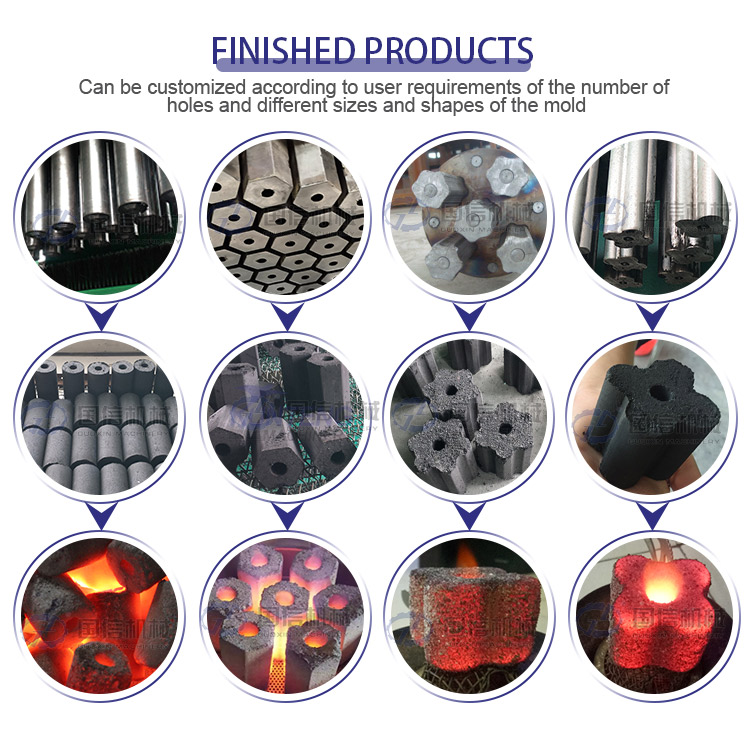
Standard Shapes: Pillow, oval, or hexagonal briquettes designed for optimal airflow and consistent “Ready-to-Light” performance.
| Parameter | Range/Requirement |
| Capacity (Finished Product) | 1.0 – 10.0 TPH (Tons Per Hour) |
| Total Installed Power | 120 kW – 450 kW (Scale-dependent) |
| Factory Footprint | 1,200 m² – 3,500 m² |
| Emission Standard | Dust collectors + Multi-stage gas purification towers |
Investing in a Guoxin BBQ charcoal line is a strategic move toward resource recovery. Based on global project data, the Payback Period (ROI) typically ranges from 10 to 18 months, depending on local raw material costs and electricity rates.
Turnkey Customization: Every line is designed based on your specific material’s moisture content and particle size.
Engineering Support: We provide full factory layout 3D designs, on-site commissioning, and proven binder formulas for different regional wood types.
Request a Customized Project Proposal & Equipment Quotation
Schedule a Material Test: Send Your Feedstock to Our Lab for Analysis
Q1: How do you achieve a “Smokeless” and “Odorless” burn for the end consumer?
A: True smokeless charcoal requires the complete removal of volatile matter during carbonization. By maintaining a stable furnace temperature above 600°C, we eliminate the tars and gases that cause smoke. Additionally, we use only natural starch-based binders in the mixing stage.
Q2: What is the optimal moisture content for the raw material before it enters the furnace?
A: For maximum efficiency, raw biomass should have a moisture content below 15%. If your material is fresh wood or green waste, we integrate a Rotary Drum Dryer at the beginning of the line to ensure high-quality carbonization.
Q3: Can the roller press create different shapes of charcoal?
A: Yes. The roller press uses interchangeable alloy molds. You can switch between pillow, round, or square shapes to meet local market preferences or supermarket retail requirements.
Q4: What are the labor requirements for an automated 5 TPH line?
A: Due to our PLC-integrated control system and automated feeding/conveying, a 5 TPH line typically requires only 3 to 5 operators per shift (feeding, monitoring, and packaging).
Related Solutions
Related Equipment