The global transition toward a circular economy has transformed biomass waste—such as coconut shells, sawdust, and agricultural residues—into high-value energy commodities.
Guoxin Machinery provides industrial-scale, integrated production lines that bridge the gap between raw waste management and export-grade charcoal production.
Our systems are engineered for investors and factory owners who require high-density output, consistent carbon content, and automated 24/7 operation.
In the B2B sector, profitability is driven by operational efficiency (OpEx) and final product quality. Our integrated line is designed to optimize both.
| Feature | Technical Performance Data | Business Value |
| Carbonization Rate | 95% – 98% (Material dependent) | Maximizes fixed carbon for high-grade export markets. |
| Automation Level | Full PLC Integrated Control | Reduces labor overhead by up to 60% compared to batch kilns. |
| Emission Standard | Multi-stage dust removal & gas purification | Ensures compliance with international environmental regulations. |
| Versatility | Quick-change mold system | Produce Shisha cubes, BBQ balls, or Honeycomb briquettes on one line. |
| Energy Efficiency | Syngas recycling & self-heating technology | Significantly lowers fuel costs after the initial pre-heating phase. |
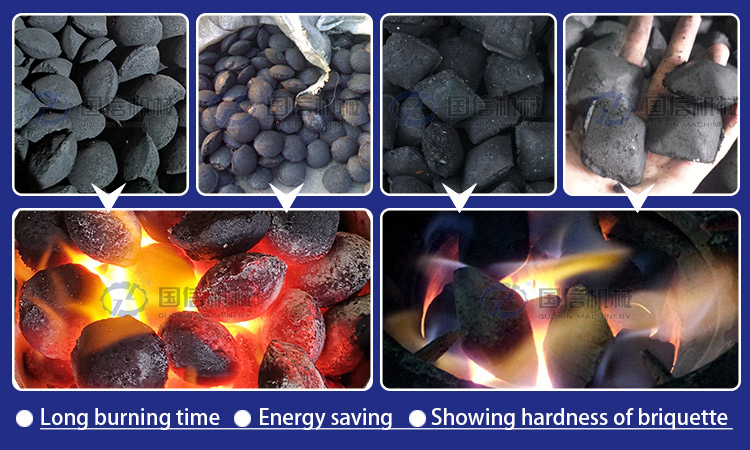
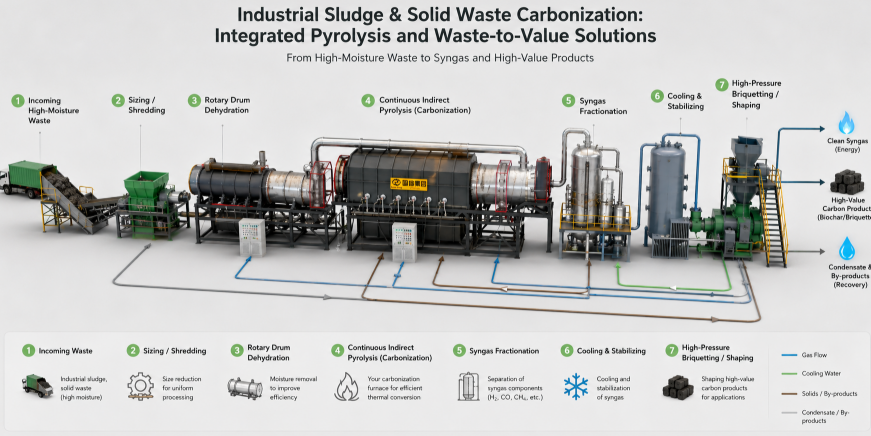
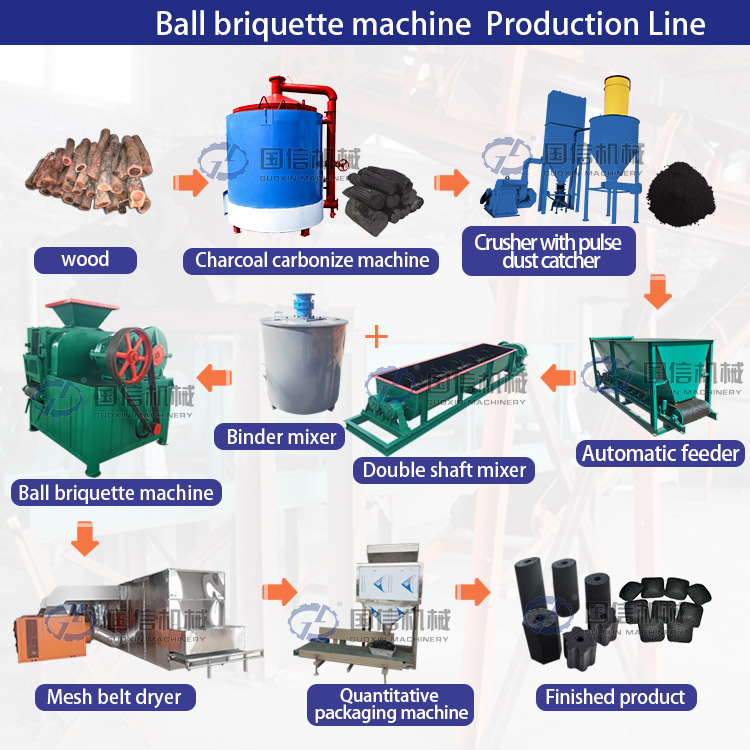
Our production line utilizes a closed-loop system to ensure thermal stability and material purity.
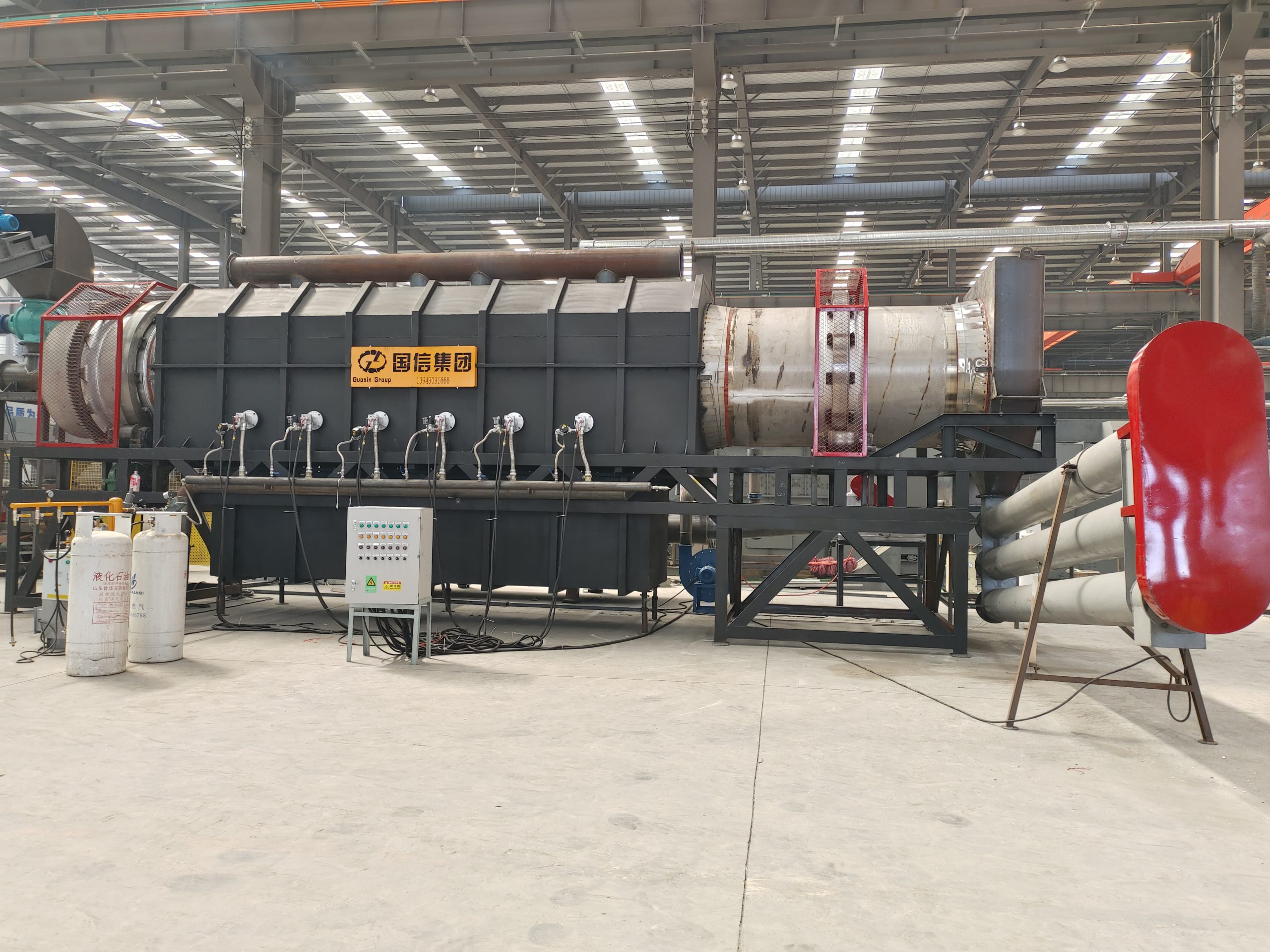
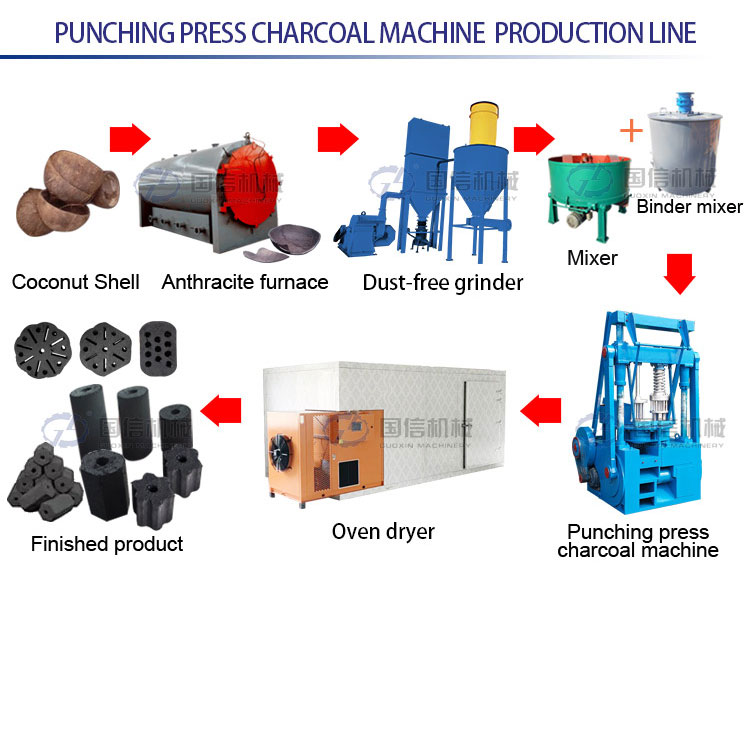
Utilizing advanced oxygen-free pyrolysis technology, raw biomass is fed into the rotary kiln. The internal temperature is precisely maintained at 450°C – 750°C, triggering the release of volatile matter and increasing fixed carbon density.
To achieve the smooth surface required for Shisha charcoal, the carbonized material is processed through high-speed hammer mills to a particle size of < 3 mm.
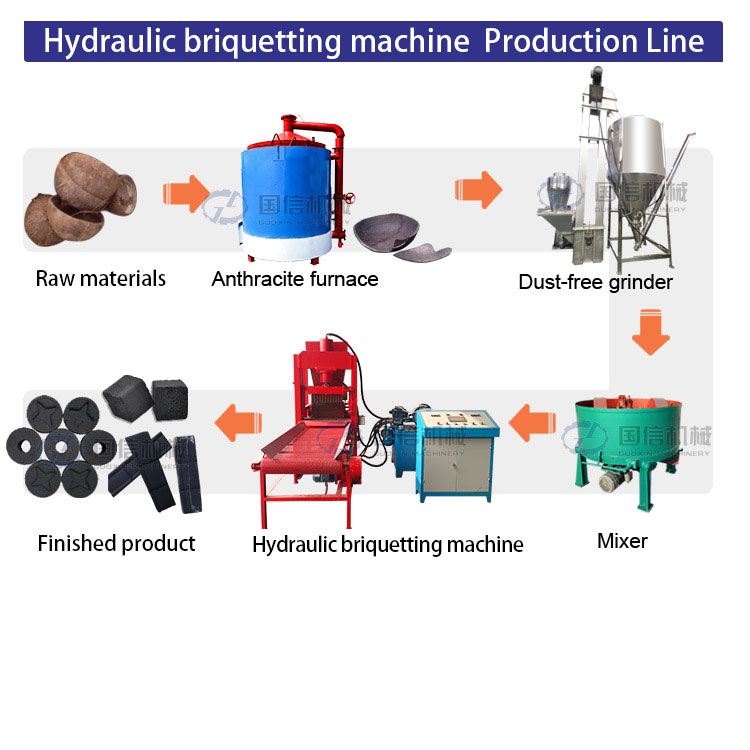
The charcoal powder is blended with water and food-grade binders (such as starch) in a double-shaft mixer. This stage is critical for the Cold Crushing Strength (CCS) of the final briquette.
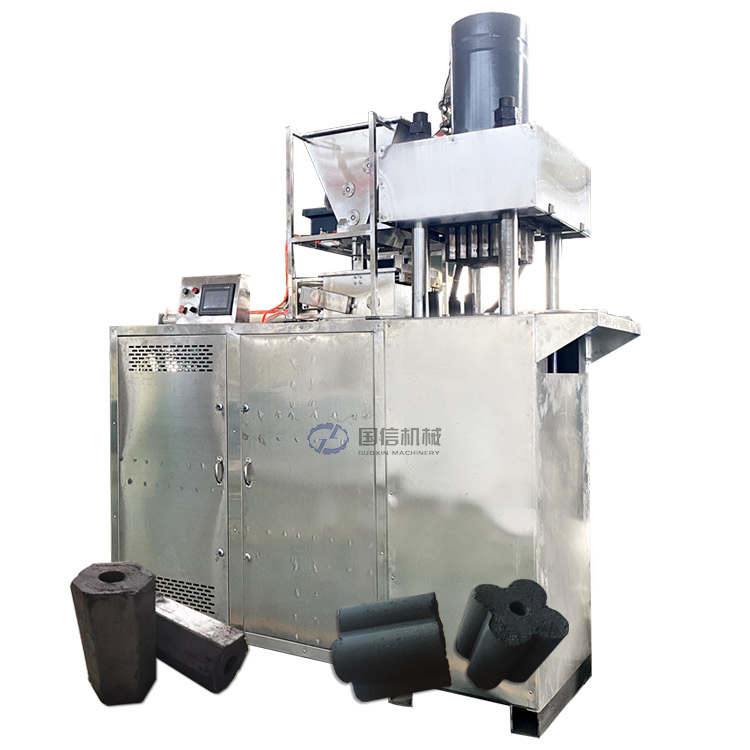
The integrated system features a high-flexibility forming station. Depending on your target commercial market, the uniform charcoal paste can be directed into specialized mechanical or hydraulic extrusion equipment:
Versatile Shaping Capabilities: By utilizing our quick-change die architecture, a single production line can be configured to produce 25mm Shisha cubes, pillow-shaped BBQ balls, or heavy industrial honeycomb briquettes.
Industrial Pressure Range: Delivers consistent compaction from 20 MPa up to 100 MPa, eliminating structural pockets and ensuring high green strength prior to the dehydration phase.
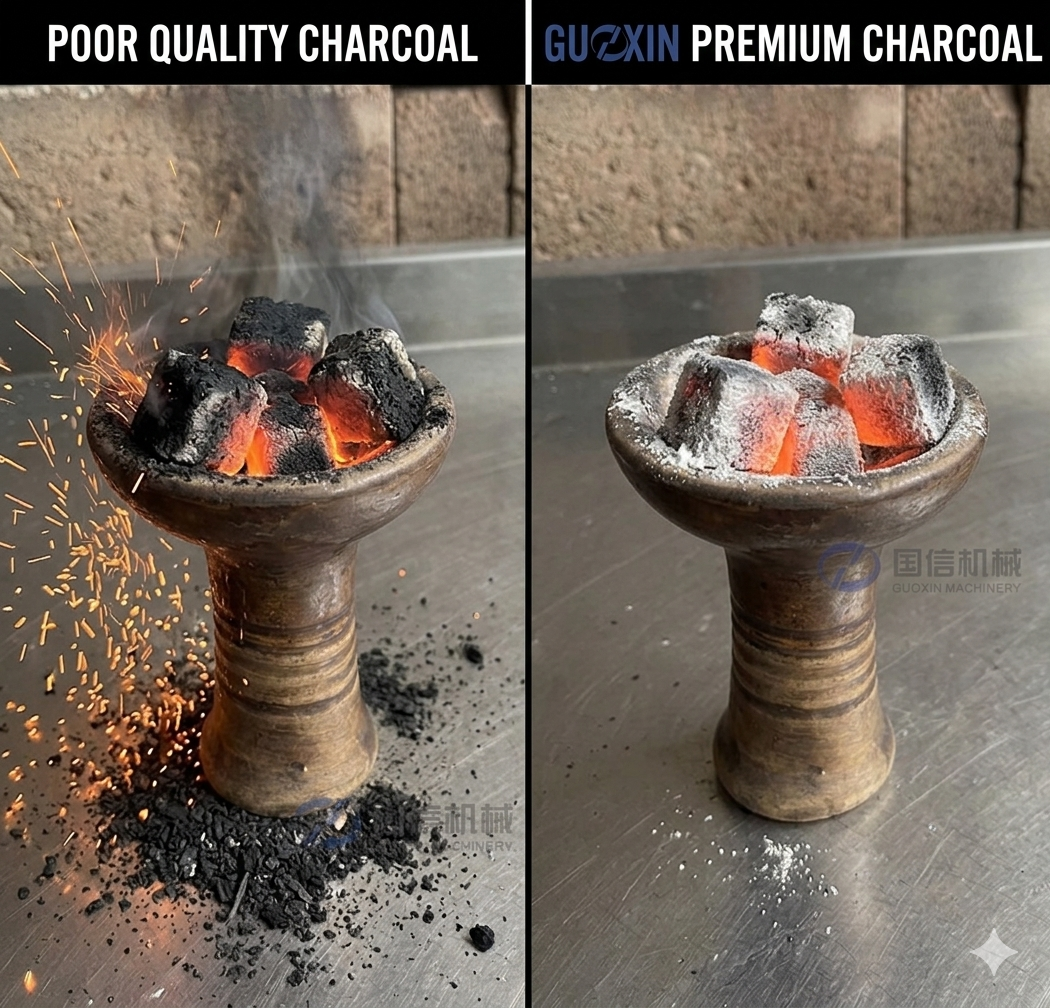
Freshly pressed briquettes contain 15% – 25% moisture. Our Mesh Belt Dryer reduces this to <5% for long-lasting, smokeless combustion.
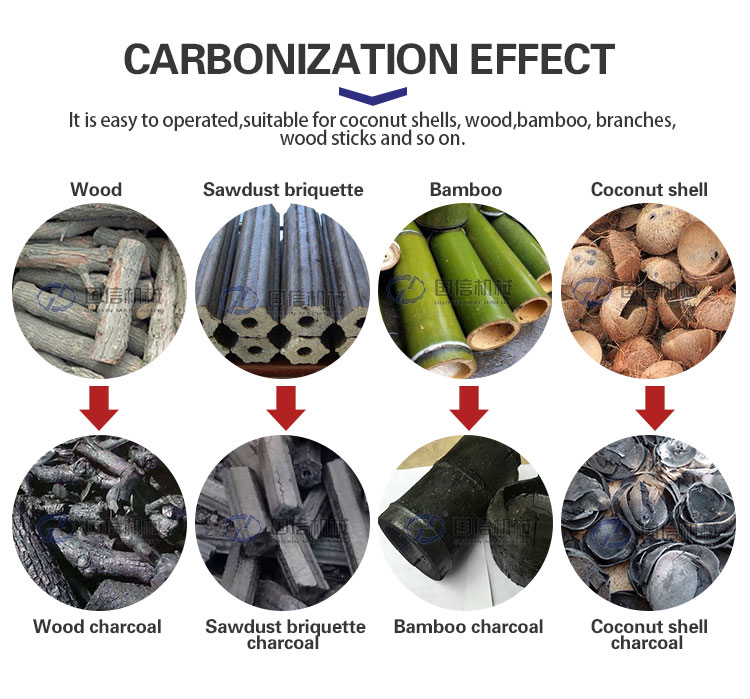
This production line is optimized for specific high-value feedstocks, ensuring the final product meets international standards (e.g., DIN, ISO).
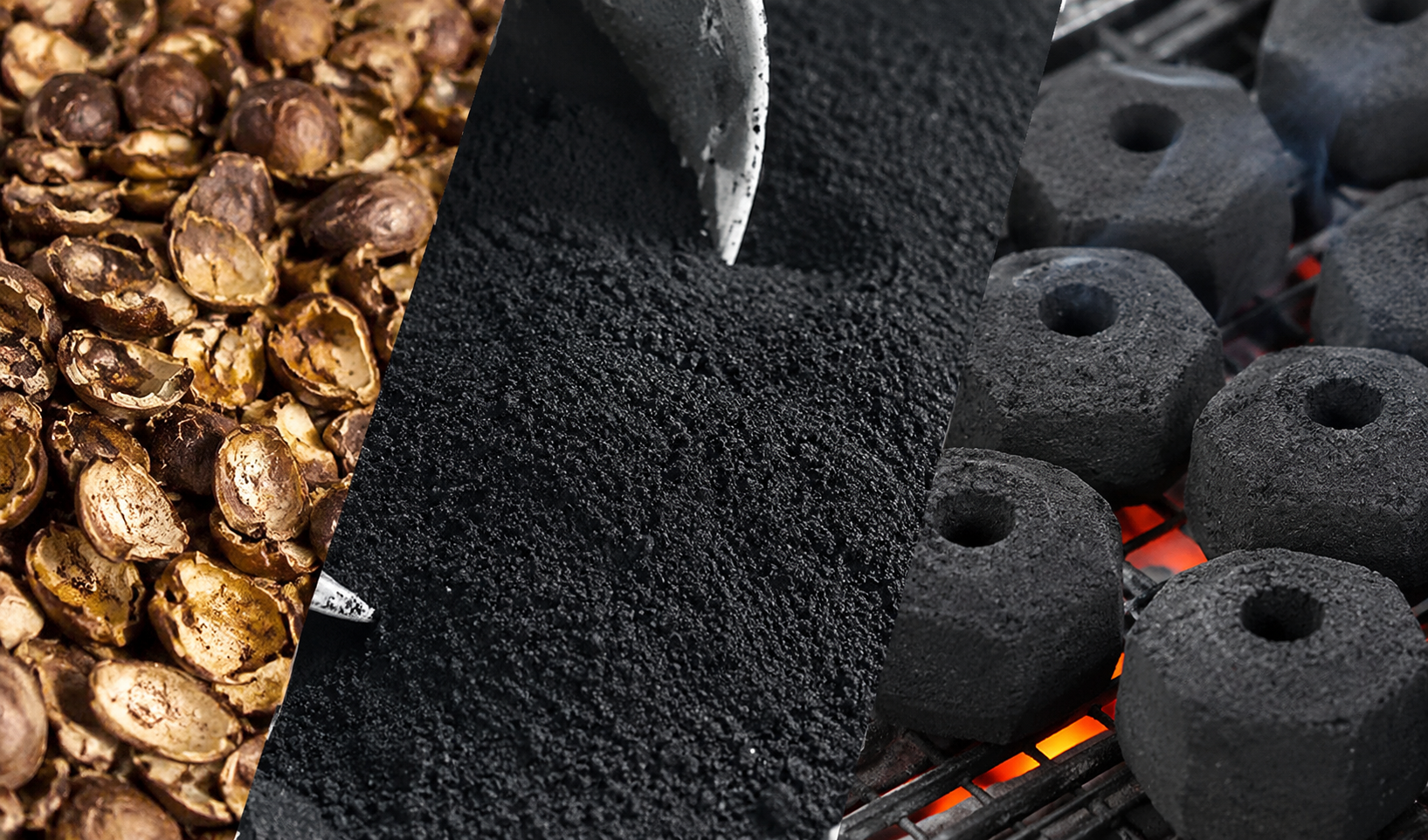
Coconut Shells: The premier choice for Shisha/Hookah charcoal due to low ash and high caloric value.
Wood Waste/Sawdust: Ideal for BBQ charcoal and industrial fuel briquettes.
Palm Kernel Shells (PKS): High-density biomass perfect for industrial energy recovery.
Agricultural Residue: Rice husk, straw, and corn stalks for localized biochar production.
Guoxin Machinery provides more than equipment; we provide Turnkey Technology Solutions. Every project is customized based on:
Raw Material Analysis: Moisture, density, and particle size testing.
Factory Layout Design: Optimized material flow to minimize footprint.
ROI Analysis: Detailed breakdown of capital expenditure (CapEx) vs. projected output revenue.
On-site Commissioning: Engineering support for installation and staff training.
Q1: What is the ideal binder ratio for high-density BBQ charcoal?
A: Typically, a 3% – 5% ratio of starch-based binder is used. However, this varies based on the fixed carbon content of your raw charcoal powder. Guoxin provides specific formulas during the commissioning phase.
Q2: Can I produce both Shisha charcoal and BBQ charcoal on the same line?
A: Yes. By utilizing our quick-change mold system on the press machine, you can switch production between Shisha cubes and BBQ balls. Note that Shisha charcoal usually requires finer grinding for a smoother finish.
Q3: How much space is required for a 2-3 TPH integrated plant?
A: A standard 2 TPH plant (including drying and storage) typically requires a footprint of approximately 1,200 – 1,800 m². We provide custom 3D layouts to maximize your available factory space.
Q4: Is the smoke treated before emission?
A: Our systems include a multi-stage purification tower and electrostatic precipitator (ESP) that neutralizes tar, dust, and VOCs, meeting the strictest No-Smoke industrial requirements.
Q5: What is the expected lifespan of the carbonization drum?
A: Our drums are manufactured from high-temperature resistant alloy steel (such as Q345R or stainless steel options). With proper maintenance, the service life exceeds 8 – 10 years of continuous operation.
Request a Material Test Run: Send Your Biomass Specs to Our Lab