Industrial Continuous Carbonization Furnace
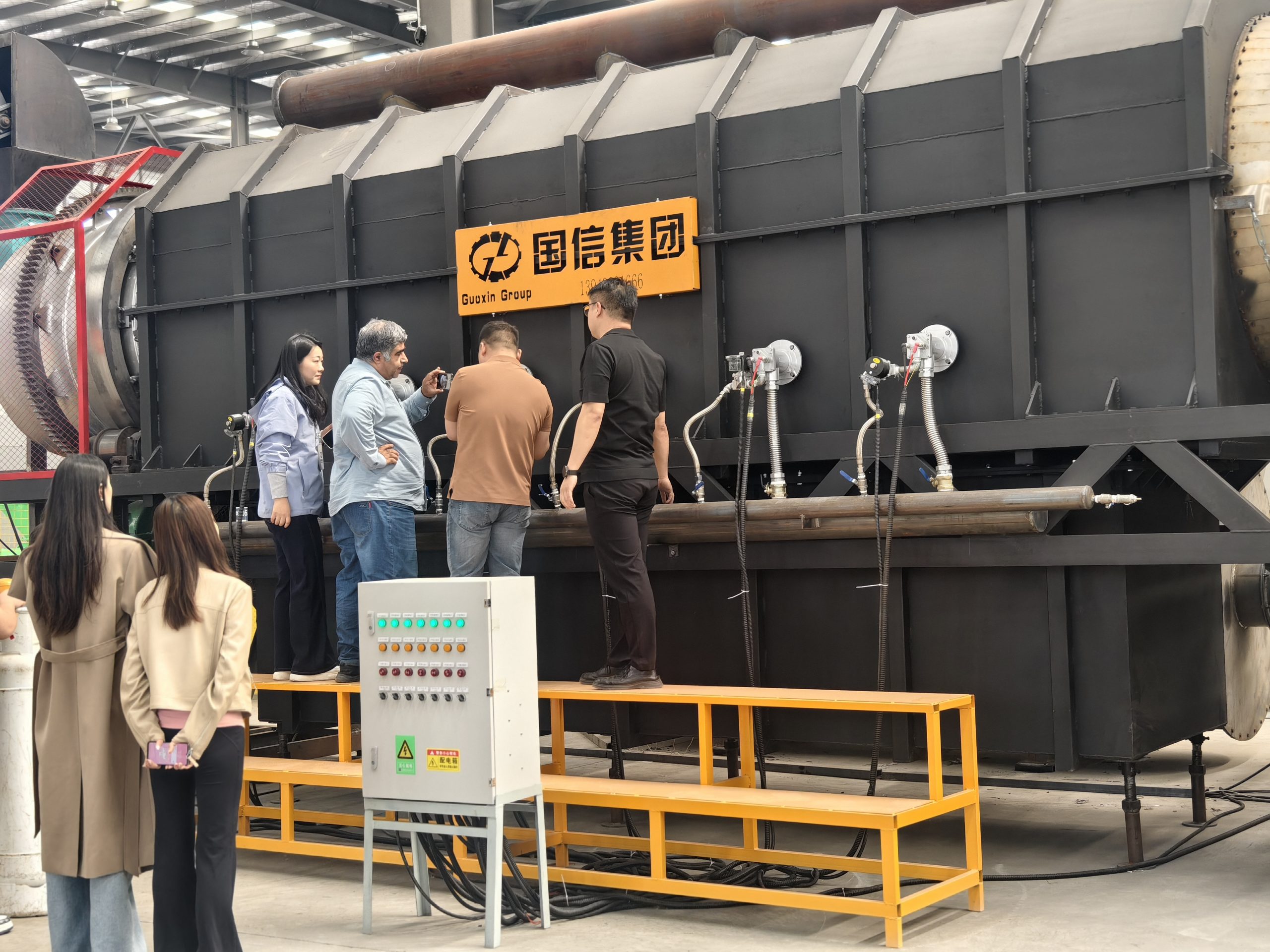
The global carbonization furnace market has expanded rapidly as industries transition toward high-fixed-carbon biochar and circular energy economies. When evaluating the current commercial tech landscape, factory investors typically choose between two heavy-duty configurations: Continuous Vertical Flow Retorts (optimized for uniform gravity-fed processing) and
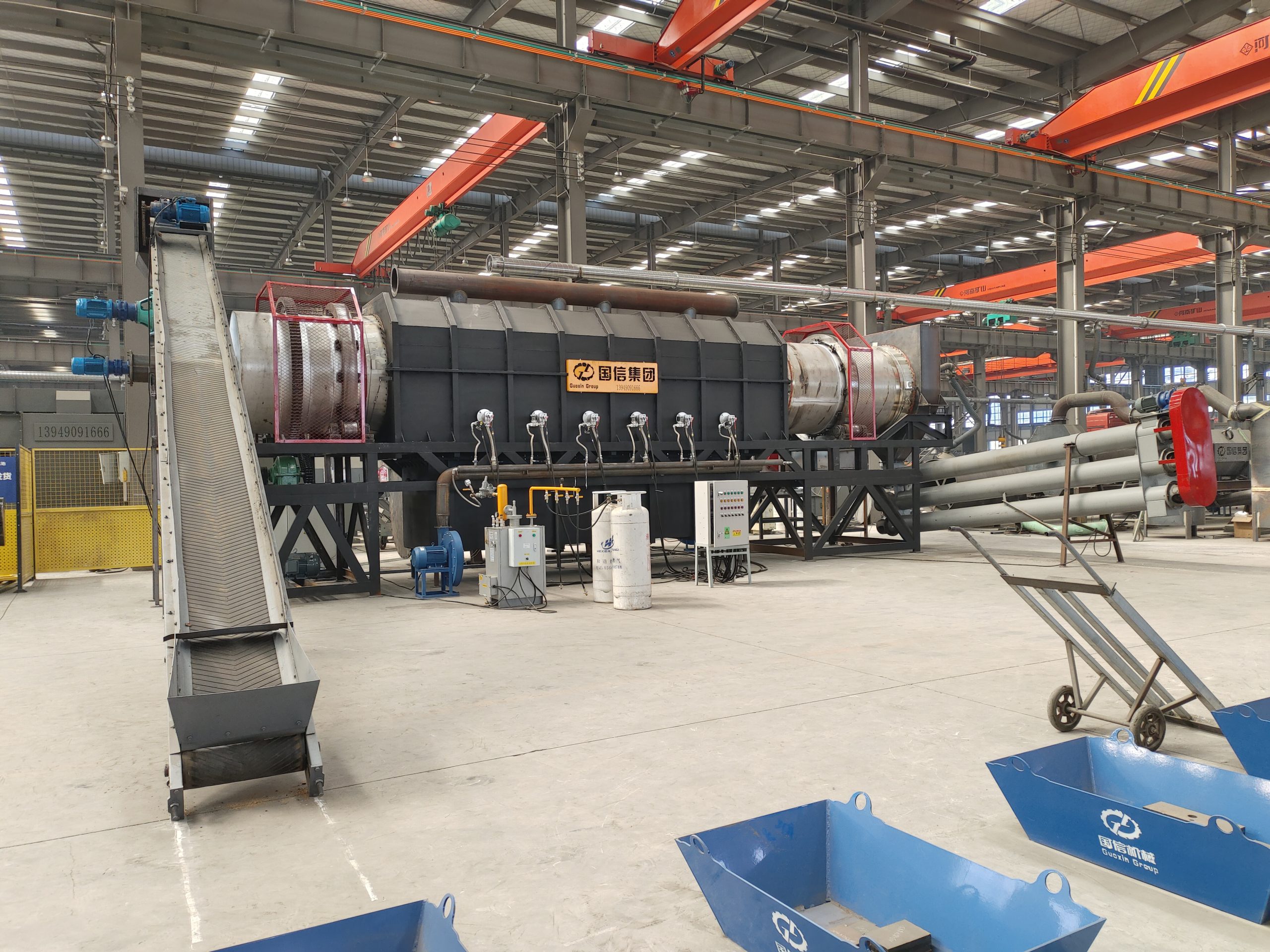
Continuous Rotary Drum Carbonization Furnace(engineered for high-volume loose biomass fines). Guoxin Machinery provides scalable industrial configurations across both market segments, ensuring high-purity thermal decomposition without environmental compromise.
If your facility requires processing high-volume loose materials like sawdust or fruit shells, explore our detailed guide on the Upgraded Continuous Rotary Drum Carbonization Furnace.
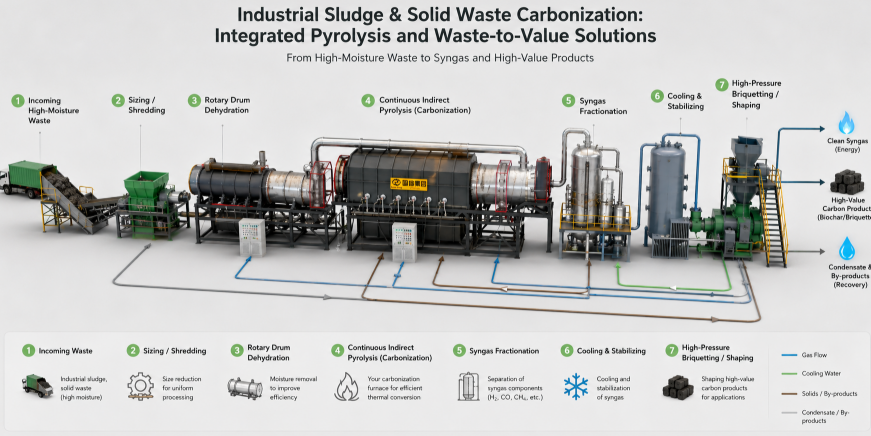
The core competitive advantage of our continuous furnace is its Self-Sustaining Thermal Cycle.
Pyrolysis Phase: As the material enters the high-temperature zone (450°C – 600°C), it undergoes thermal decomposition, releasing combustible volatiles.
Gas Purification: A multi-stage scrubbing system captures tar and wood vinegar, purifying the raw syngas.
Combustion Loop: This purified gas is redirected into the burners beneath the rotary drum. Once the carbonization threshold is reached, the system relies primarily on its own generated gases, drastically reducing the consumption of external fuel (Natural Gas/LPG/Diesel).
| Feature | Specification / Capability |
|---|---|
| Operational Mode | 24/7 Continuous Vertical Flow |
| Carbonization Temp | 270°C — 400°C (Adjustable) |
| Core Technology | Syngas Recovery & Thermal Decomposition |
| Emission Standard | Smokeless operation via secondary combustion |
| Automation | Fully integrated PLC monitoring |
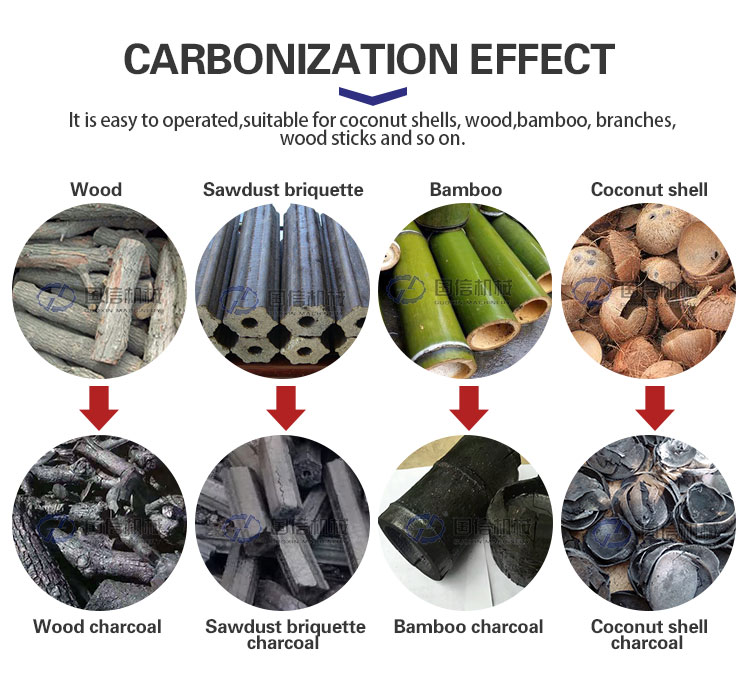
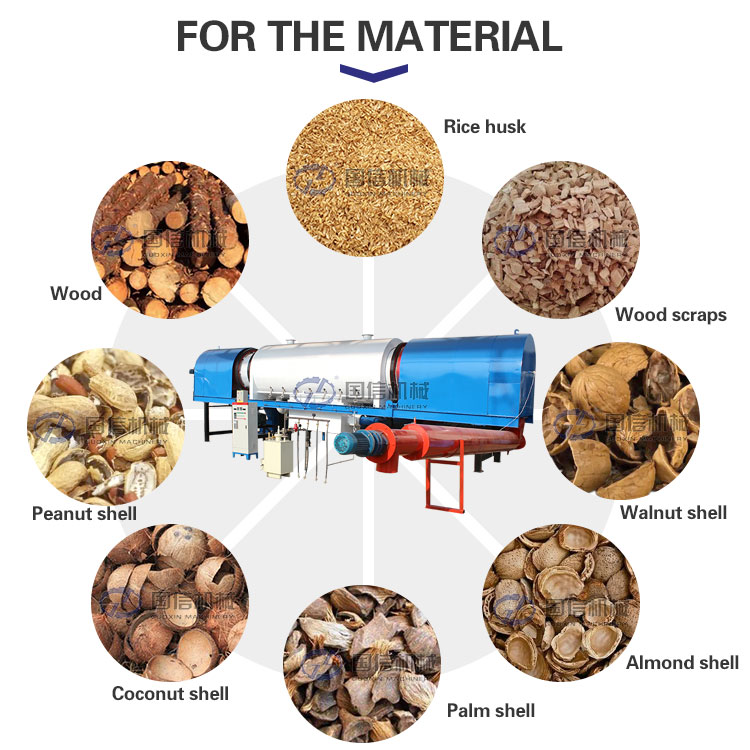
The rotary mechanism is specifically designed for loose biomass, providing the ideal raw material for downstream industrial applications:
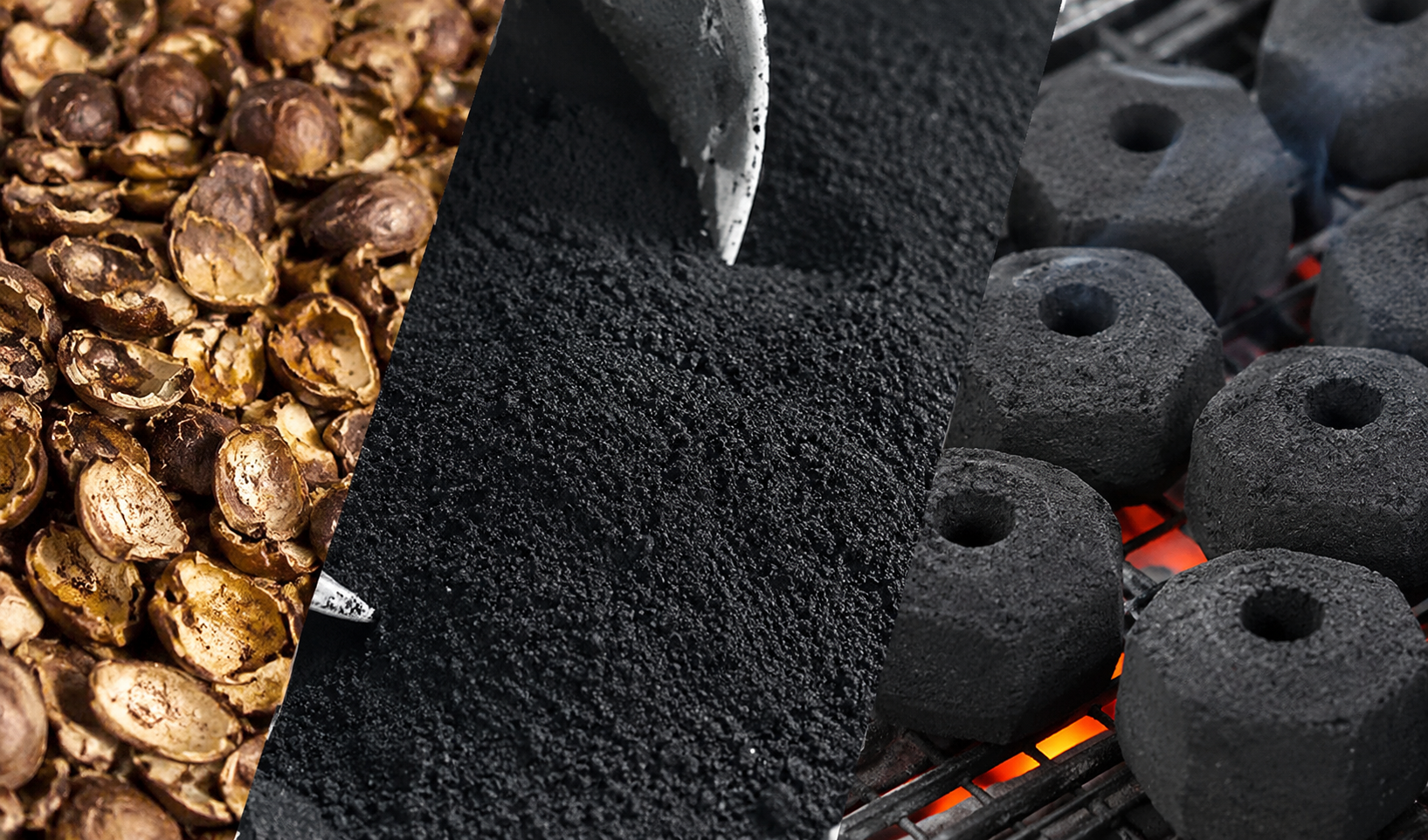
Coconut Shell & Palm Kernel Shell (PKS): The primary feedstock for high-end [Activated Carbon] precursors and premium shisha charcoal due to its high density and low ash content.
Wood Chips & Sawdust: Ideal for producing high-calorific BBQ charcoal and soil-remediating biochar with fixed carbon levels exceeding 85%.
Agricultural Residues: Efficiently processes rice husks and walnut shells into stable carbon for the steel-making and chemical industries.
Dynamic Uniformity: The rotary drum’s internal flight continuously turns the material, ensuring every particle is uniformly carbonized from core to surface. This eliminates “cold spots” found in vertical or batch designs.
24/7 Industrial Scale: Engineered for non-stop operation, our furnaces feature water-cooled discharge systems that bring the charcoal temperature down to <40°C, allowing for immediate packaging or briquetting.
Environmental Compliance: The integrated flue gas treatment system meets stringent emission standards by neutralizing harmful particulates and recycling the thermal energy.
For maximum ROI, the continuous furnace is the central module of a fully integrated plant:
Pre-Processing: Raw materials are conditioned via [Rotary Drum Dryers] to ensure moisture is <15% before entering the furnace.
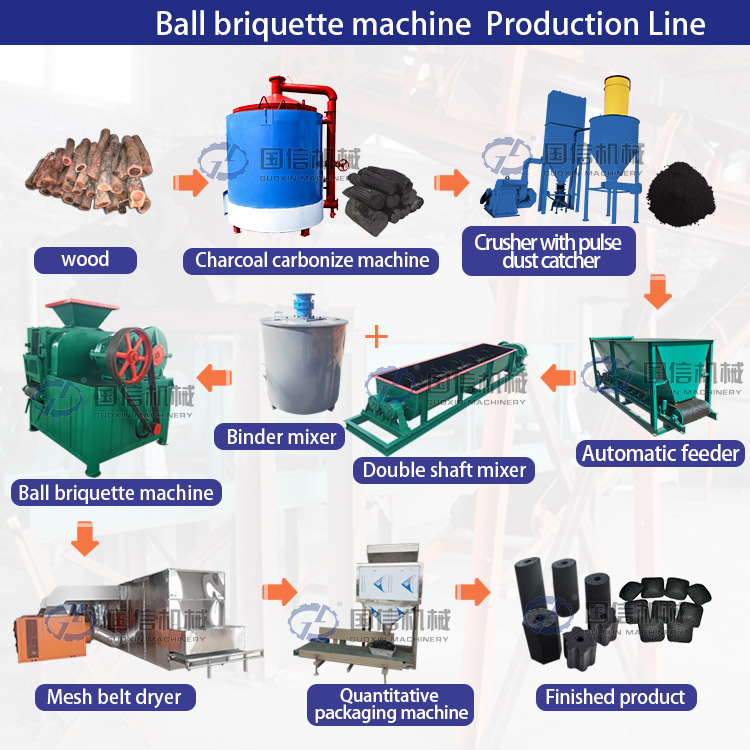
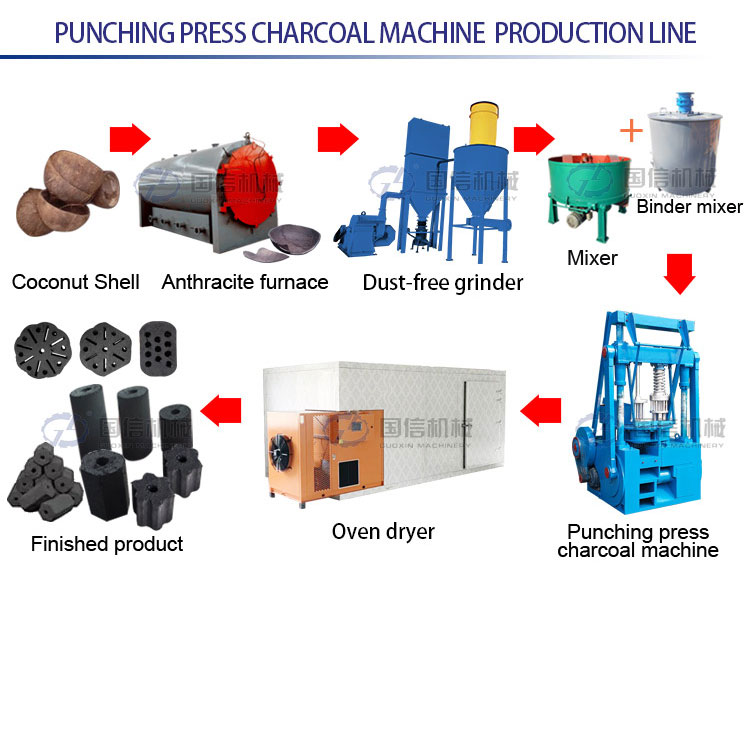
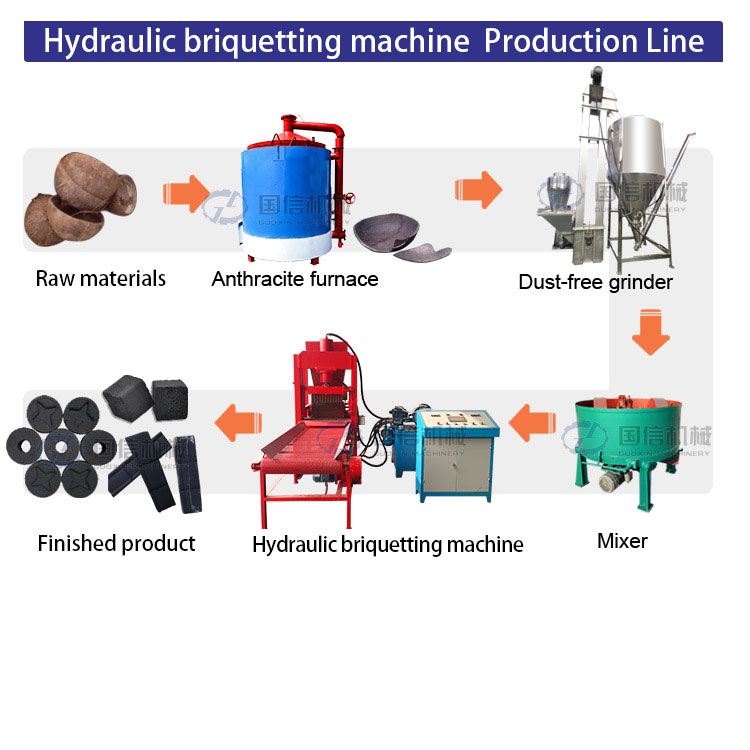
Forming Technology: Post-carbonized fines are frequently fed into our [High-Pressure Shisha Tablet Presses] or [BBQ Briquetting Lines] to produce standardized retail products.
Post-Forming: Final briquettes are then stabilized in a Mesh Belt Dryer for structural hardness.
Q1: How does the rotary furnace handle different moisture levels in the feedstock?
A: Feedstock moisture is the most critical variable. While the furnace can handle minor fluctuations, we recommend integrating a pre-drying stage if the moisture exceeds 20%. This preserves the thermal balance of the syngas recycling system and ensures high-strength charcoal output.
Q2: What is the expected service life of the rotary drum?
A: The drum is manufactured from high-temperature resistant alloy steel (such as Q345R or specialized boiler steel). With proper thermal management and regular maintenance of the roller supports, the drum’s service life typically exceeds 8-10 years.
Q3: Is the syngas enough to run the entire line?
A: For most high-energy biomass (like wood or coconut shells), the syngas produced is sufficient to maintain the carbonization temperature once the system is pre-heated. This achieves “thermal autonomy,” minimizing your operational OpEx.