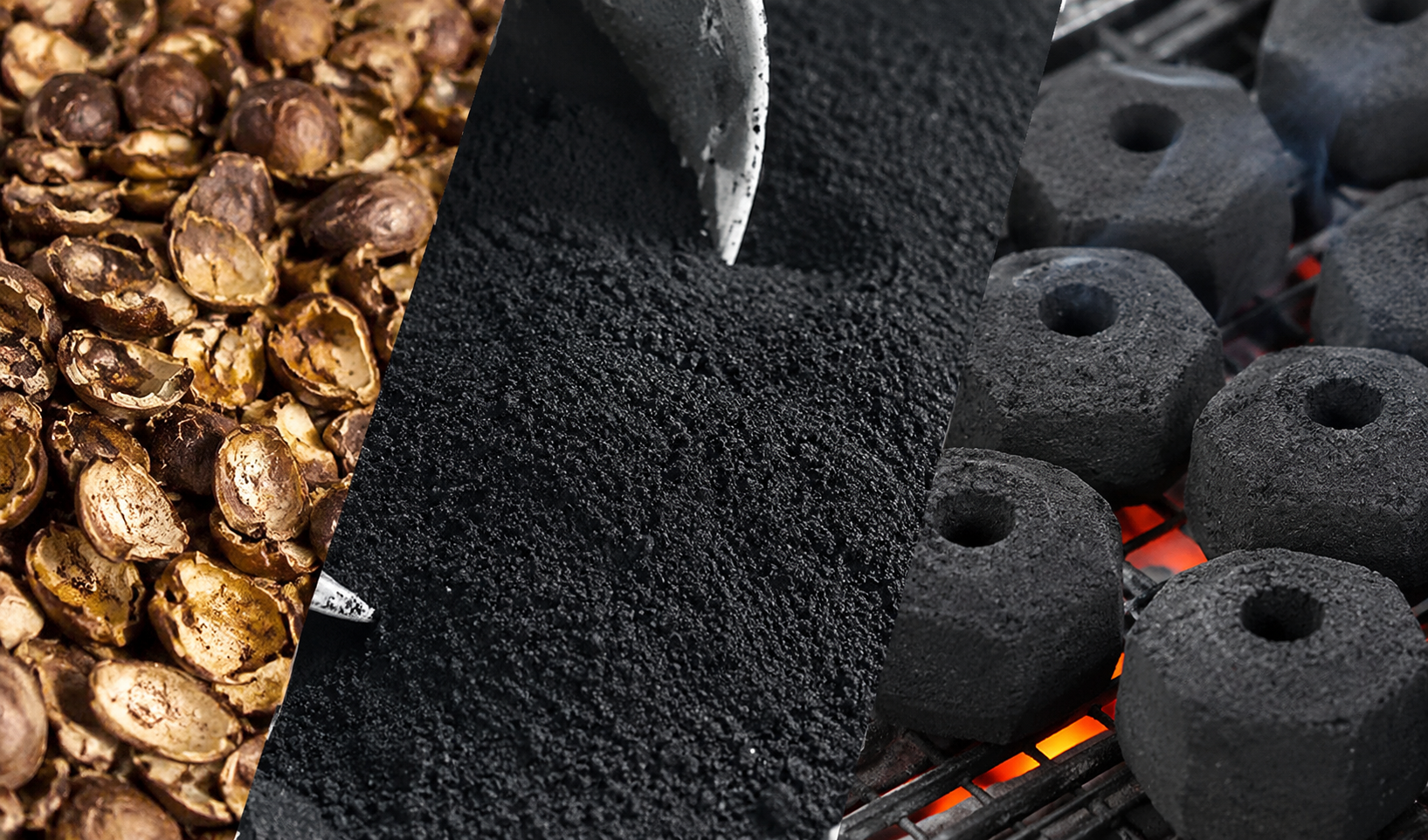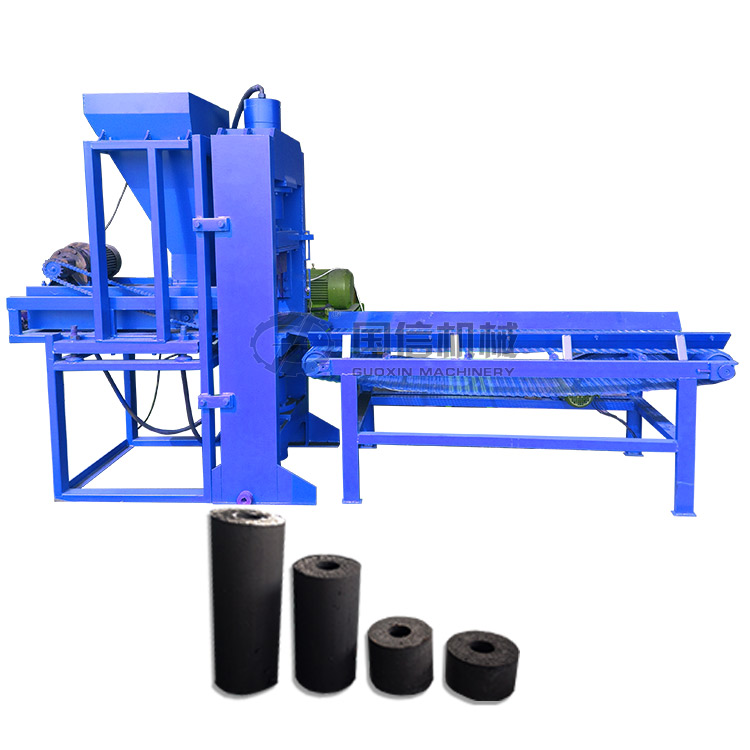
In large-scale BBQ charcoal production, the Hydraulic Briquette Press is the preferred solution for manufacturers requiring high-density output and diverse product shapes. This machine utilizes a high-pressure hydraulic system to compress carbonized charcoal powder into uniform “pillow,” “oval,” or “tablet” shapes. By precisely controlling the pressure dwell time and tonnage, the equipment ensures that every briquette achieves the structural integrity necessary for professional-grade catering and retail export.
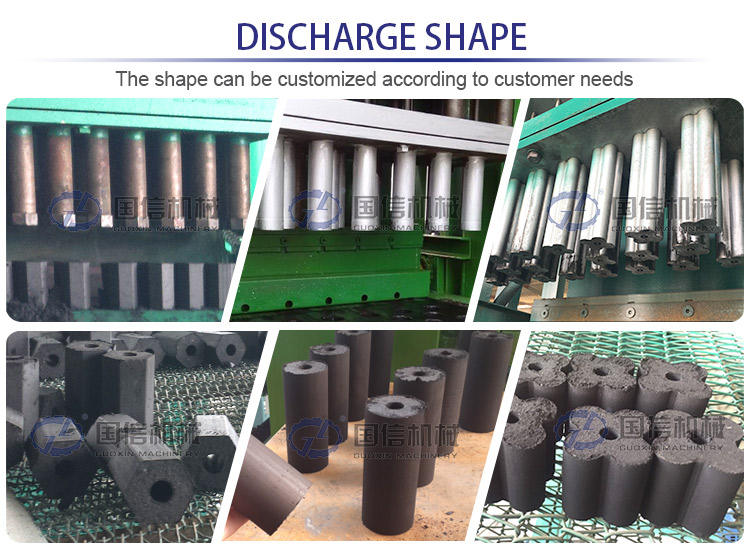
The core advantage of hydraulic pressing over mechanical extrusion lies in its ability to deliver constant, multidirectional pressure, which is critical for biomass materials with low plasticity:
Adjustable Tonnage: Operators can calibrate the pressing force based on the specific feedstock (wood charcoal, bamboo charcoal, or coal fines) to reach a density of ≥1.2g/cm³.
Multi-Shape Capability: The hydraulic system allows for rapid mold changes, supporting the production of traditional BBQ pillow shapes, hexagons, or high-volume rounds with embossed branding.
Density Uniformity: The vertical pressure stroke ensures that the core of the briquette is as dense as the surface, preventing the “inner-soft” failure common in lower-quality machinery.
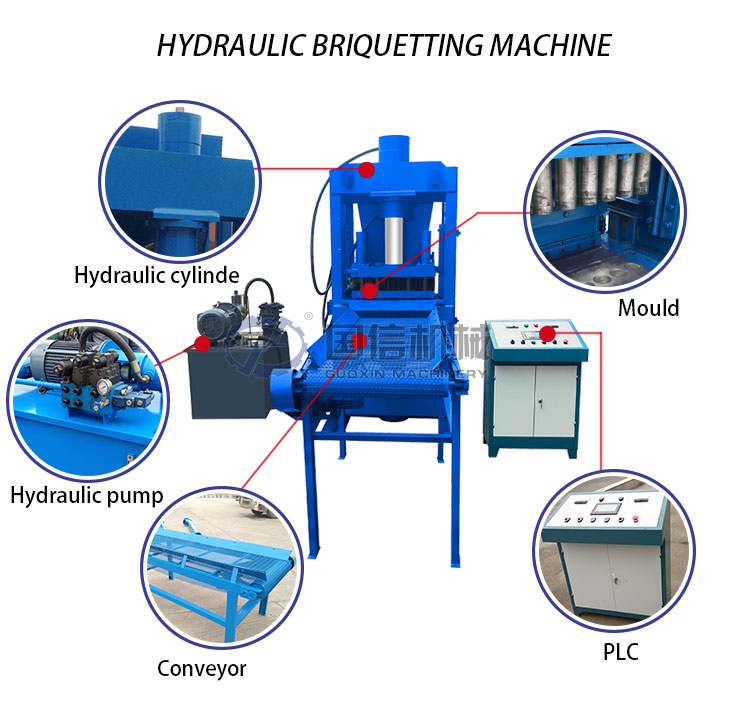
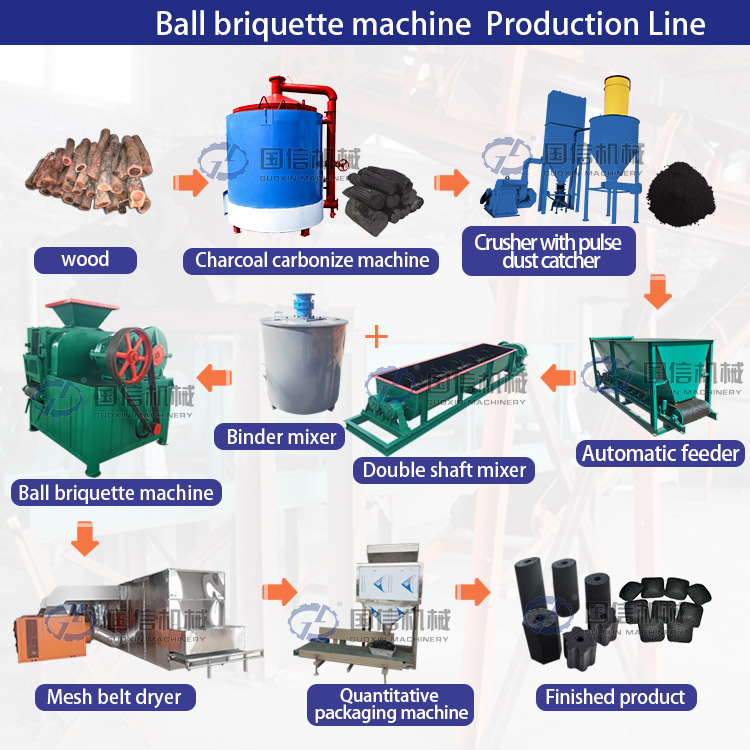
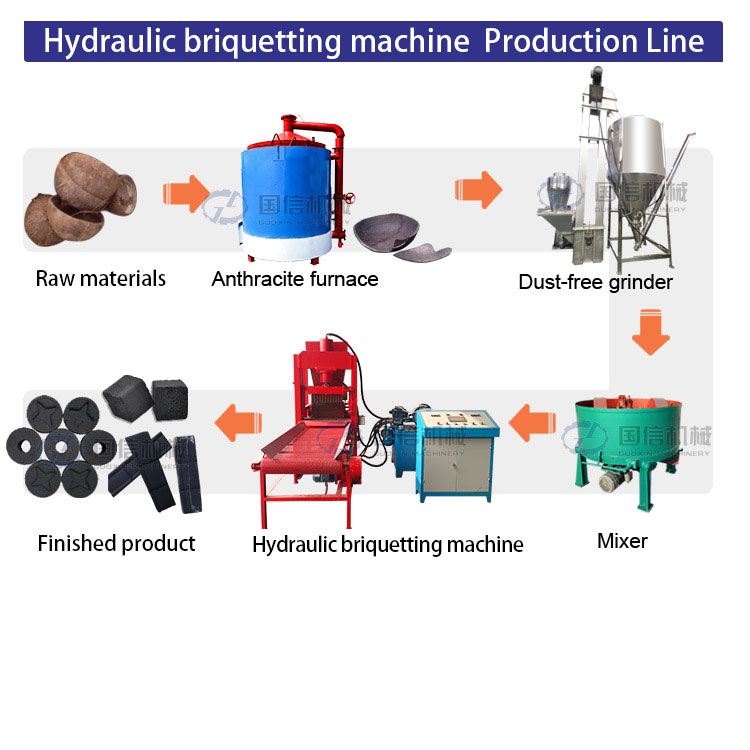
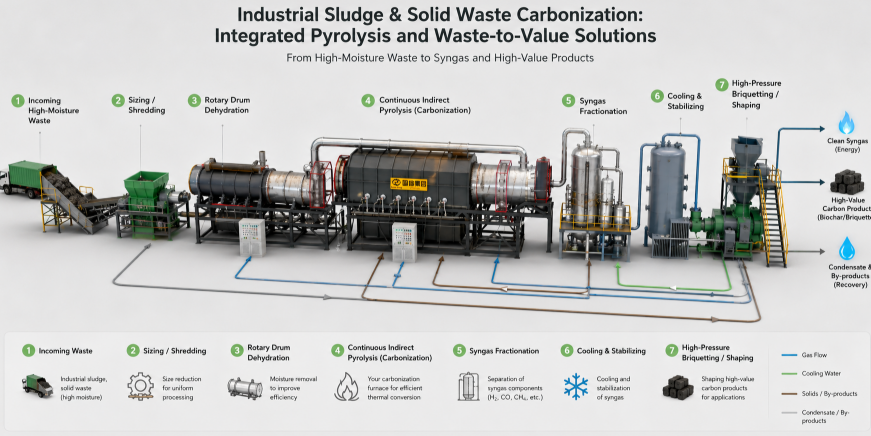
To achieve an efficient 24/7 production cycle, the hydraulic press must be integrated into a synchronized industrial line:
Upstream Preparation: Carbonized charcoal from the Continuous Carbonization Furnace is refined and homogenized in a double-shaft mixer. The moisture and binder content must be precisely metered to ensure the hydraulic cylinder achieves a clean release from the mold.
Downstream Hardening: Although hydraulic briquettes are physically stable upon exit, they contain residual moisture. Transitioning them through a drying machine is essential to reduce moisture to 5%, locking in the “metallic hardness” required for bulk packaging.

Technical Parameters
Hydraulic System: Equipped with a high-performance pumping station and cooling system to maintain stable oil viscosity during continuous high-speed operation.
Mold Durability: Mold liners are manufactured from high-chromium or manganese alloy steel to resist the high friction of abrasive charcoal fines.
PLC Automation: Features a centralized control system that manages the entire cycle—from feeding and pressing to automated discharge—reducing labor requirements and human error.
Q1: Why choose a hydraulic press over a mechanical punching machine for BBQ charcoal?
A: Hydraulic presses offer “dwell time” (holding pressure at the bottom of the stroke), which allows air to escape and particles to bond more effectively. This results in a higher-density briquette that burns longer and more evenly compared to the rapid impact of a mechanical punch.
Q2: What is the typical cycle time for a hydraulic charcoal press?
A: Depending on the mold configuration and the number of cavities (e.g., 20–40 pieces per press), a standard cycle takes 15–20 seconds. We optimize the hydraulic valve speed to maximize throughput without sacrificing product density.
Q3: How do I maintain the molds when processing abrasive charcoal?
A: We use modular mold inserts. Instead of replacing the entire mold block, you only replace the high-wear alloy liners. For standard wood charcoal, these liners typically last for 1,000–1,200 tons before requiring maintenance.
Consult with an Engineer: Compare Tonnage and Output for Your Specific Feedstock