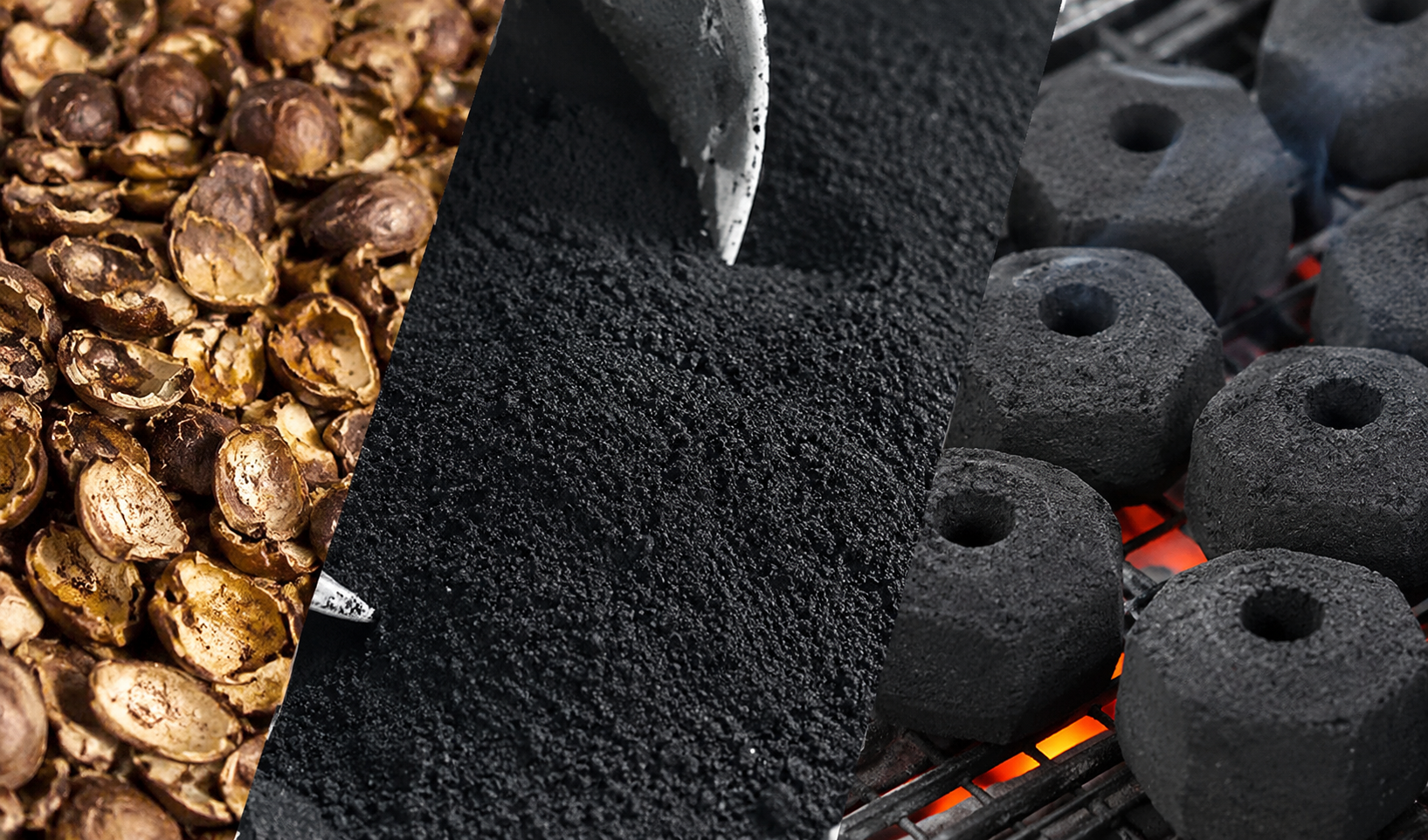
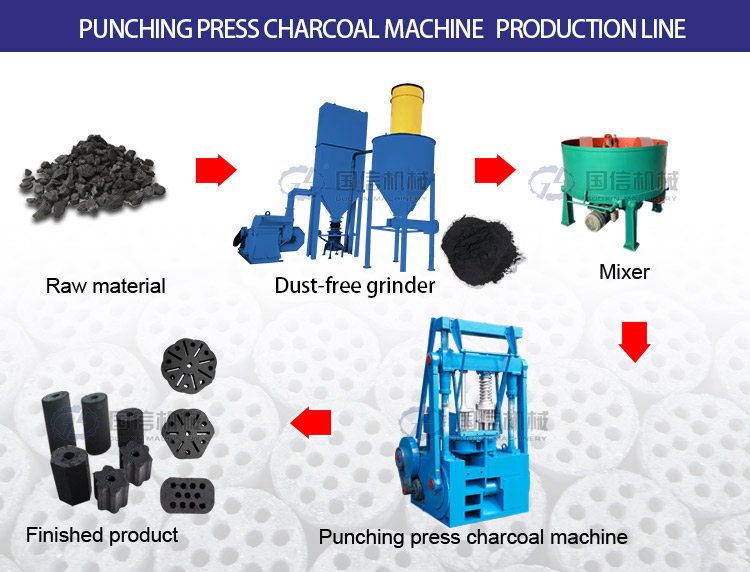
The structural density and vertical airflow geometry of briquettes directly dictate their combustion efficiency.
The multi-hole honeycomb design (internationally known as honeycomb briquettes or honeycomb charcoal) provides an optimized chimney effect—delivering prolonged, steady heat with minimal smoke and unburnt residuals.
Guoxin Machinery manufactures high-tonnage, fully automated honeycomb charcoal and coal briquette production lines.
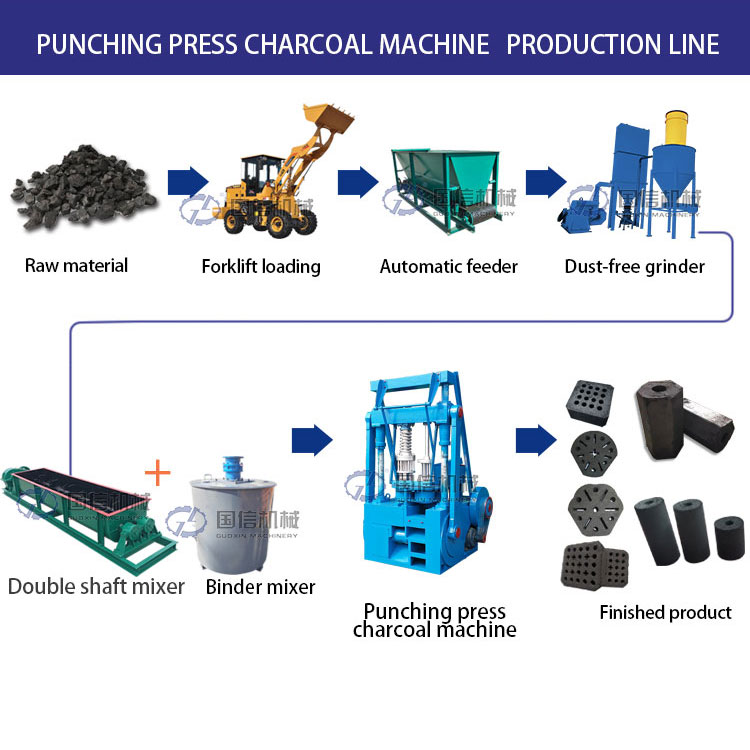
By integrating precision pulverizing, wheel muller binder kneading, heavy-duty mechanical punching, and continuous mesh belt drying, our complete plant solutions convert carbonized charcoal powder, loose coal fines, coal slime, and coke dust into high-density, multi-hole fuel blocks.
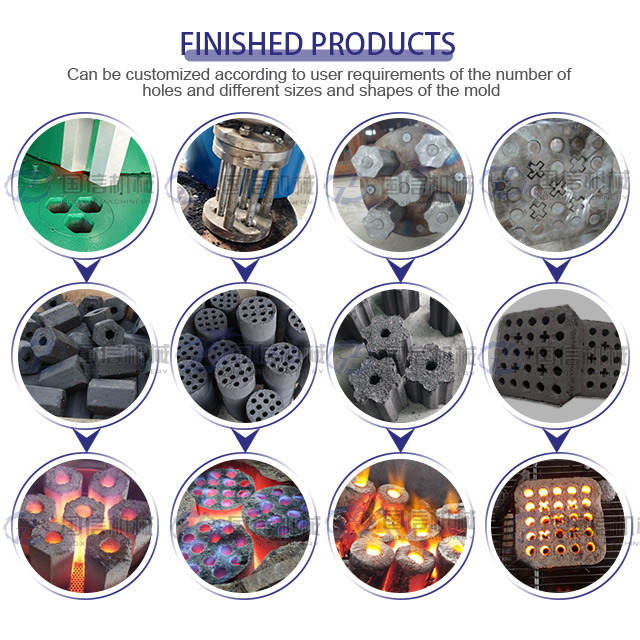
Operating a profitable, continuous briquetting plant requires a synchronized processing loop where material plasticity, moisture content, and compaction force are precisely balanced to eliminate production bottlenecks.
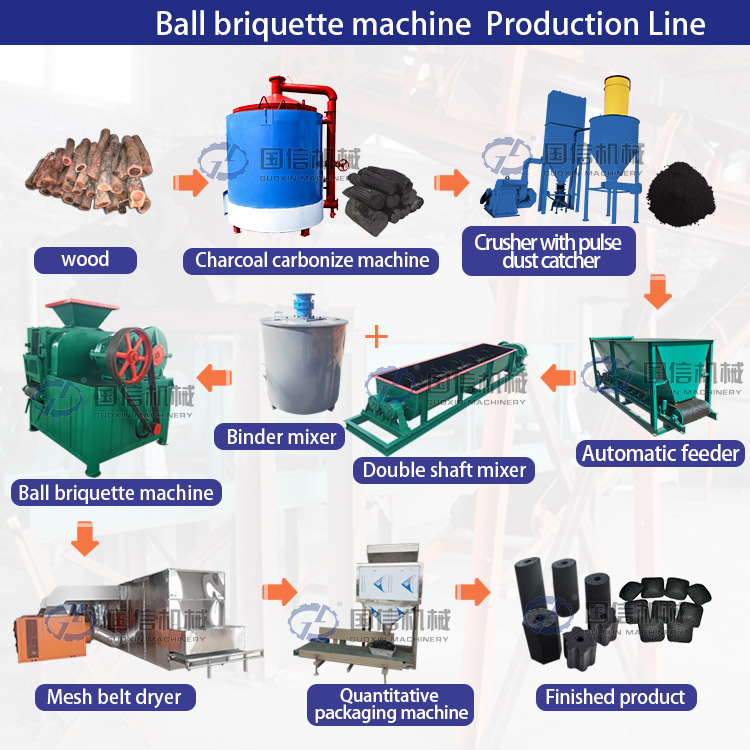
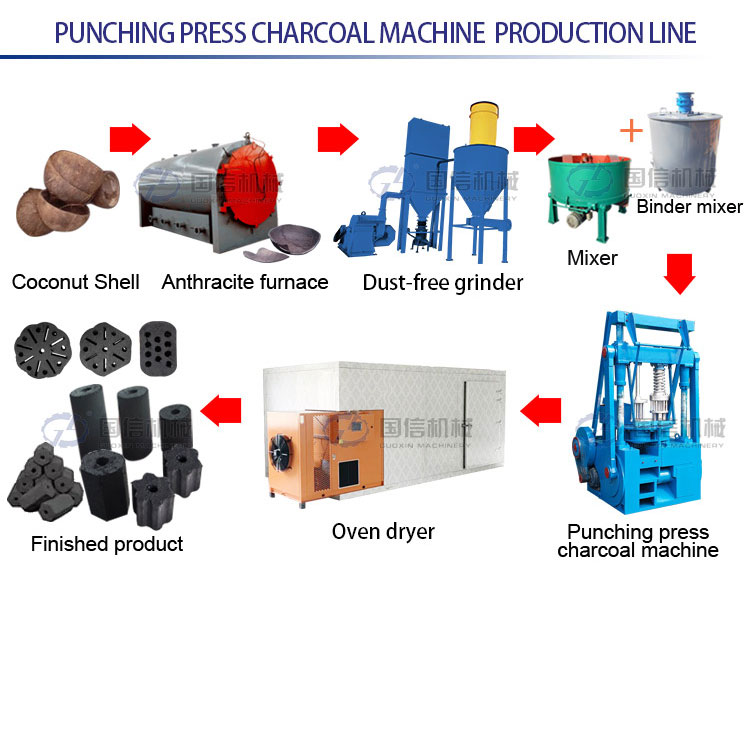
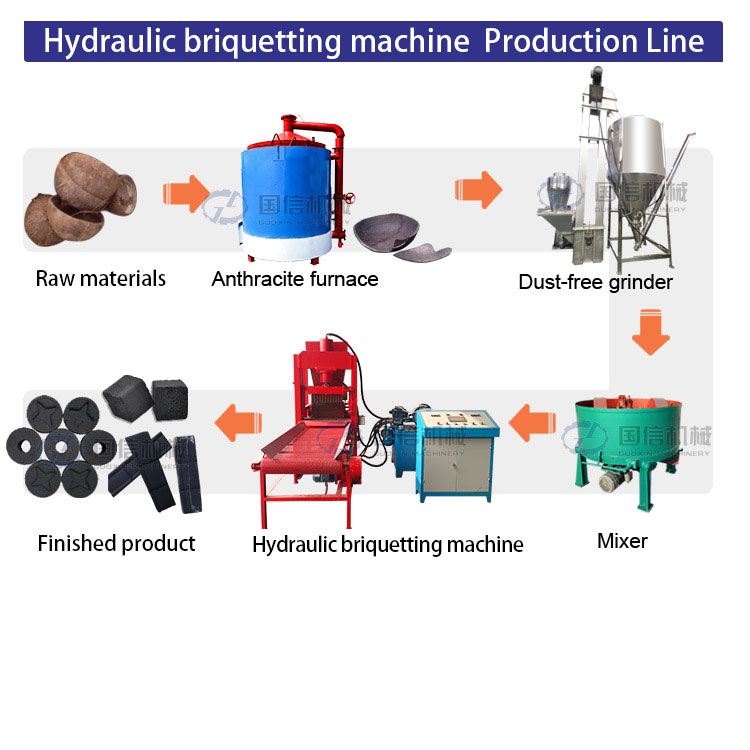
[Raw Charcoal / Coal Fines] ➔ [Precision Pulverizing] ➔ [Wheel Muller Binder Kneading] ➔
[Mechanical Punch Press Molding] ➔ [Protect-Conveying] ➔ [Multi-Pass Mesh Belt Drying] ➔ [Finished Honeycomb Blocks]
1.1 Precision Pulverizing & Particle Sizing
To achieve smooth surface finishes and non-crumbling internal air channels, the feedstock must be pre-conditioned. Our high-speed hammer mills refine raw coal deposits, mineral slime, or carbonized biomass powder down to ≤ 3mm, establishing the ideal particle size distribution for dense compaction.
1.2 High-Friction Wheel Muller Binder Kneading
Charcoal powder and mineral fines lack natural cohesion. Before molding, the material enters a heavy-duty Wheel Muller Mixer. The heavy rotating muller wheels apply combined compressive weight and shear friction, thoroughly kneading the carbon powder with a 3%–5% liquid starch binder paste. This friction-mixing process squeezes out air pockets and builds the required material plasticity, preventing structural cracking during high-pressure stamping.
1.3 High-Pressure Mechanical Punch Pressing (The Core Molding Stage)
This is the mechanical core of the line. Utilizing a heavy-duty crankshaft mechanical punch press, the conditioned carbon paste is fed into precision mold sleeves. Heavy vertical impact rams compact the material while CNC-machined pins simultaneously pierce the block to form vertical airflow channels (e.g., 12, 14, 19, or 37 holes), achieving a uniform density of ≥ 1.3 g/cm³.
1.4 Smooth Chain-Plate Protect-Conveying
Freshly stamped “green” honeycomb briquettes carry internal moisture and require gentle handling. An automated chain-plate conveyor receives the ejected blocks smoothly from the die plate, protecting the structural edges and delicate hole geometries during transfer to the drying stage.
1.5 Continuous Multi-Pass Mesh Belt Dehydration
Green honeycomb briquettes are automatically transferred onto a multi-layer mesh belt drying system. Operating within a temperature-controlled thermal loop (60°C – 80°C) powered by carbonization waste heat or clean hot air, the dryer systematic extracts moisture down to ≤ 5% without thermal cracking—delivering durable blocks ready for retail packaging or industrial distribution.
Guoxin Machinery engineers custom plant layouts tailored to your target hourly output and material characteristics. Both standard and heavy-duty configurations support both charcoal powder and mineral coal matrices.
| Complete Plant Parameter | GX-PL30 Standard Line | GX-PL60 Heavy-Duty Line |
| Hourly Production Capacity | 2,000 – 3,000 pcs/hour | 5,000 – 6,000 pcs/hour |
| Primary Feedstock Compatibility | Biomass Charcoal Powder / Coconut Shell Char | Coal Slime / Anthracite / Coke Fines |
| Briquette Diameter Range | 80 mm – 140 mm (Custom mold options) | 140 mm – 220 mm (Custom mold options) |
| Available Hole Formats | 12, 14, 16, 19, or 37 Vertical Air Channels | 12, 14, 16, 19, or 37 Vertical Air Channels |
| Finished Density & Burn Time | Density ≥ 1.3 g/cm³; 3.5 – 5.0 hours burn time | Density ≥ 1.3 g/cm³; 4.0 – 6.0 hours burn time |
| Total Integrated Line Power | ~ 45 kW | ~ 90 kW |
| Automation Platform | Centralized Control Panel | Siemens PLC with SCADA Interface |
| Required Factory Footprint | Min. 180 m² | Min. 350 m² |
Q1: Why is a wheel muller mixer required before punching honeycomb charcoal?
A: Charcoal powder is lightweight and non-cohesive. Standard twin-shaft paddle mixers only perform basic liquid-solid distribution but cannot build material plasticity. The heavy rollers of a Wheel Muller Mixer apply intense shear friction and downward pressure, compacting charcoal powder and binder into a malleable paste necessary for clean, non-crumbly punch molding.
Q2: Why is mechanical punch pressing superior to extrusion for honeycomb briquettes?
A: Screw extruders rely on continuous friction, which overheats starch binders and fails to mold long vertical hole channels smoothly in large diameters. Mechanical punch presses apply instantaneous, high vertical impact force, forming clean, durable airflow holes that ensure a natural chimney effect and complete combustion in stoves and grills.
Q3: Can the line switch between making mineral coal blocks and biomass charcoal blocks?
A: Yes. The main machinery components—pulverizer, muller mixer, conveyor, and belt dryer—are fully compatible. Because mineral coal has a higher specific gravity than lightweight charcoal powder, our technical team provides interchangeable die molds with calibrated compression strokes and tailored binder formulations for each feedstock.
Q4: What civil engineering foundation is required for the honeycomb punch press?
A: Because high-tonnage punch presses generate dynamic impact loads during continuous operation, the machine must be anchored onto a dedicated concrete foundation pit (typically 300mm to 500mm deep with reinforced rebar and vibration-damping pads) to maintain long-term mechanical alignment.
Henan Guoxin Machinery operates a full-scale testing workshop in Zhengzhou, Henan, China. Project developers and plant operators are invited to submit raw coal fines or charcoal powder for complete material testing, wheel muller kneading, and high-pressure punch molding trials.
Our engineering team provides:
Project application: eve@guoxinmachinery.com