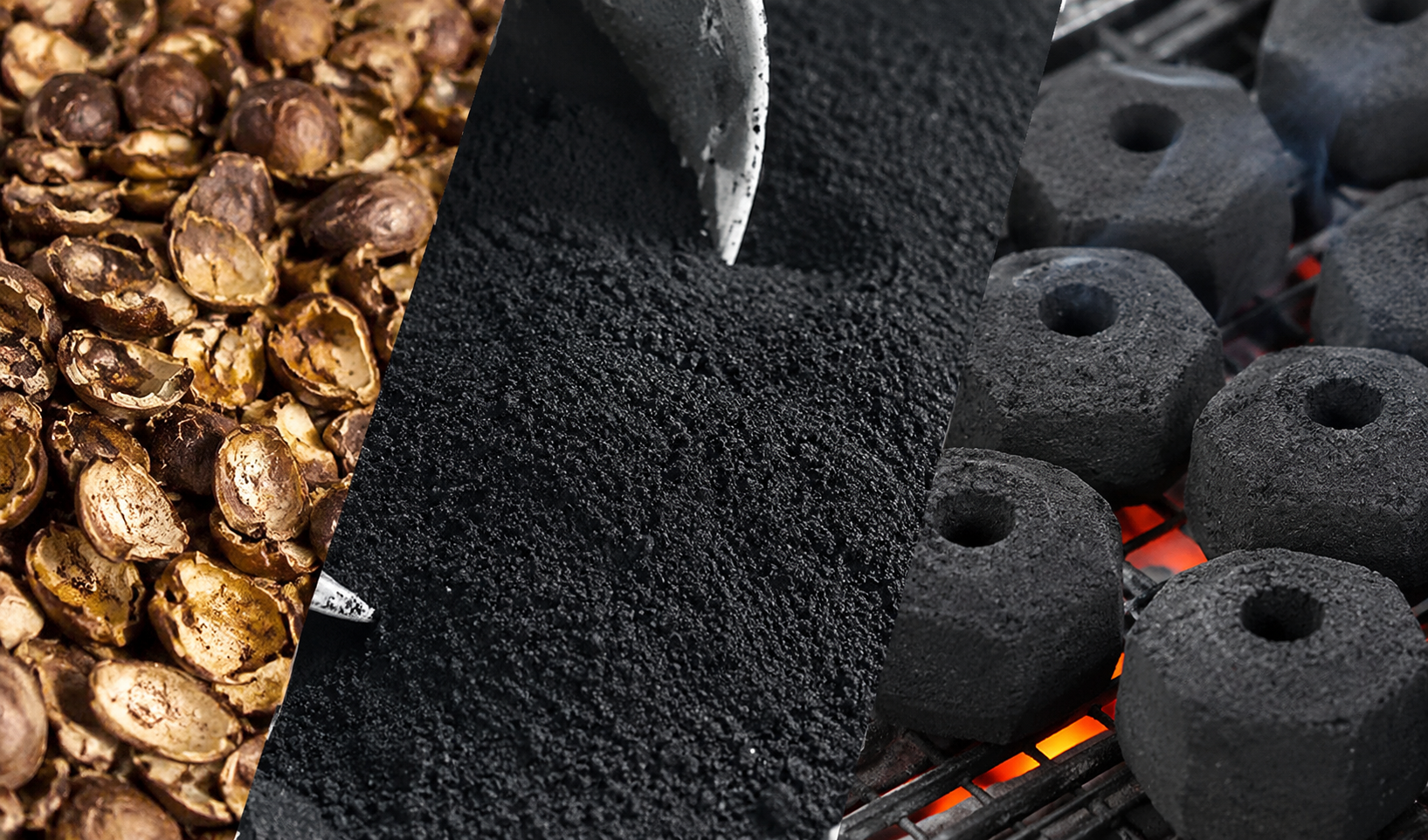
In the commercial biomass fuel and wood waste recycling industry, transforming loose carbonized wood powder, hardwood residuals, or saw dust char into dense solid charcoal logs is essential for maximizing market value.
Guoxin Machinery’s Industrial Hydraulic Wood Charcoal Briquette Machine utilizes heavy-duty hydraulic pressure (100–200 tons) to produce high-calorific, uniform charcoal briquettes—including hexagonal logs (BBQ charcoal), hollow sticks, and custom shapes.
Guoxin hydraulic press technology operates under steady, high vertical compression. This delivers solid briquettes with density ≥ 1.3 g/cm³, superior drop strength, and zero structural degradation during long-distance maritime transport.
Compared to standard mechanical or screw-type briquetting machinery, high-tonnage hydraulic pressing offers distinct operational benefits for commercial charcoal producers:
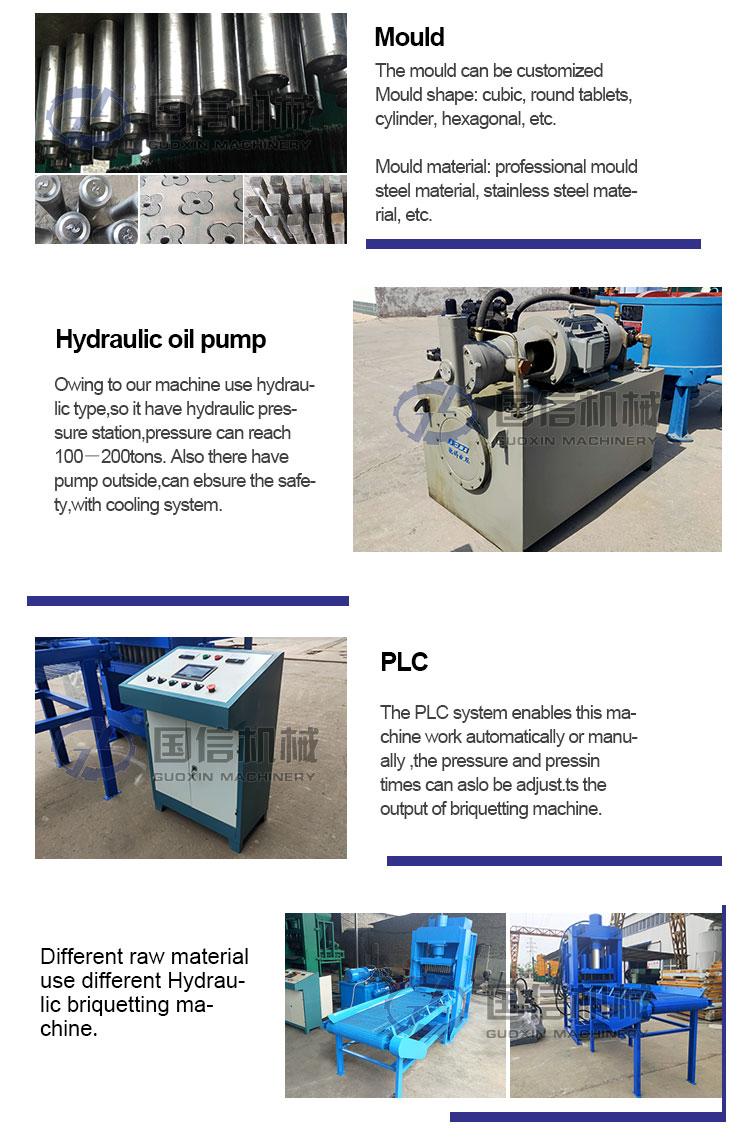
100 – 200 Ton Compression Force: Driven by an external hydraulic oil station with an integrated oil cooling system, the machine applies massive, uniform force to eliminate internal air pockets, producing clean, hard briquettes.
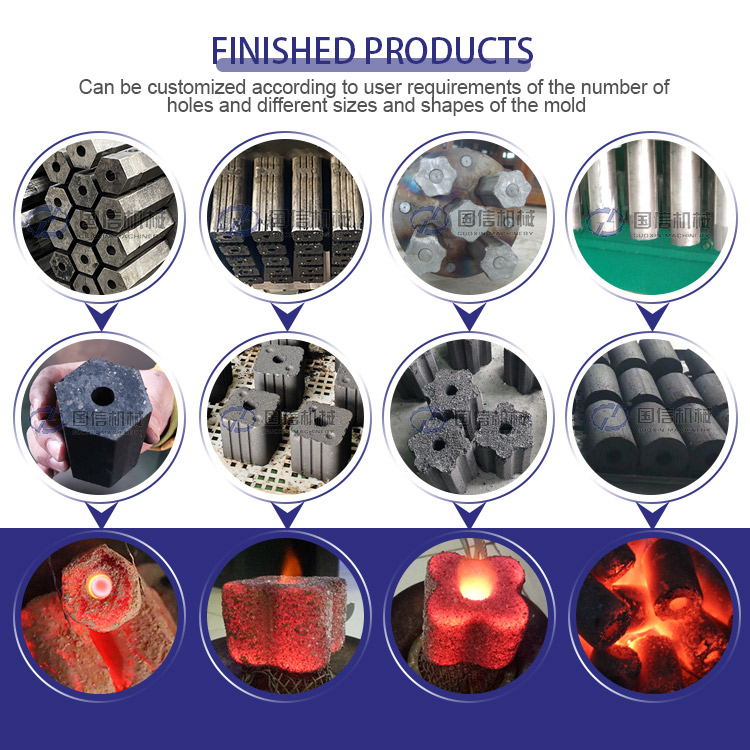
Versatile Quick-Change Molds: By simply swapping the stainless steel or alloy mold dies, operators can produce hexagonal hollow logs, quadrangular bars, flower-shaped logs, round tablets, or 25mm shisha cubes on a single machine frame.
Low Wear & Minimal OpEx: Free from high-friction screws, the hydraulic piston and mold die plates experience significantly lower wear rates, reducing routine maintenance costs by up to 60%.
Automated PLC Touchscreen Control: Integrated Siemens/Guoxin PLC control panel allows operators to adjust pressing times, hydraulic tonnage, and ejection speeds seamlessly in automatic or manual modes.
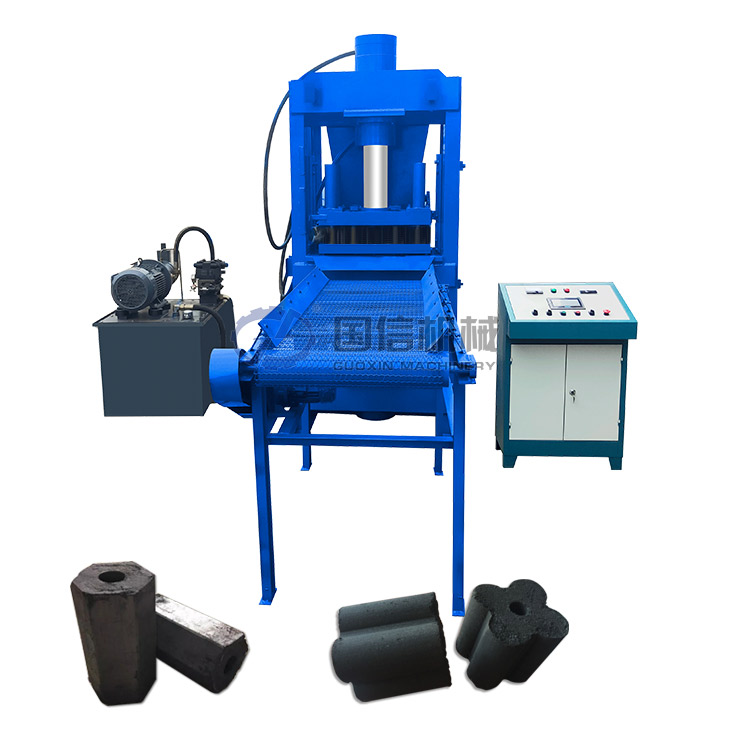
Guoxin offers flexible hydraulic briquetting configurations tailored to various biomass feedstocks and hourly production targets.
| Engineering Parameter | Hydraulic Wood Charcoal Briquette Machine |
| System Type | Heavy-Duty Hydraulic Multi-Mold Briquette Press |
| Hydraulic Pressure Tonnage | 100 Tons – 200 Tons (Adjustable via hydraulic station) |
| Finished Briquette Density | ≥ 1.3 g/cm³ (High structural density) |
| Mold Geometries | Hexagonal, Quadrangular, Flower-shaped, Cubic, Cylindrical |
| Mold Metallurgy | Professionally. Hardened die steel / Stainless steel |
| Automation Architecture | PLC Control Panel with touch-screen parameters |
| Discharge Mechanism | Automated mesh belt conveyor for smooth briquette transport |
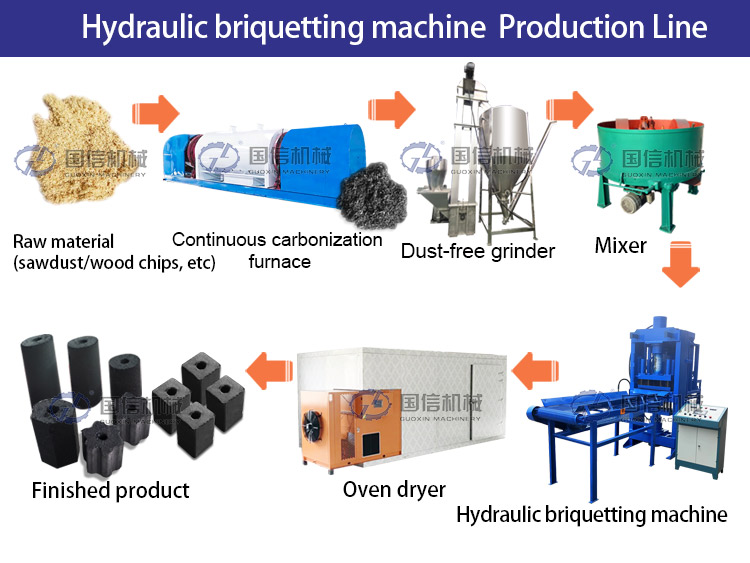
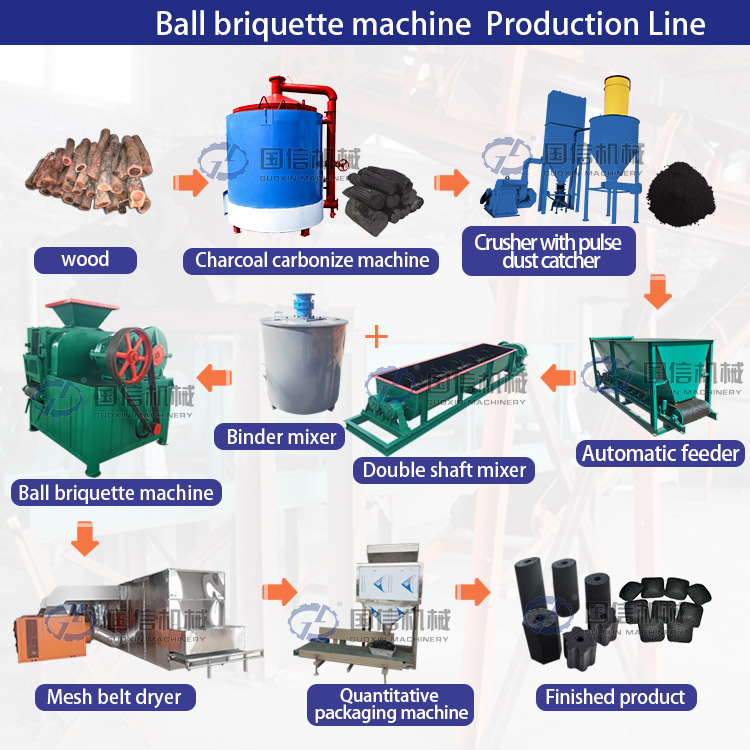
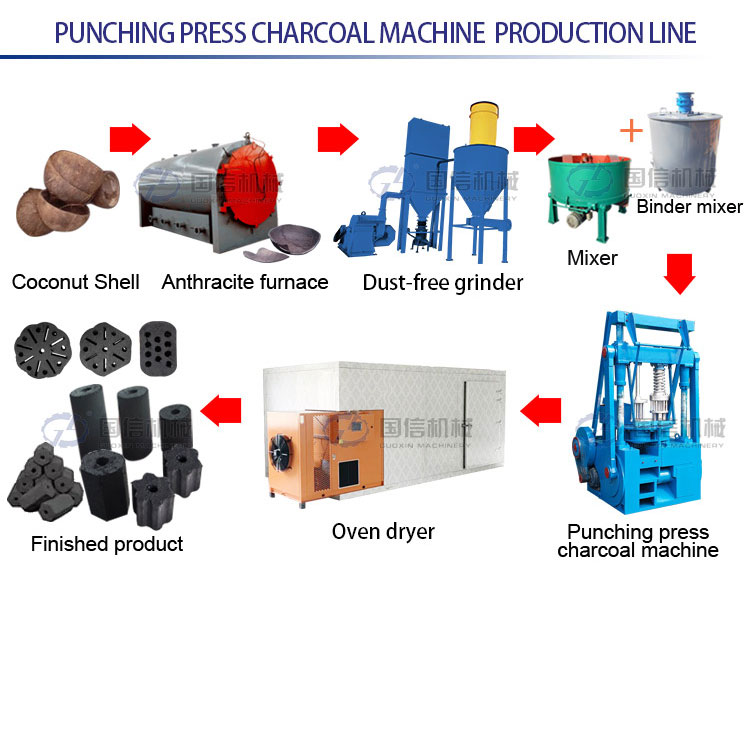
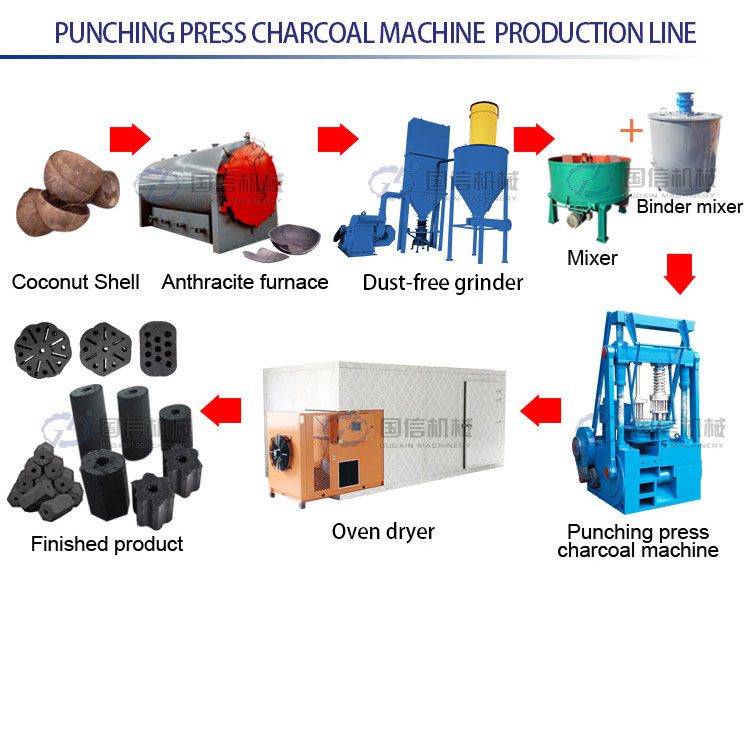
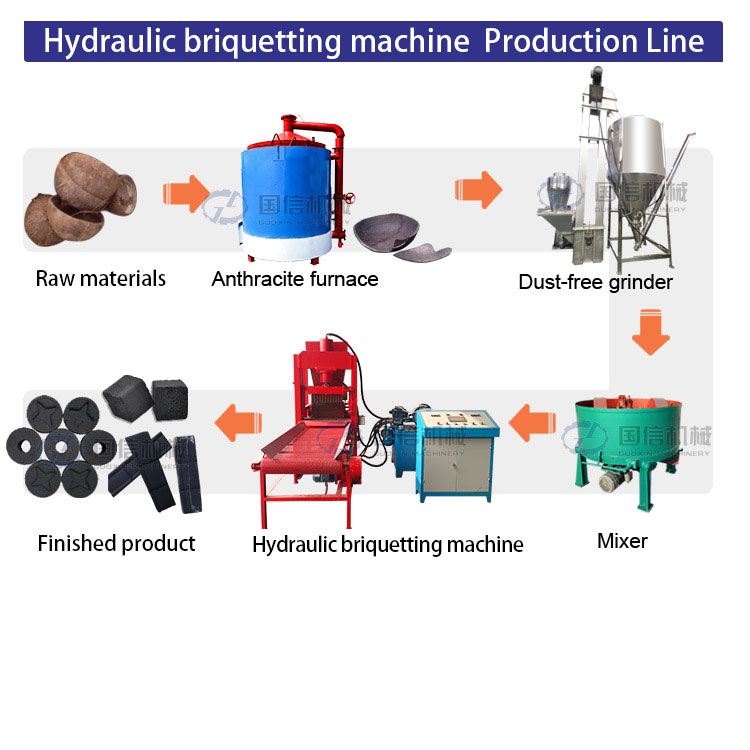
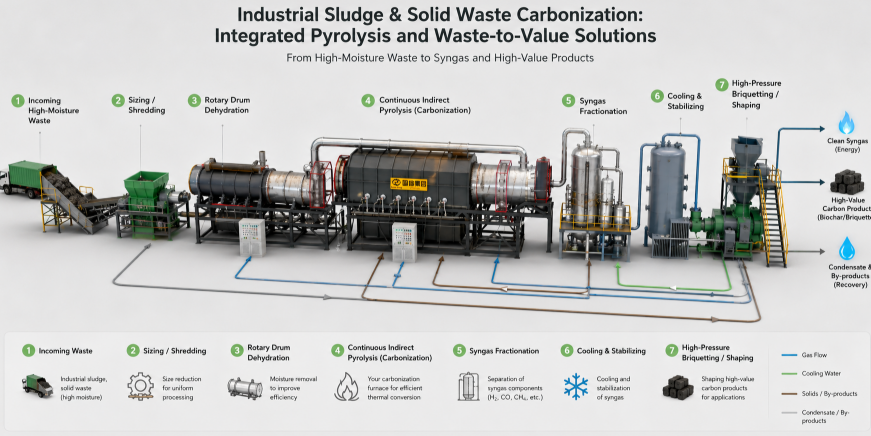
To produce high-quality, export-grade wood charcoal briquettes, the hydraulic press operates as the core forming station within a complete plant setup:
Carbonization: Raw hardwood, sawdust, or biomass waste is pyrolyzed in a Continuous Rotary Carbonization Furnace to achieve fixed carbon > 80%.
Fine Pulverizing: Carbonized char is ground into 200-mesh fine charcoal powder.
Wheel Muller Mixing: Charcoal powder is kneaded with water and a 3%–5% organic starch binder in a Wheel Muller Mixer to build essential plasticity.
Hydraulic High-Pressure Molding: The carbon paste is pressed under 100–200 tons of force into hexagonal logs or custom shapes.
Drying: Fresh briquettes are dried in a Mesh Belt Dryer to achieve final moisture ≤ 5%.
Q1: Why choose a hydraulic briquette machine over a screw extruder for wood charcoal?
A: Hydraulic press machines apply smooth, massive vertical pressure (100–200 tons) without high-speed friction. This prevents overheating binders, significantly reduces wear on machine parts, and allows operators to produce multiple shapes (hexagonal logs, shisha cubes, tablets) simply by swapping molds on the same press.
Q2: Can this hydraulic machine produce both BBQ charcoal logs and shisha charcoal blocks?
A: Yes. Because the hydraulic system uses quick-change mold dies, you can produce large hexagonal hollow logs for BBQ/heating, or change the mold to press dense 25mm shisha charcoal cubes or round tablets.
Q3: What is the maintenance requirement for the hydraulic station?
A: Guoxin hydraulic stations feature external oil pumps with built-in cooling systems to maintain optimal hydraulic oil temperatures. Maintenance involves routine hydraulic oil filter checks and replacing oil according to operational hours, avoiding frequent mechanical teardowns.
Guoxin Machinery provides custom mold engineering and material testing in our Zhengzhou facility. Send us your charcoal powder samples to test pressing density, drop strength, and mold ejection performance.
Contact our team today to receive: