In major rice-producing regions globally, managing bulk paddy residues presents a significant logistics and environmental challenge. Raw rice husk has an incredibly low bulk density (around 0.10 to 0.12 g/cm³) and contains high silica content, making it difficult to burn efficiently in its loose state.
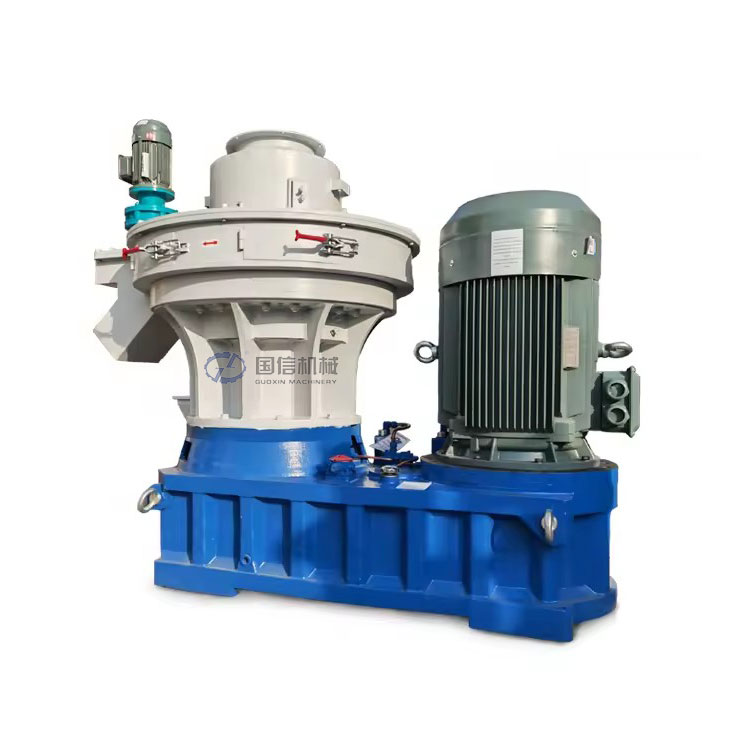
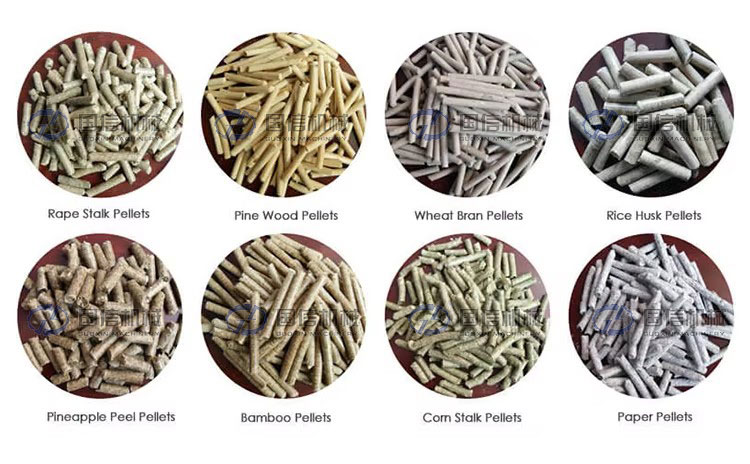
Guoxin Machinery’s Industrial Rice Husk Pellet Machine is engineered specifically to overcome these material limitations. Utilizing a heavy-duty vertical ring die architecture, this processing machinery applies intense mechanical pressure to compress loose agricultural waste into premium biomass pellets with a density exceeding 1.1–1.2 g/cm³, drastically reducing transportation footprints and creating a high-calorific alternative fuel.
To ensure your production facility balances electricity inputs with target hourly commercial outputs, our specialized rice husk pelletizing series features the following calibrated specifications:
| Equipment Model | Hourly Pellet Output | Main Motor Power | Rice Husk Compression Ratio | Core Ring Die Metallurgy |
| GX-RHP560 | 1.0 – 1.2 Tons/h | 90 kW / 110 kW | 1:5.5 (Customized) | 20CrMnTi Alloy Steel |
| GX-RHP850 | 2.0 – 2.5 Tons/h | 160 kW / 220 kW | 1:5.5 – 1:5.8 | Vacuum-Quenched Stainless |
| GX-RHP1250 | 4.0 – 5.5 Tons/h | 315 kW / 400 kW | 1:5.8 (Heavy-Duty) | Hardfaced High-Chrome Alloy |
Note: Because rice husk is naturally abrasive due to its interior silica structure, we recommend upgrading to vacuum-quenched or chromed dies to extend component wear-life.
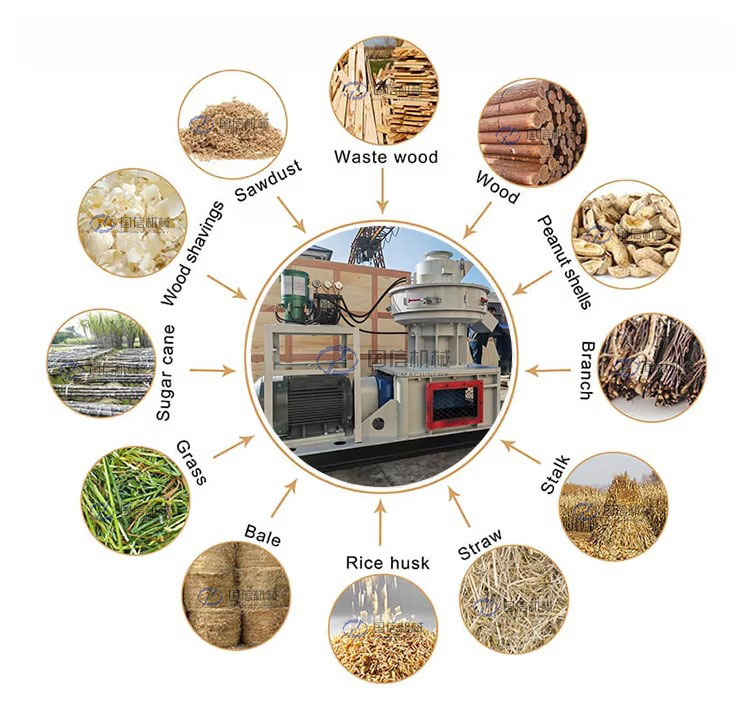
Traditional horizontal biomass granulators fail prematurely when processing paddy husks due to uneven die wear and material bridging. Guoxin’s vertical processing series implements four direct mechanical upgrades:
Gravity-Assisted Vertical Feeding:
The raw husk drops vertically into the pelletizing zone. The centrifugal force generated by the rotating rollers distributes the lightweight material 100% uniformly across the interior ring die walls, eliminating raw material bridging and clogging.
Silica-Resistant Die Metallurgy:
Rice husk contains over 20% silica, which acts like sandpaper on spinning steel components. Our custom-machined ring dies are forged from deep-vacuum quenched alloy matrices, delivering an operational wear-life exceeding 600 to 800 hours.
Intelligent Continuous Lubrication:
The heavy-duty main drive shaft and secondary compression roller bearings are connected to an automated, pressurized oil-pumping station. This guarantees round-the-clock operation without requiring manual grease-gun shutdowns.
High-Volume Reduction Ratio:
The machine instantly condenses bulk agricultural husks into highly compacted pellets. This volume reduction makes shipping, marine freight container packing, and bulk automated silo storage highly cost-effective.
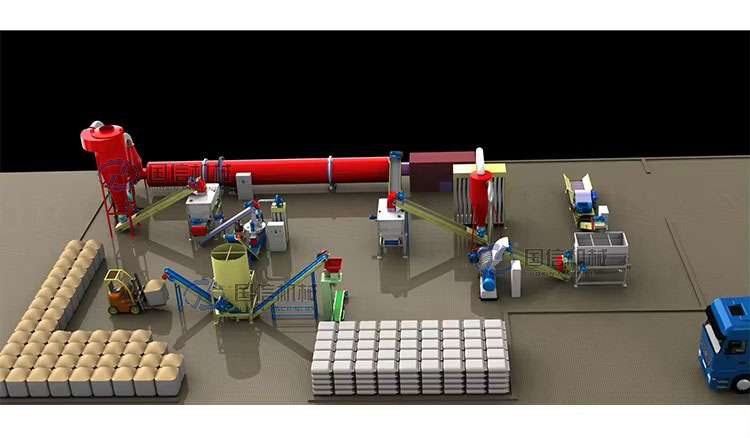
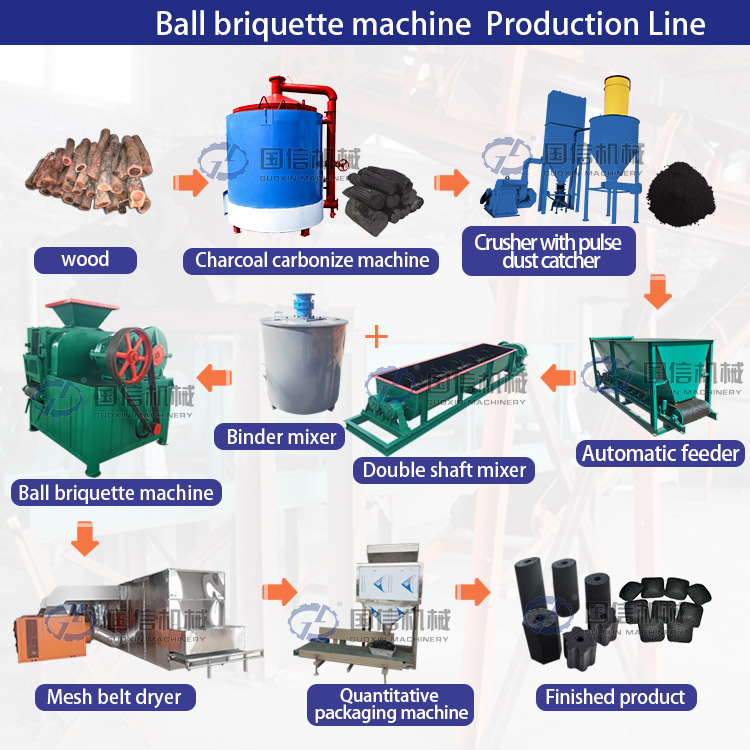
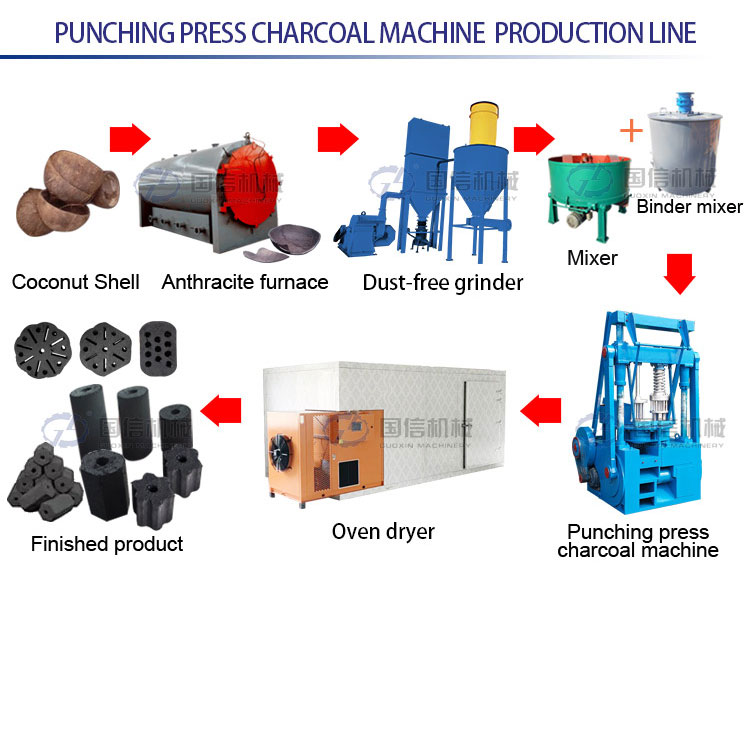
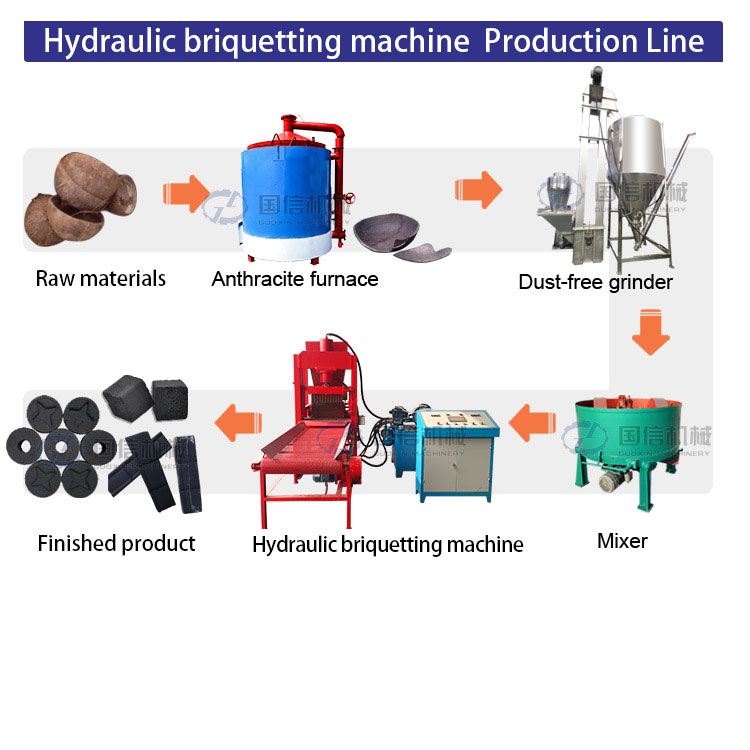
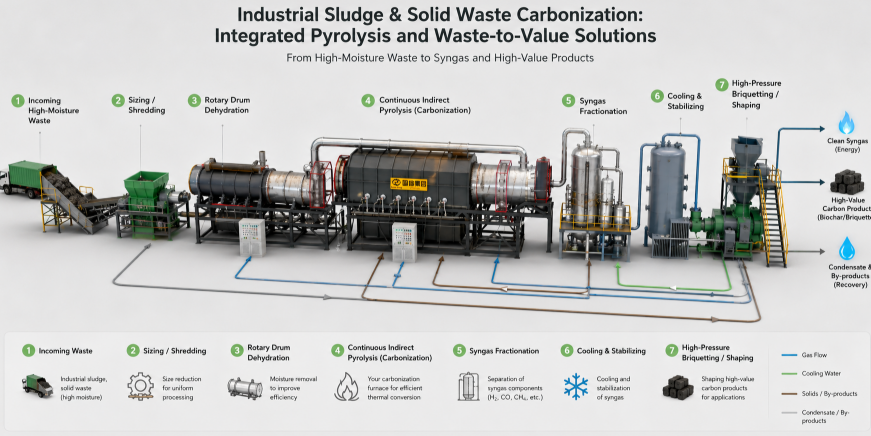
A standalone pellet mill requires balanced upstream conditioning and downstream cooling systems to maintain continuous commercial output. Guoxin designs and delivers fully synchronized automated complete plant layouts:
[Raw Rice Husk Fines] ➔ [Sifting & Metal Separation] ➔ [Rotary Drum Moisture Dryer] ➔
[Vertical Ring Die Pellet Mill] ➔ [Counter-Flow Pellet Cooler] ➔ [Automated Bagging Station]
Q1: Why do rice husks require a lower compression ratio than typical wood sawdust?
A: Softwood and hardwood contain high amounts of natural resin and lignin, which liquefy under friction heat to bind the wood pellets. Rice husk has a much lower internal lignin content and an abrasive exterior hull. Therefore, it requires a highly specific, shorter compression ratio (typically 1:5.5) combined with intense vertical mechanical impact to mold the particles securely without charring or seizing the machine.
Q2: Can this same pellet production line process wheat straw, peanut shells, or wood waste?
A: Yes. The structural machinery components—conveyors, feeders, coolers, and packaging systems—are fully universal. If you want to switch production from 100% rice husk to hardwood sawdust or crop straw, you only need to swap out the outer ring die module for a die machined with the corresponding compression ratio for that specific biomass density.
Q3: What electrical grid modifications are required for the industrial units?
A: Because our high-output industrial models (like the GX-RHP850) utilize high-horsepower 160 kW+ Siemens-compatible motors, they cannot run on light commercial lines. We custom-wind all main motor stators to align precisely with your country’s industrial power grid configuration (e.g., 380V/50Hz/3Phase, 415V/50Hz, or 460V/60Hz) before factory shipment.
Request Factory Blueprint & Wholesale Pricing
Turnkey Support: 100% customized CAD factory layout blueprints, overseas technician installation, and global spare parts supply.