Charcoal Briquette Production Line
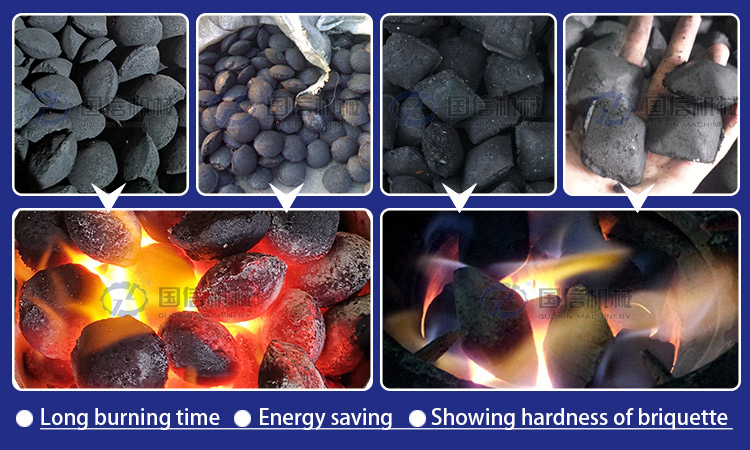
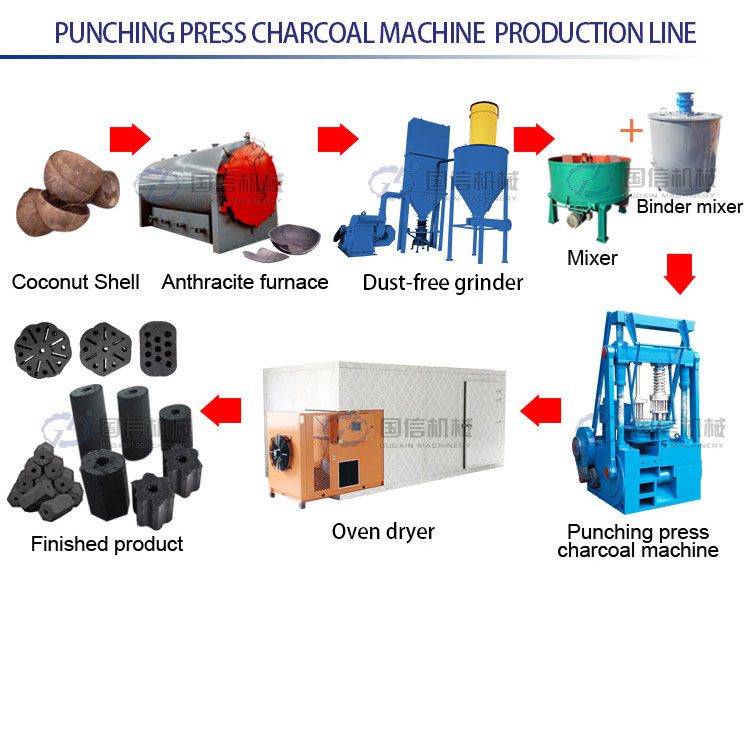
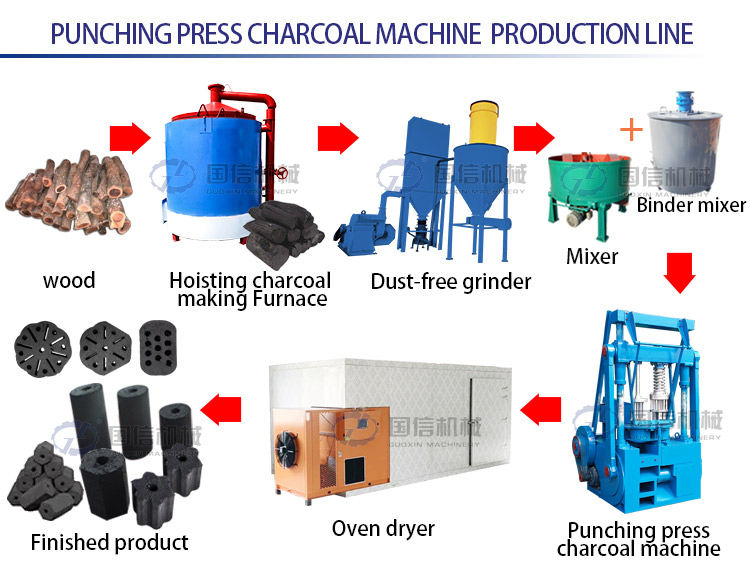
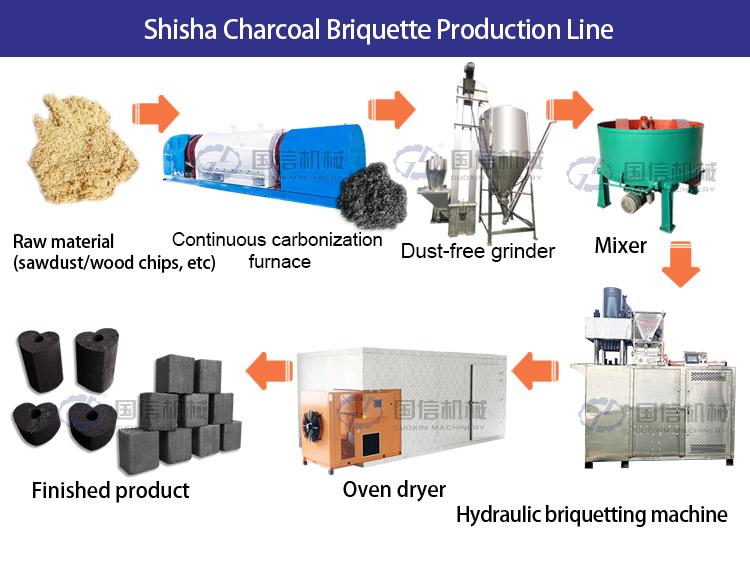
The charcoal briquette production line is a system designed specifically for producing charcoal products. Biomass raw materials are made into a structure through carbonization, mixing, molding, and drying processes. These charcoal products are typically used as fuel and are widely popular in barbecue and industrial heating due to their excellent combustion performance.
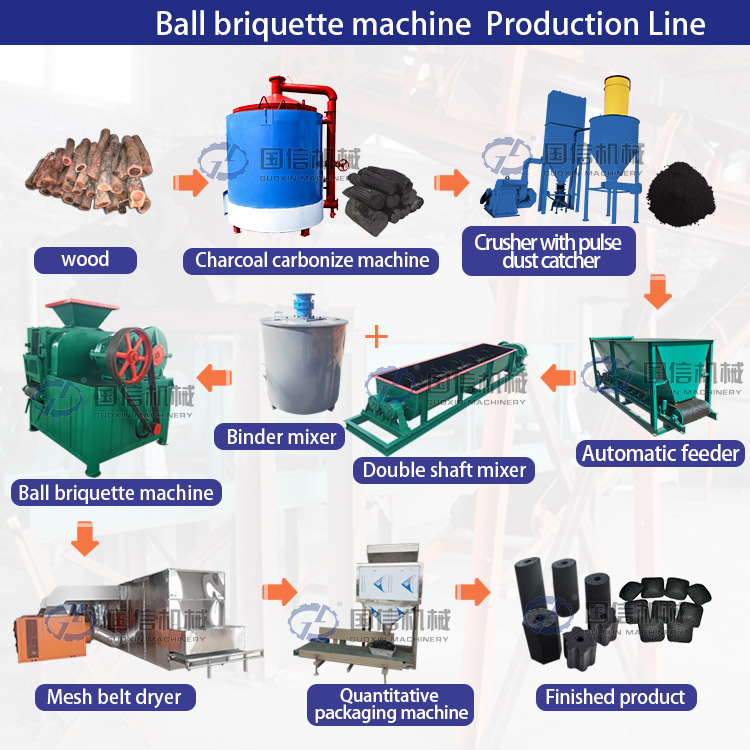
The production line integrates all key steps of charcoal briquette production, including crushing, drying, mixing, briquetting, and carbonization.
It is suitable for BBQ charcoal, shisha charcoal, charcoal, and industrial fuel briquettes.
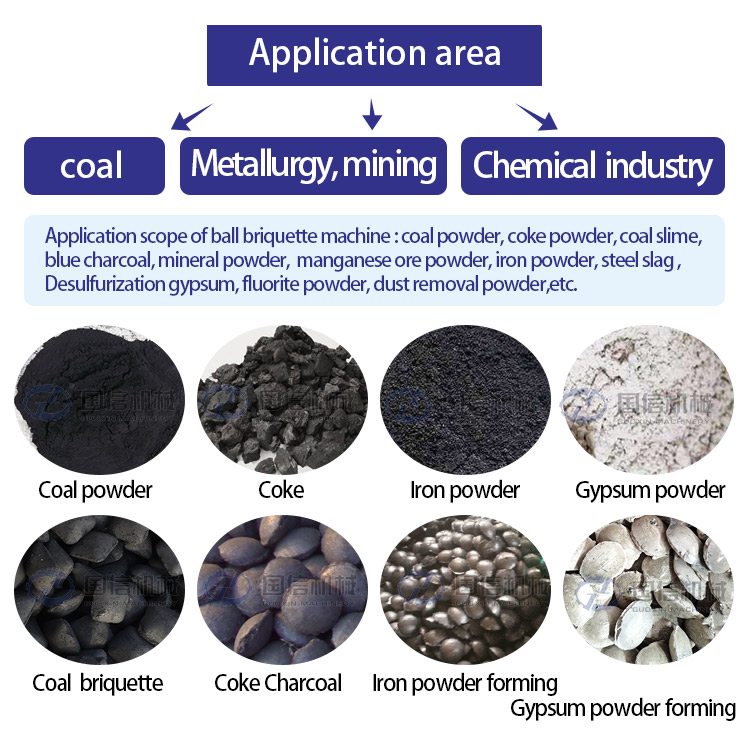
Each product type can be customized in shape, size, density, and output capacity.
Moisture content, particle size, and binder ratio are all adjustable according to raw material conditions.
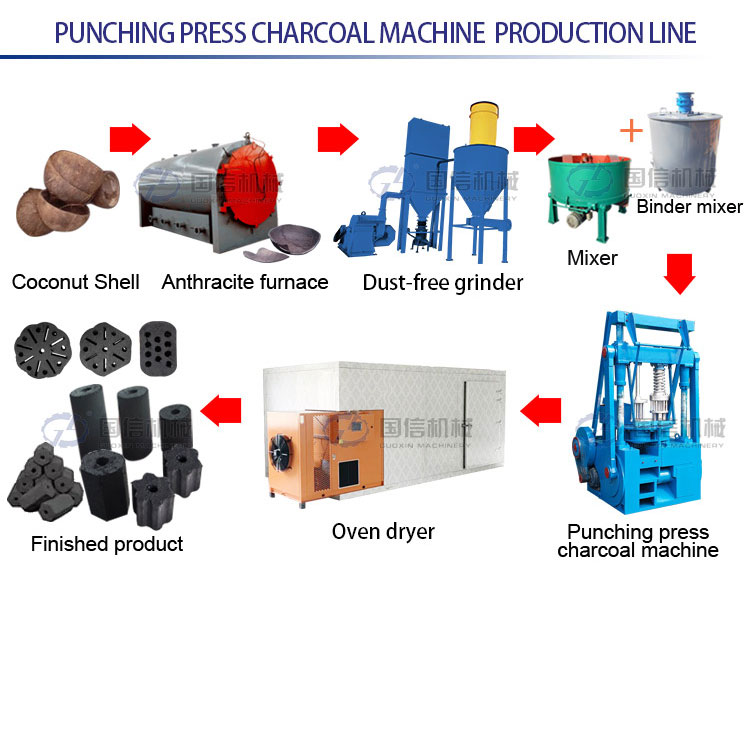
The biomass is subjected to high temperatures (usually about 400-600°C) in the carbonization furnace, releasing volatile gases and leaving charcoal.
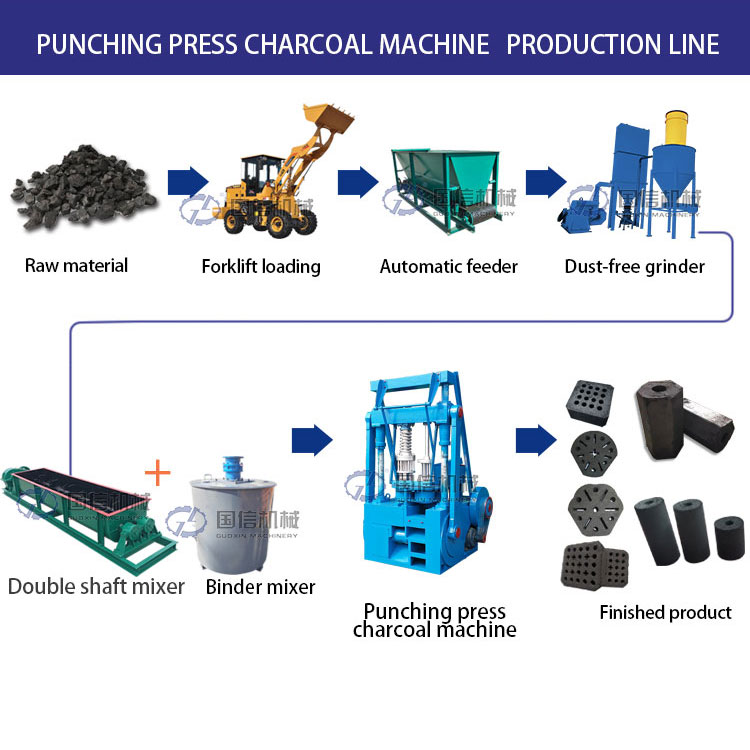
The charcoal generated after carbonization is usually in the form of blocks or larger particles, and it is usually necessary to grind it into fine charcoal powder with a grinder or crusher.
The feeder can be fed with a forklift. The function of the feeder is to make the work of the entire line uniform. A binder bin is installed next to the feeder, and a certain amount of raw materials and binders enter the mixer together.
Some materials are not sticky, so to make better balls, some adhesives need to be added to increase the strength. The mixer can completely mix the materials and adhesives.
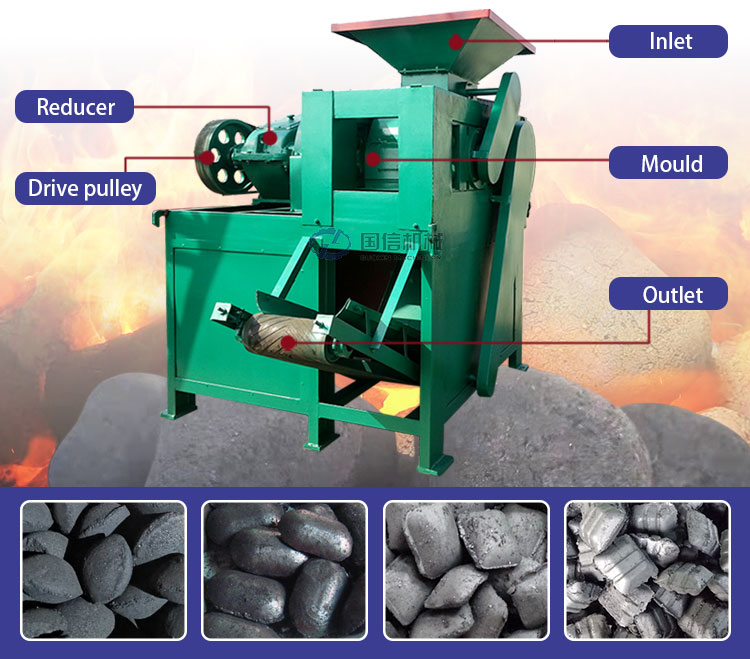
The ball press is mainly used to press granular or powdered materials into balls. The raw materials are fed from the feed port and enter the roller area. The roller gives a certain pressure to squeeze the raw materials into shape.
After the carbon balls or carbon blocks are formed, they are usually too wet to be packaged or used immediately. Therefore, drying must be carried out to reduce the moisture content to a safe level (usually around 5-10%).
Ensures product quality and stability for storage and transport.