

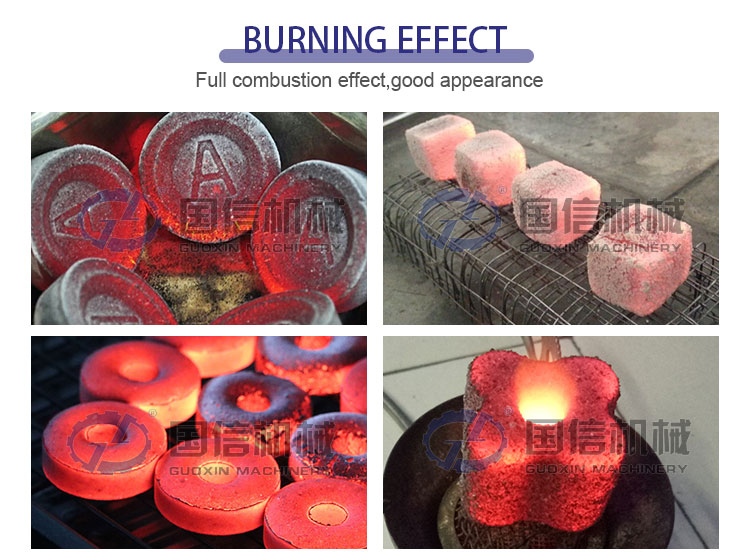
The market for quick-light charcoal (also known as instant-ignition or self-lighting charcoal) represents the highest-margin niche in the solid fuel industry.
Catering to premium Shisha (Hookah) lounges and the outdoor ready-to-grill retail sector, these products command a significant price premium due to their chemical convenience.
Guoxin Machinery provides integrated, industrial-scale EPC solutions that combine high-purity carbonization with proprietary accelerant infusion and high-pressure molding.
Quick-light charcoal is an engineered fuel. Its value is not just in the carbon content but in the precision of its ignition chemistry.
| Parameter | Raw Biomass Waste | Carbonized Quick-Light Charcoal |
| Fixed Carbon Content | 15% – 25% | > 85/% |
| Calorific Value (LHV) | 3,500 – 4,000 kcal/kg | 7,200 – 7,600 kcal/kg |
| Ignition Speed | N/A | 5 – 10 Seconds (Single Match) |
| Volatile Matter | 70% – 80% | < 12/% (Before additive infusion) |
Raw Material Acquisition: Approximately $20 – $60 per ton (Sawdust, rice husk, or wood chips).
Finished Product Value (FOB Price): Approximately $850 – $1,350 per ton, significantly higher than standard BBQ charcoal.
Estimated Payback Period: 12 – 16 months, driven by the high market premium for Instant-Light convenience.
Production Cost Efficiency: Our syngas recovery system lowers OpEx by utilizing carbonization off-gas to power the dehydration stage.
Our production line is engineered to solve the three primary challenges of quick-light charcoal: ignition consistency, structural integrity, and operational safety.
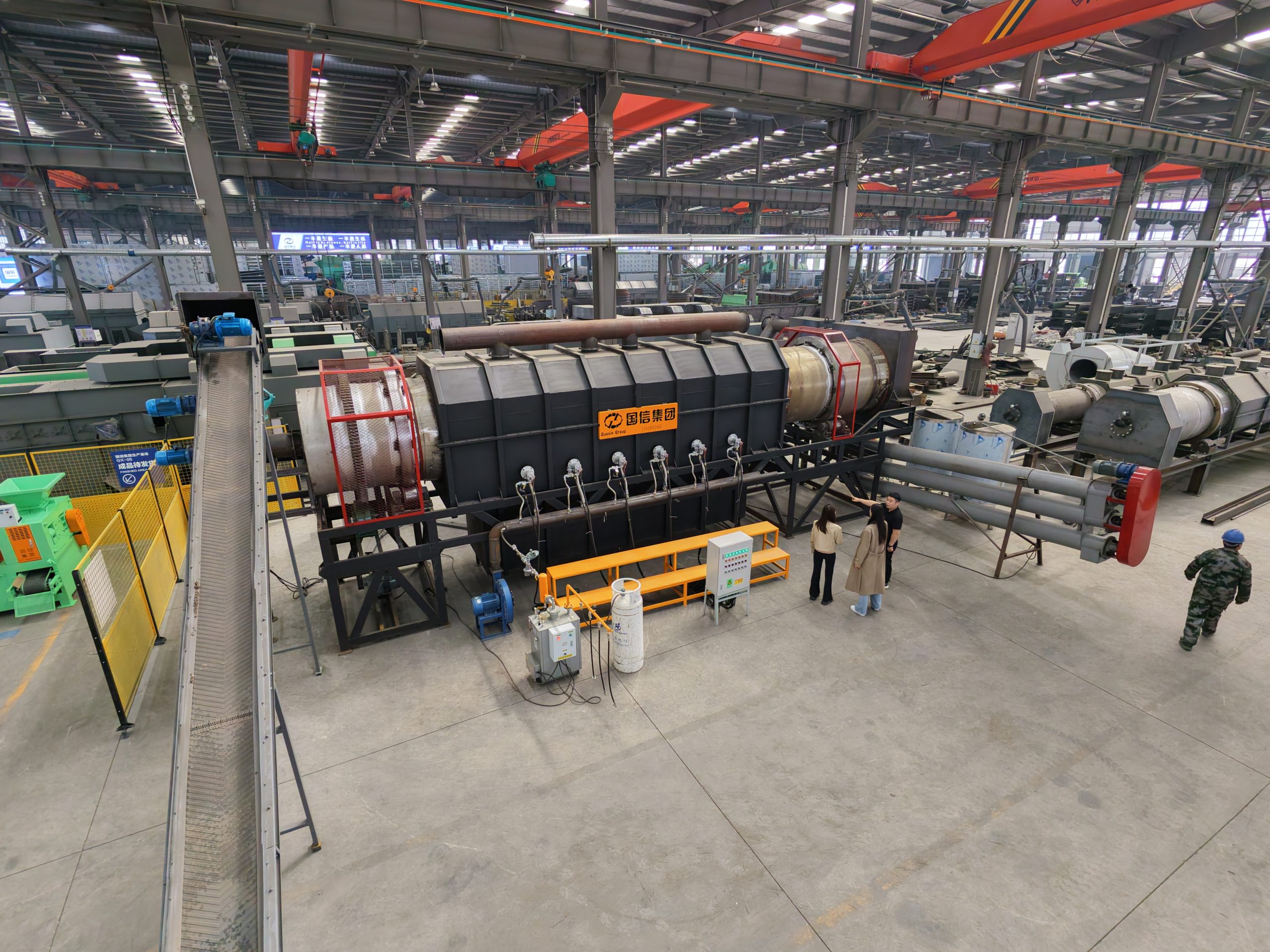
Raw biomass is processed in a Continuous Rotary Furnace. This oxygen-free environment ensures the complete removal of wood tars and impurities that cause smoke or chemical odors. The resulting high-fixed-carbon base is essential for a clean burn.
Charcoal is ground to an ultra-fine 200-300 mesh powder. This micro-scale fineness is critical; it allows for the homogeneous distribution of food-grade accelerants and binders. We utilize vacuum-assisted mixing to eliminate internal air pockets, which prevents the charcoal from poppin or sparking when lit.
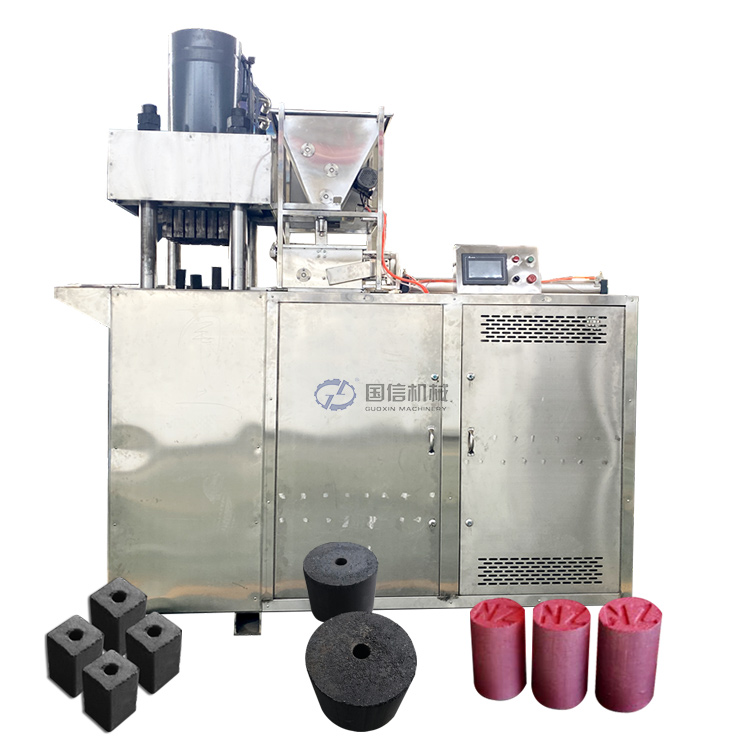
Force: 100 – 200 Tons of constant hydraulic pressure.
Stability: High density ensures the tablets do not crumble during international shipping.
Versatility: Interchangeable molds for 33mm/40mm round tablets or 25mm cubes.
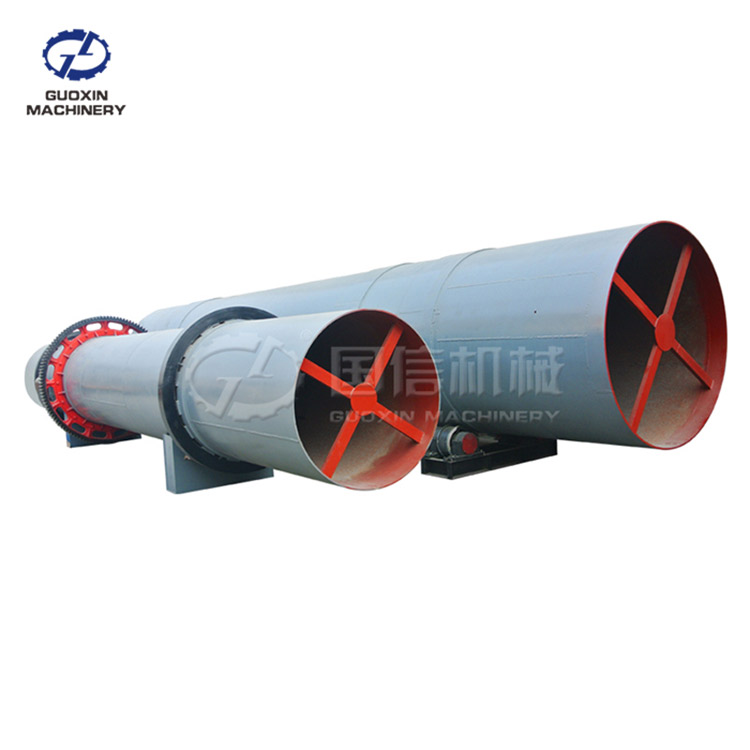
Moisture is reduced to < 3/%. This stage utilizes a precision-controlled rotary drum dryer or mesh belt dryer to ensure the charcoal is dry-to-the-core, which is vital for the 5-second ignition guarantee.
| Parameter | Industrial Specification / Requirement |
| Output Capacity | 500 kg/h – 10.0 TPH (Tons Per Hour) |
| Operating Temperature | 450 – 650°C (Carbonization) / 60 – 80°C (Drying) |
| Installed Power | 150 kW – 450 kW (Depending on automation) |
| Factory Area | 1,200 m² – 3,500 m² |
| Safety Systems | Gas purification + Spark detection + Temperature HMI |
Inquire for a Detailed Project Feasibility Study
Schedule a Technical Consultation: Optimize Your Ignition Formula
Q1: How do you ensure the quick-light additives are safe for food and Shisha?
A: We utilize high-purity, organic oxygen-donors and food-grade starch binders. These additives are designed to burn off rapidly within the first 60 seconds of ignition, leaving only the pure, odorless carbon to provide heat for the remainder of the burn.
Q2: What prevents the tablets from self-igniting during the drying or storage phase?
A: This is a critical safety concern. Our drying systems use multi-stage sensors to maintain temperatures well below the auto-ignition threshold of the infused chemicals. Additionally, our vacuum-mixing technology ensures the accelerant is stable within the carbon matrix.
Q3: Can I use rice husks or straw for quick-light charcoal?
A: Yes, but agricultural waste requires a specific grinding and mixing ratio to compensate for higher ash content compared to wood. We offer custom-designed pulverizers and specialized binder formulas for these materials to ensure they still meet the Match-Light standard.
Q4: What is the typical lifespan of the hydraulic press molds?
A: We use SUS304 or hardened alloy steel for all contact parts. Under standard 2-shift daily operation, molds typically last 2,000 – 3,500 tons before requiring maintenance or replacement.
