

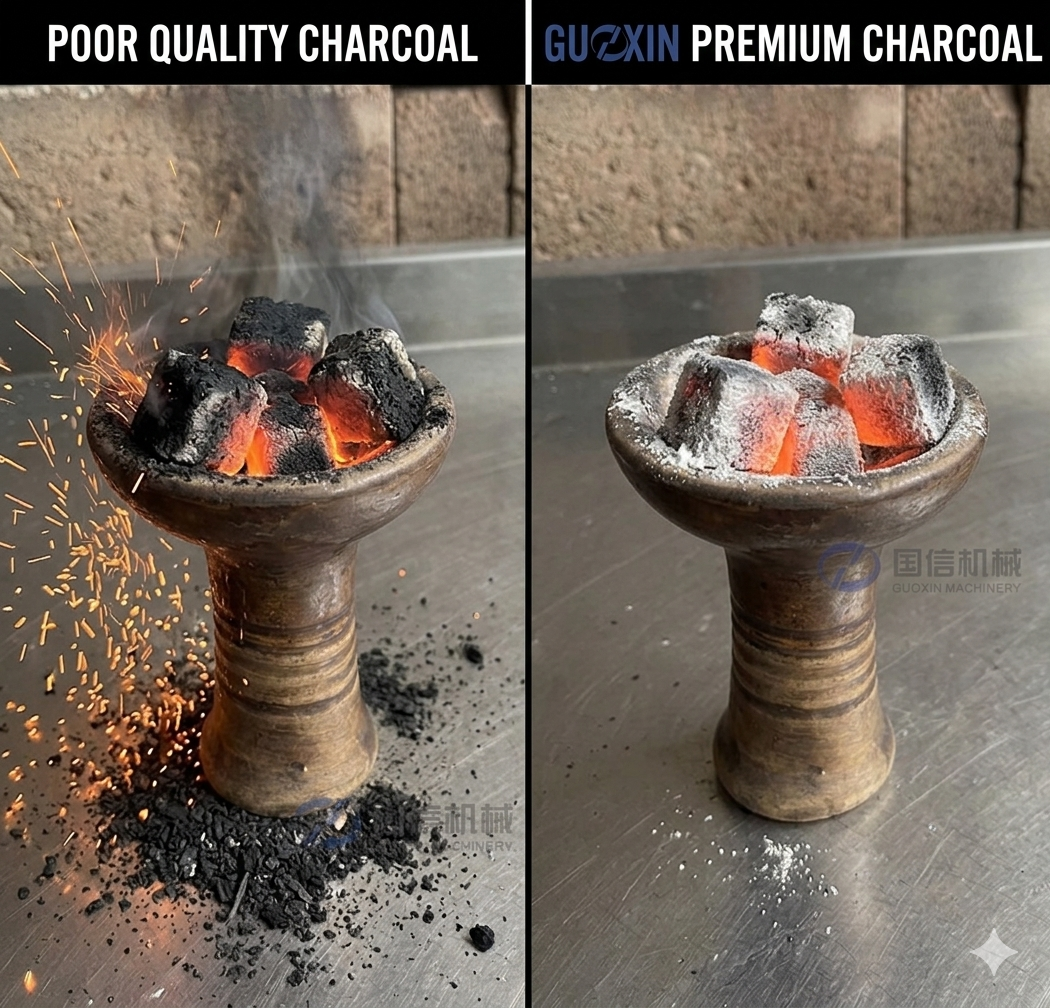
In the premium hookah market, the commercial viability of a production facility depends on achieving three critical chemical benchmarks: crystal-white ash, odorless combustion, and a 90–120-minute burn duration.
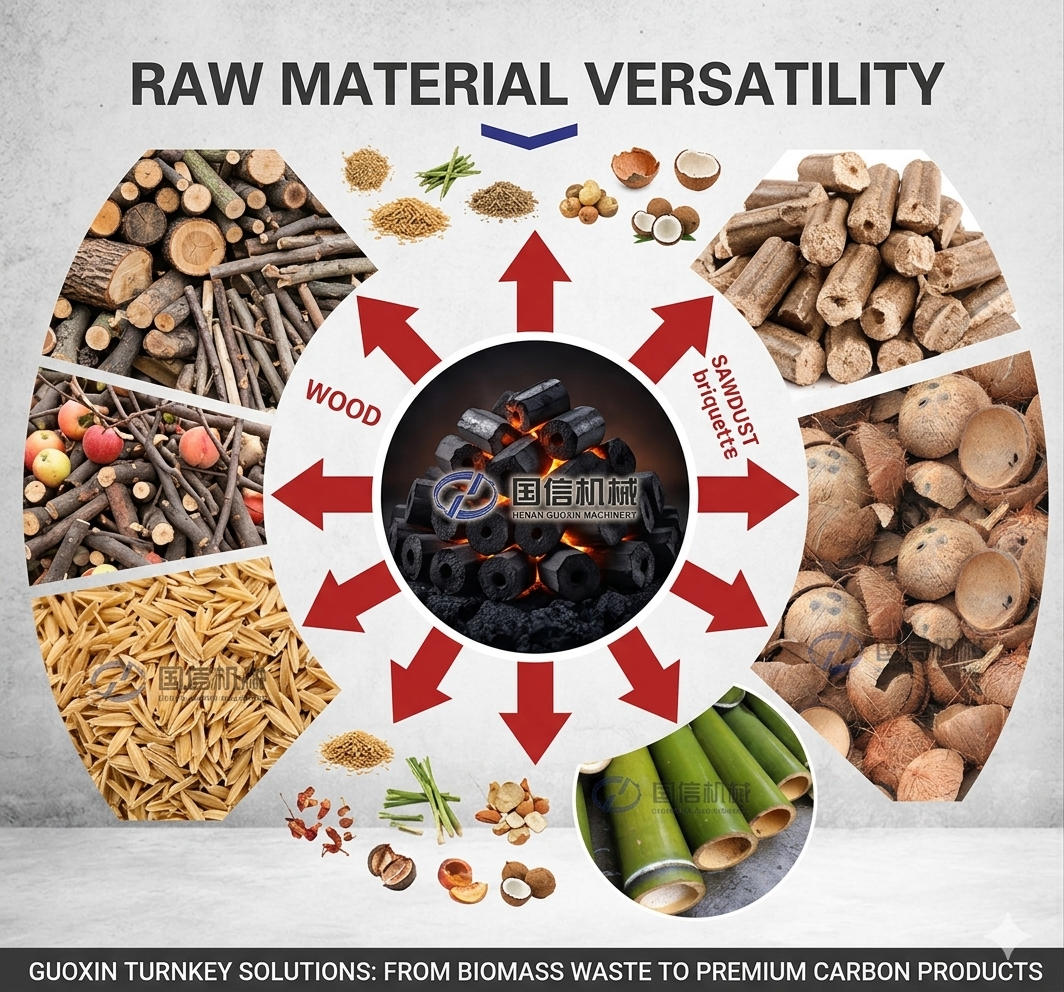
We provide integrated, industrial-scale solutions that transform raw coconut shells and fruitwood into high-density charcoal cubes and tablets.
Our engineering focus is on maximizing the Fixed Carbon (FC) recovery while ensuring the final product meets the rigorous standards of the Middle Eastern and European shisha markets.
For investors, the ROI of a shisha charcoal plant is driven by the significant price gap between raw biomass waste and the finished energy commodity.
| Metric | Raw Coconut Shell | Carbonized Shisha Charcoal |
| Fixed Carbon Content | ~18% – 24% | > 85/% |
| Caloric Value (LHV) | 3,800 – 4,200 kcal/kg | 7,200 – 7,800 kcal/kg |
| Volatile Matter | 70% – 75% | < 12\% (Odorless threshold) |
| Ash Content | ~2% | < 3/% (White/Silver Ash) |
When estimating the total hookah/shisha manufacturing plant cost, the final capital expenditure (CapEx) depends on three core technical factors: your target hourly tonnage, the automation level of the logistics conveyors, and the configuration of the core sheesha processing machine.
To help global investors draft their initial financial budget, a turnkey production facility investment is generally categorized into three strategic tiers:
Pilot Commercial Tier (500–800 kg/h): Optimized for localized waste-to-wealth projects. This layout features a single continuous carbonization retort and a standard automated shisha processing machine press matrix.
Industrial Export Tier (1–3 Tons/h): Engineered for suppliers targeting the premium Middle Eastern and European markets. This configuration includes full syngas recycling loops, heavy-duty stainless steel hydraulic molding, and an automated mesh-belt multi-tier drying system.
Mega Turnkey Plant (3 Tons/h to 10 TPH): Fully customized, plant-wide automated EPC installations featuring multi-furnace clusters, integrated packaging lines, and centralized PLC control rooms.
For a tailored, itemized machinery price list and customized layout quotation based on your raw feedstock test results, please contact our engineering desk directly.
Our integrated production sequence utilizes a closed-loop system to eliminate odors and structural defects.
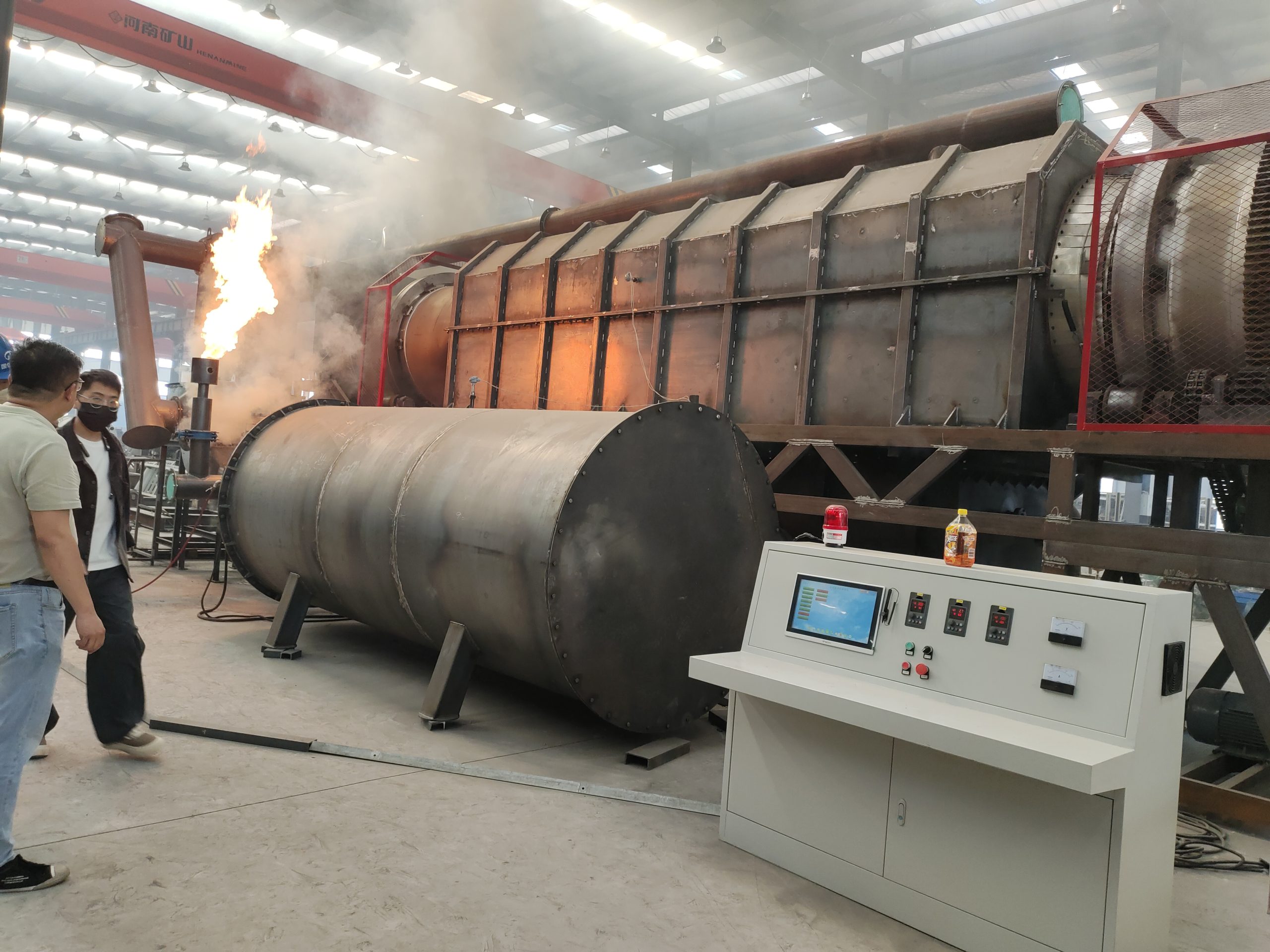
Raw shells are processed in a Continuous Rotary Pyrolysis Kiln. Precision thermal control ensures the full expulsion of volatile organic compounds (VOCs)—the primary cause of “charcoal smell”—while preventing the over-burning that results in gray or brown ash.
Carbonized material is ground into a micro-powder. Achieving a 200-300 mesh consistency is essential for a smooth surface finish and the high packing density required for long burn times.
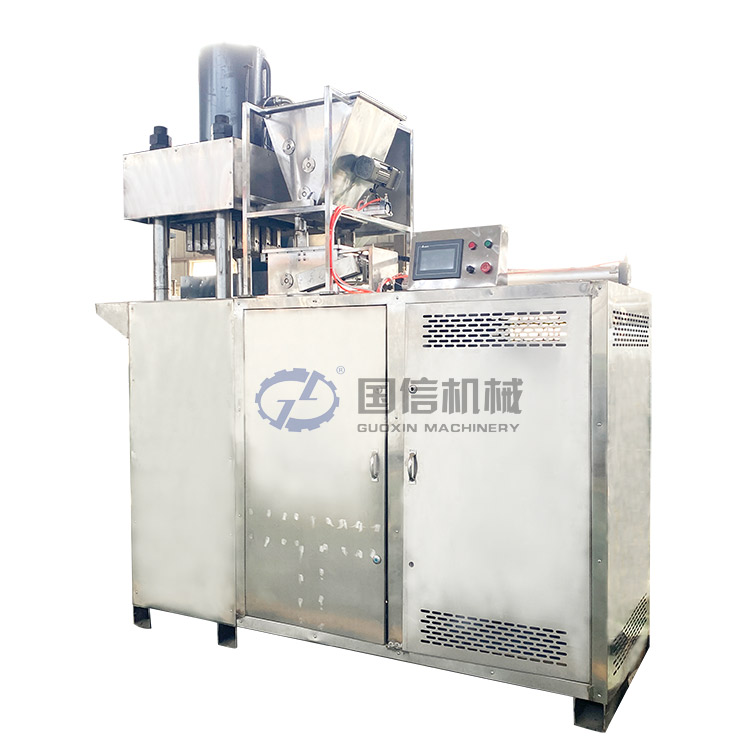
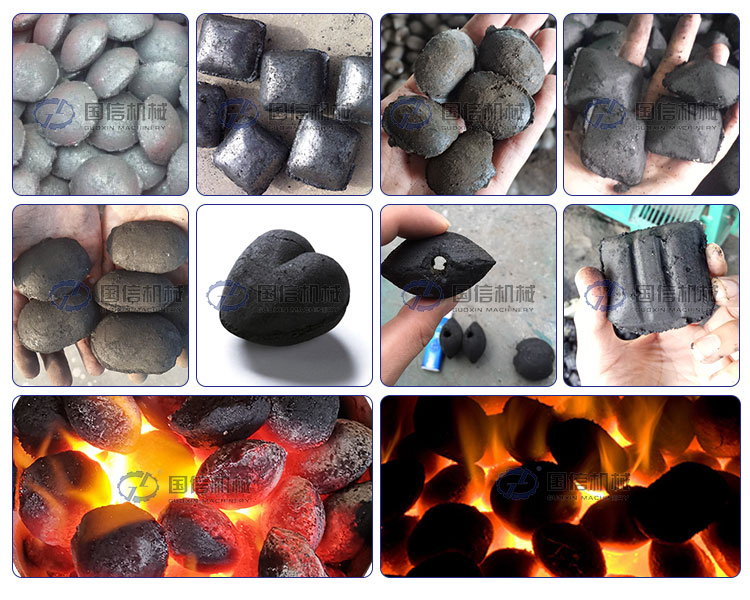
Briquettes are dried to a final moisture content of < 5/%. Controlled drying prevents internal micro-cracks, ensuring the charcoal remains intact during rapid ignition.
| Parameter | Industrial Requirement |
| Output Capacity | 500 kg/h – 10 TPH (Tons Per Hour) |
| Installed Power | 120 kW – 350 kW (Scale-dependent) |
| Factory Footprint | 1,500 m² – 3,000 m² |
| Energy Recovery | Syngas purification & recycling system (30% fuel savings) |
Guoxin Machinery provides comprehensive technical support for global investors:
Request a Professional Factory ROI Analysis
Schedule a Material Lab Test: Send Your Shell Samples to Our Engineering Team
Q1: How do you achieve Zero Smoke and Zero Odor in shisha charcoal?
A: The smel in charcoal is caused by residual volatiles. By utilizing a continuous rotary furnace at450-600℃, we ensure nearly 100/% removal of these impurities. Combined with our natural, food-grade binder formulas, the resulting charcoal provides a pure smoking experience.
Q2: Why is 200 tons of hydraulic pressure necessary for shisha cubes?
A: Coconut shell powder is dense and difficult to bind. High pressure (100–200 tons) is required to eliminate air pockets, which directly results in a longer burn time ($1.5 – 2$ hours) and prevents the charcoal from sparking or shattering when heated.
Q3: Can one production line switch between different tablet sizes?
A: Yes. Our stainless steel hydraulic presses are designed with quick-change mold technology. Operators can switch between 25mm cubes and 33mm rounds in approximately 30–45 minutes.
Q4: What is the benefit of the Syngas Recycling System?
A: During carbonization, the biomass releases combustible gases. We purify this syngas and redirect it back to the burners, reducing external fuel consumption by up to 60/%.
Related Pages
