

Project Date: January 5, 2026
Location: Industrial Site, Türkiye
Equipment Focus: Integrated Pyrolysis Retort & High-Pressure Charcoal Screw Extruder
A prominent fuel producer in Türkiye required a turnkey solution to convert local timber residues into high-density hexagonal charcoal sticks for the premium BBQ market. The project necessitated a seamless transition from raw wood carbonization to the final extrusion of uniform, export-grade charcoal logs.
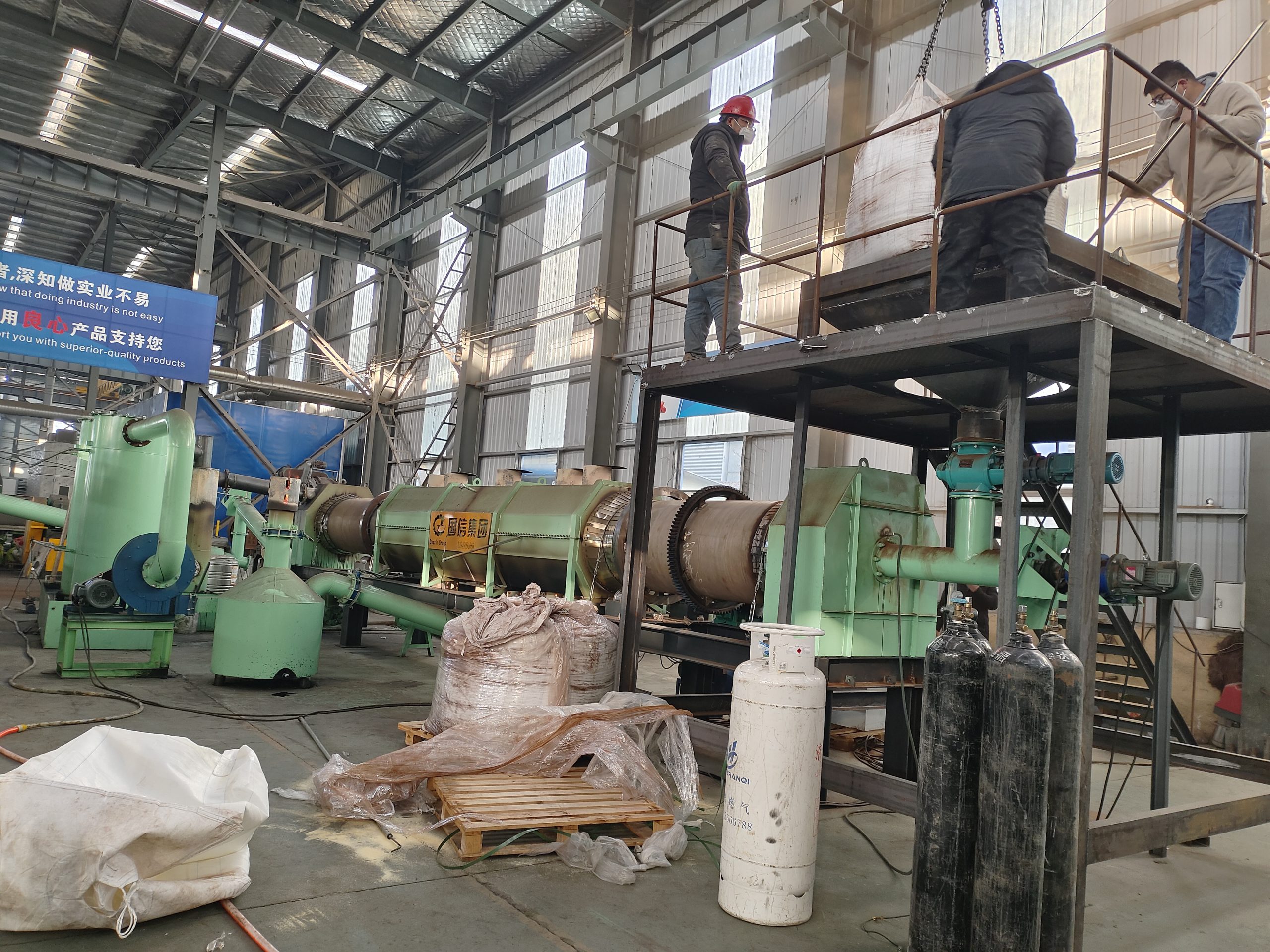
Industrial Continuous Vertical Carbonization Furnace
The process begins with the thermal decomposition of raw timber in our [Continuous Carbonization Furnace]. By maintaining a strictly controlled oxygen-free environment, the system maximizes fixed carbon content while minimizing ash.
Energy Efficiency: The system captures the volatiles (syngas) released during pyrolysis. This gas is purified and redirected to the burners, making the carbonization process nearly energy self-sufficient once the target temperature is reached.
To ensure the high-pressure extruder operates without blockages, the carbonized material undergoes two critical stages:
Refining: A pulverizer grinds the charcoal into a fine powder (typically <3mm).
Double-Shaft Mixing: The powder is blended with an eco-friendly binder and water. The double-shaft mechanism ensures the moisture and binder are distributed with absolute uniformity—a prerequisite for producing crack-free charcoal sticks.
The core of the line is the [Charcoal Briquette Extruder].
The Mechanism: A high-torque screw conveyor forces the charcoal mix through a specialized alloy mold.
The Output: The machine produces high-density hexagonal sticks with a central hole to improve airflow during combustion. The physical pressure applied during extrusion results in a “stony” hardness, ensuring a burn time of 4–6 hours.
Freshly extruded sticks contain residual moisture that must be removed for structural stability. The briquettes pass through a multi-layer [Mesh Belt Dryer], which utilizes a low-temperature, high-volume airflow system to reduce moisture to $\le$5%.
| Parameter | Performance Level |
| Hourly Output | 2,000 — 3,000 kg (Finished product) |
| Briquette Density | 1.2 — 1.4 g/cm³ |
| Fixed Carbon | 80% — 88% (Depending on feedstock) |
| Burn Stability | Smokeless, odorless, and spark-free |
The Turkish market demands charcoal that can withstand long-distance transport without crumbling. Our screw extrusion technology, combined with a precise binder ratio, ensures the hexagonal edges remain sharp and the structure remains intact, meeting the rigorous standards of European and Middle Eastern catering distributors.
Q1: Can this line produce different shapes of charcoal?
A: Yes. By replacing the extrusion mold, the line can produce square, hexagonal, or cylindrical charcoal sticks of varying diameters.
Q2: What is the maintenance cycle for the extruder screw?
A: The screw is coated with a high-wear-resistant alloy. Depending on the abrasive nature of the charcoal powder, the welding or replacement cycle typically occurs after 1,000—1,500 tons of production.
Q3: Is a dedicated operator required for each stage?
A: The line is highly automated. A standard 2-3 TPH facility can be operated by 3-4 technicians per shift, covering feeding, monitoring, and packaging.
[Consult with our Engineers for a Customized Plant Layout & ROI Quote]
