

On October 11, 2026, an Indian customer visited the workshop of Henan Guoxin Machinery Manufacturing Co., Ltd. for a free material trial of our continuous coconut shell carbonization furnace.
The trial focused on processing coconut shell feedstock under actual workshop conditions. It gave the customer an opportunity to observe the material feeding system, rotary carbonization equipment, operating controls, and final charcoal discharge before making further equipment and process decisions.
For biomass processors looking to convert coconut shells into charcoal, testing the actual feedstock is an important step in evaluating equipment suitability and planning a reliable production line.
Coconut shells are a biomass feedstock that can be processed into charcoal through controlled carbonization. However, practical operating conditions depend on the characteristics of the raw material and the requirements of the intended final product.
For this customer from India, the workshop trial provided a practical opportunity to see how coconut shell material moved through the carbonization system and to inspect the resulting carbonized product.
The main objectives were to observe the feeding process, understand the equipment’s operating configuration, inspect the discharge process, and provide a practical basis for discussing the customer’s future production requirements.
Testing the customer’s own raw material also helps identify the operating parameters and equipment configuration that need to be considered during subsequent project planning.
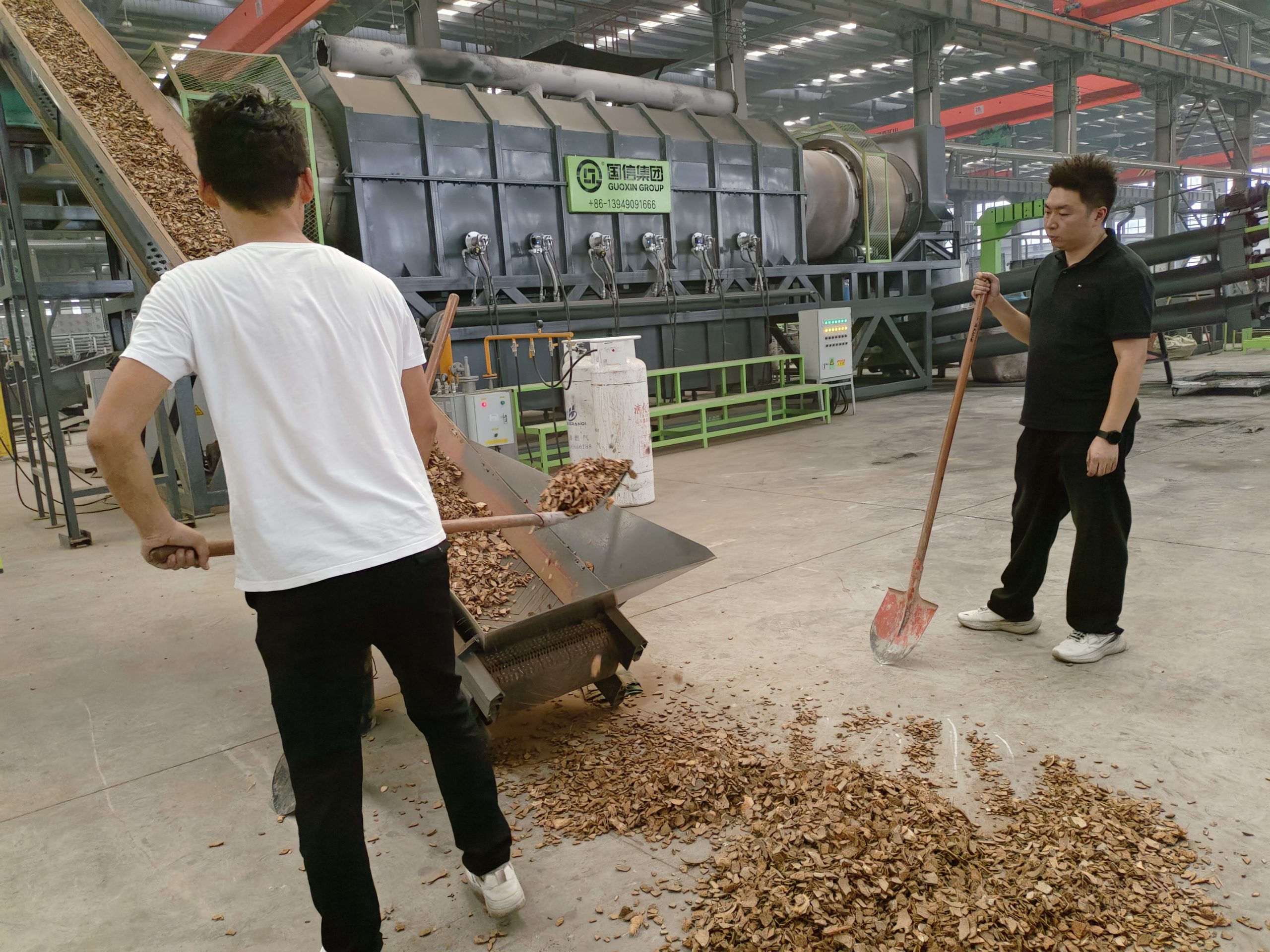
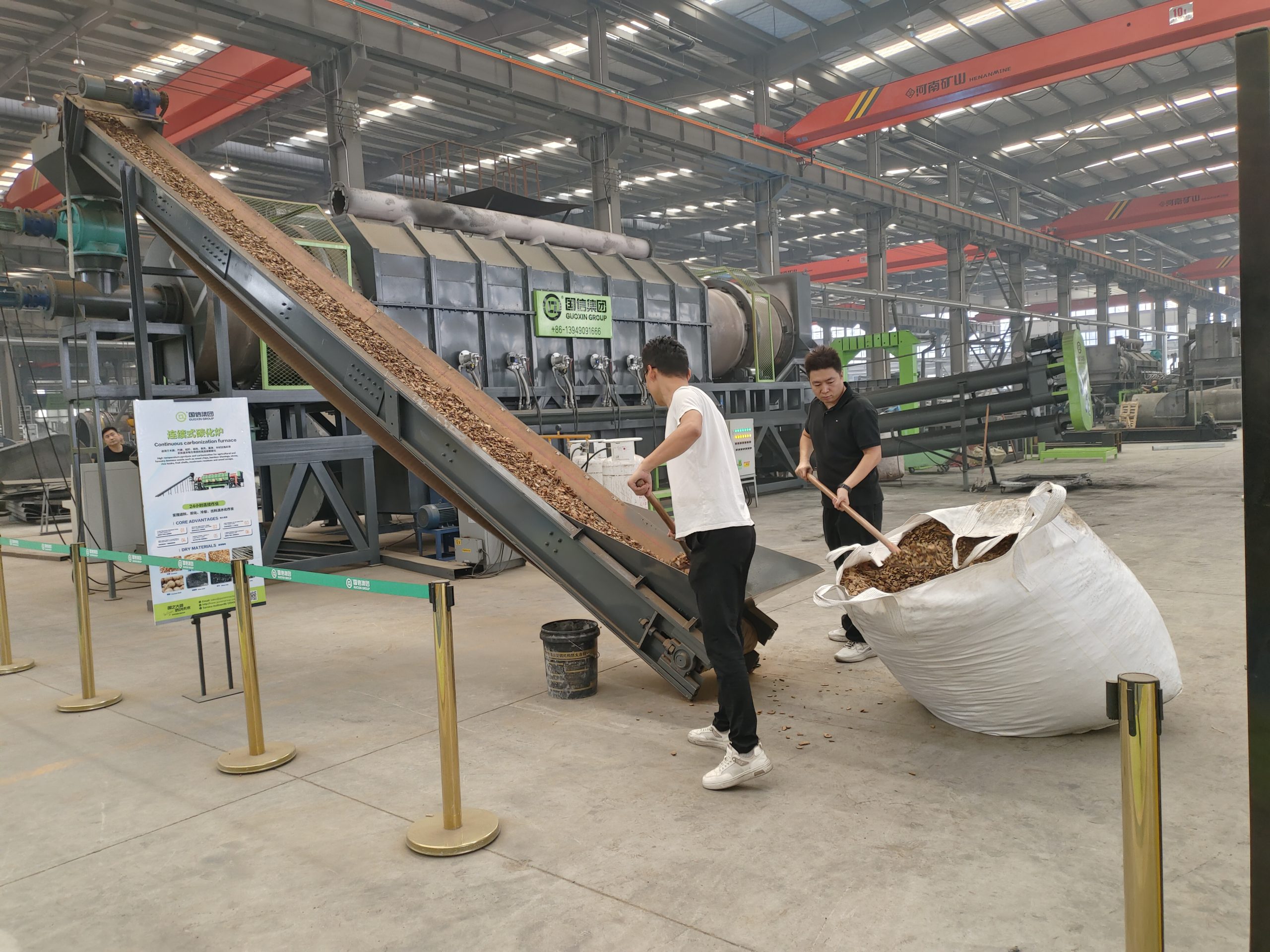
The trial footage shows coconut shell pieces being conveyed toward the processing system.
Consistent material feeding is an important consideration in continuous carbonization. Feedstock size, moisture content, and feeding conditions can affect material movement and the overall stability of the process.
Testing the actual coconut shell material allows the equipment supplier and customer to assess these factors under practical operating conditions.
After feeding, the material enters the rotary carbonization equipment for thermal processing.
The continuous configuration is designed around ongoing material movement through the processing system, rather than relying solely on separate batch-by-batch loading and unloading.
For commercial applications, the appropriate operating temperature, material residence time, feed rate, and heating arrangement must be established according to the feedstock characteristics, equipment design, and required charcoal specifications.
During the workshop trial, the customer could directly observe the rotary furnace and its operating arrangement.
The video also shows the operator working at the equipment’s control cabinet while the carbonization system is running.
Observing the control interface and equipment configuration helps customers understand how the system is operated and how its principal components are arranged.
For a future production project, the final configuration should be determined by the required processing capacity, site conditions, heating method, gas treatment requirements, and level of automation.
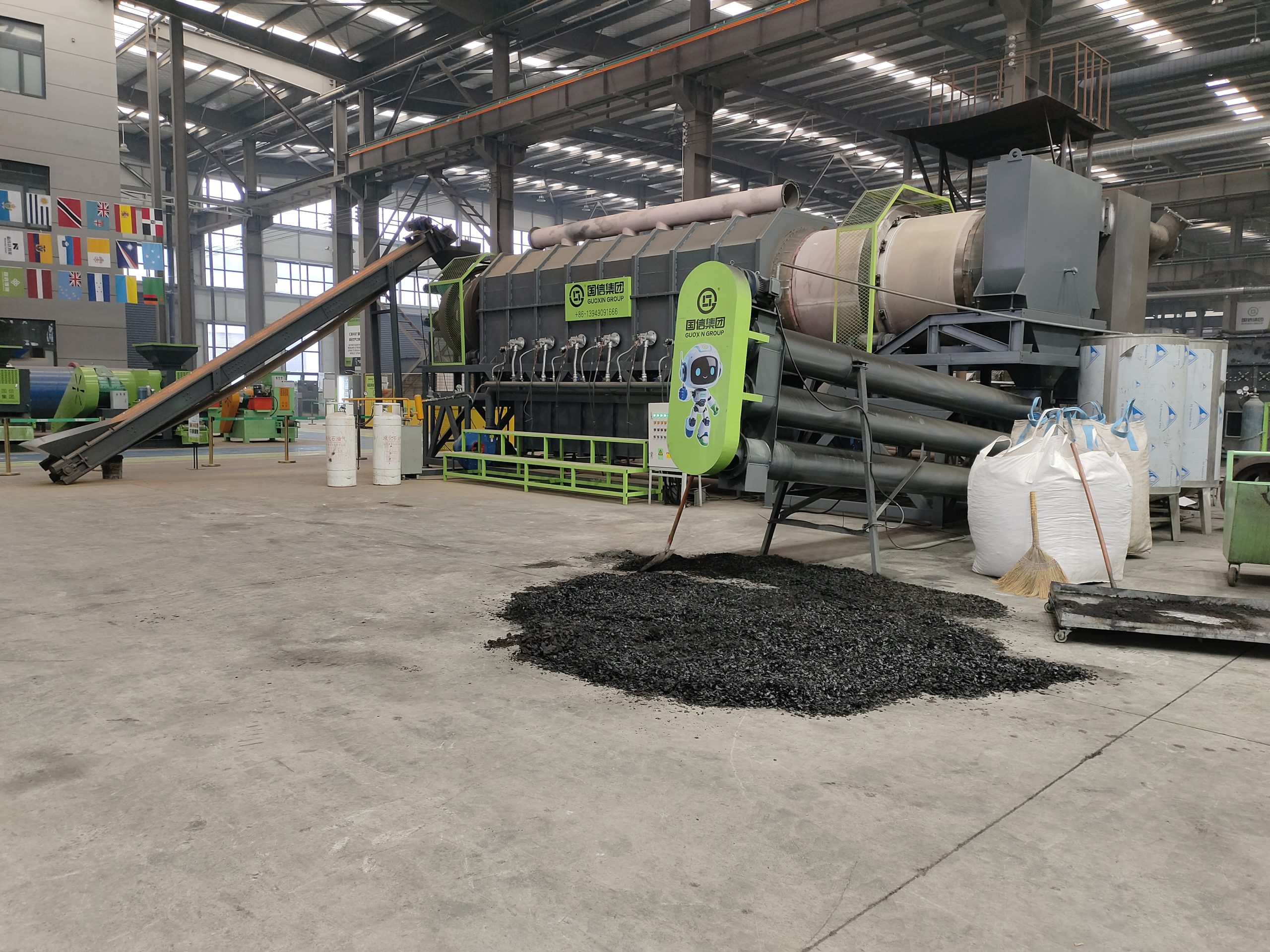
The final part of the footage shows dark carbonized material being discharged from the equipment into the collection area.
This provides a direct visual reference for the material output from the coconut shell carbonization trial.
For a complete technical evaluation, visual inspection should be combined with relevant test records and, where required, laboratory analysis. Parameters such as charcoal yield, fixed carbon content, residual moisture, and product temperature should be assessed using measured data rather than appearance alone.
These observations provide the customer with a more practical understanding of the equipment than a product brochure alone.
The trial also creates an opportunity for further technical discussion about raw material preparation, target processing capacity, product specifications, and the requirements of the customer’s intended production site.
Actual production capacity, carbonization yield, energy consumption, and final product quality should be confirmed against the corresponding test data and agreed technical specifications.
Raw materials can differ significantly in particle size, moisture content, density, and other physical characteristics. These differences can influence material feeding, heat transfer, processing time, and the properties of the resulting charcoal.
A material trial helps customers and equipment manufacturers evaluate several important considerations.
Feedstock compatibility: Testing the intended material helps assess whether the feeding arrangement and processing configuration are suitable for the application.
Process evaluation: Direct observation provides a clearer understanding of how the equipment handles the material during operation.
Product inspection: The discharged material can be collected for visual inspection and additional testing against the customer’s product requirements.
Project planning: Trial observations help inform discussions about equipment sizing, auxiliary systems, operating parameters, and the overall production line layout.
A workshop trial does not replace a full industrial performance assessment, but it provides a useful practical reference when selecting carbonization equipment.
For customers planning to process coconut shells on a commercial scale, equipment selection should be based on more than the carbonization furnace alone.
A suitable system configuration may need to account for raw material storage and feeding, moisture and particle-size conditions, continuous carbonization, combustible gas handling, product cooling, charcoal collection, and emission-control requirements.
The appropriate configuration depends on the project’s target capacity, feedstock properties, local environmental requirements, available energy sources, and final product specifications.
Before preparing a detailed technical proposal, Henan Guoxin Machinery can work with the customer to clarify these requirements and determine which operating parameters need to be verified through material testing.
Planning a coconut shell charcoal production project?
Contact our team-Eve@guoxinmachinery.com to discuss your raw material, target capacity, charcoal specifications, and carbonization equipment requirements. We can evaluate the application and help identify a suitable equipment configuration for your project.
