

Trial Date: September 28, 2026
Testing Site: Guoxin Heavy Machinery Assembly Workshop
Equipment Tested: Horizontal Biochar Carbonization Furnace
Raw Material: Raw wood sticks, tree branches, and timber offcuts
On September 28, 2026, our engineering team conducted a comprehensive performance trial on the Horizontal Carbonization Furnace at our main manufacturing workshop. The primary objective was to evaluate the thermal efficiency, air-sealing performance, and final charcoal density when processing raw wood sticks and thick tree branches under simulated field conditions.
This case study documents the complete carbonization lifecycle—from material loading and auxiliary ignition to cooling and final charcoal quality assessment.
| Parameter | Operational Detail |
| Equipment Model | Horizontal Biochar Carbonization Furnace Series |
| Input Material | Mixed hardwood/softwood sticks (Diameter: 3–10 cm) |
| Moisture Content | Approx. 15% – 20% |
| Heating Method | Initial LPG burner ignition + Self-sustaining gas recycling |
| Furnace Seal Type | High-temperature gasket insulated door with mechanical locks |
| Trial Outcome | 100% complete carbonization; zero over-ashing |
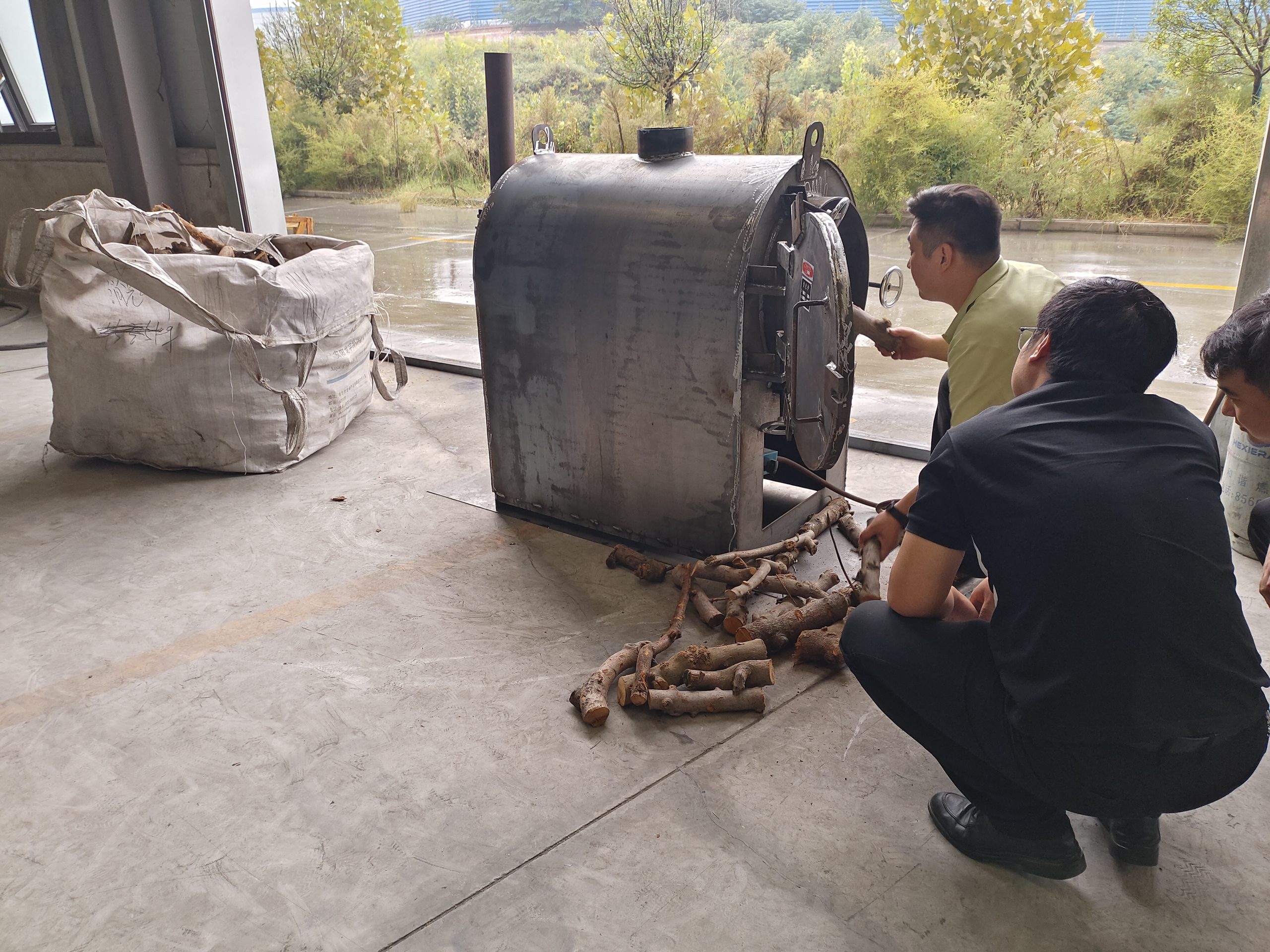
1. Raw Material Stacking & Chamber Sealing
The wood sticks and branches were manually stacked into the horizontal furnace chamber. The horizontal barrel design allows straight timber and long branches to be loaded directly without complex pre-shredding, significantly reducing labor and preparation costs. Once full, the heavy-duty insulated door was sealed using multi-point mechanical clamps to ensure an absolute anaerobic (oxygen-restricted) environment.
2. Ignition & Pyrolysis Control
An external Liquefied Petroleum Gas (LPG) system was connected to the burner port below the furnace. The heat rapidly elevated the internal temperature past 300°C, initiating thermal decomposition (pyrolysis). As combustible syngas began generating from the heating wood, the gas recycling system routed the gas back into the combustion zone, enabling self-sustaining carbonization while minimizing external fuel consumption.
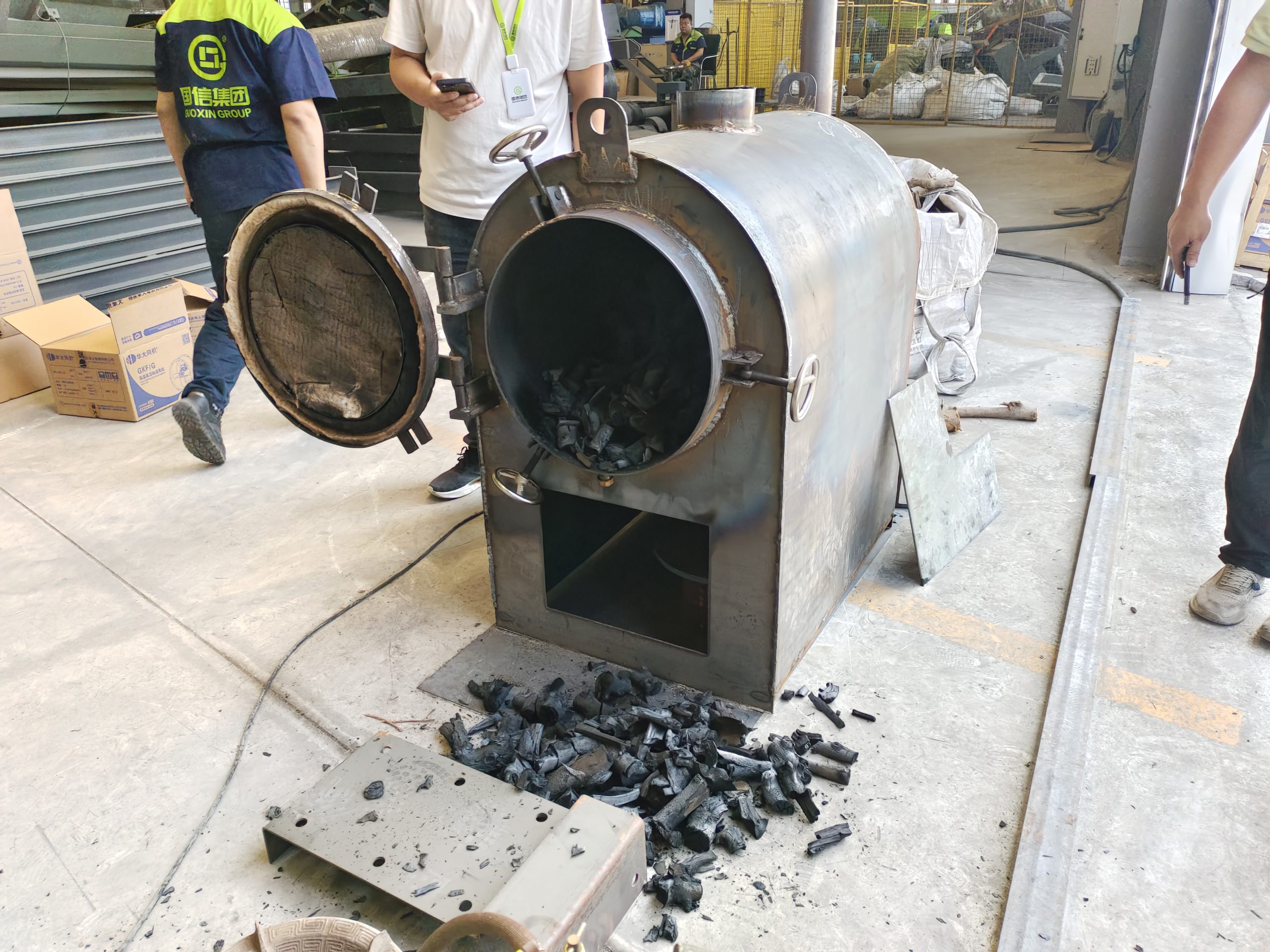
3. Cooling & Unloading Inspection
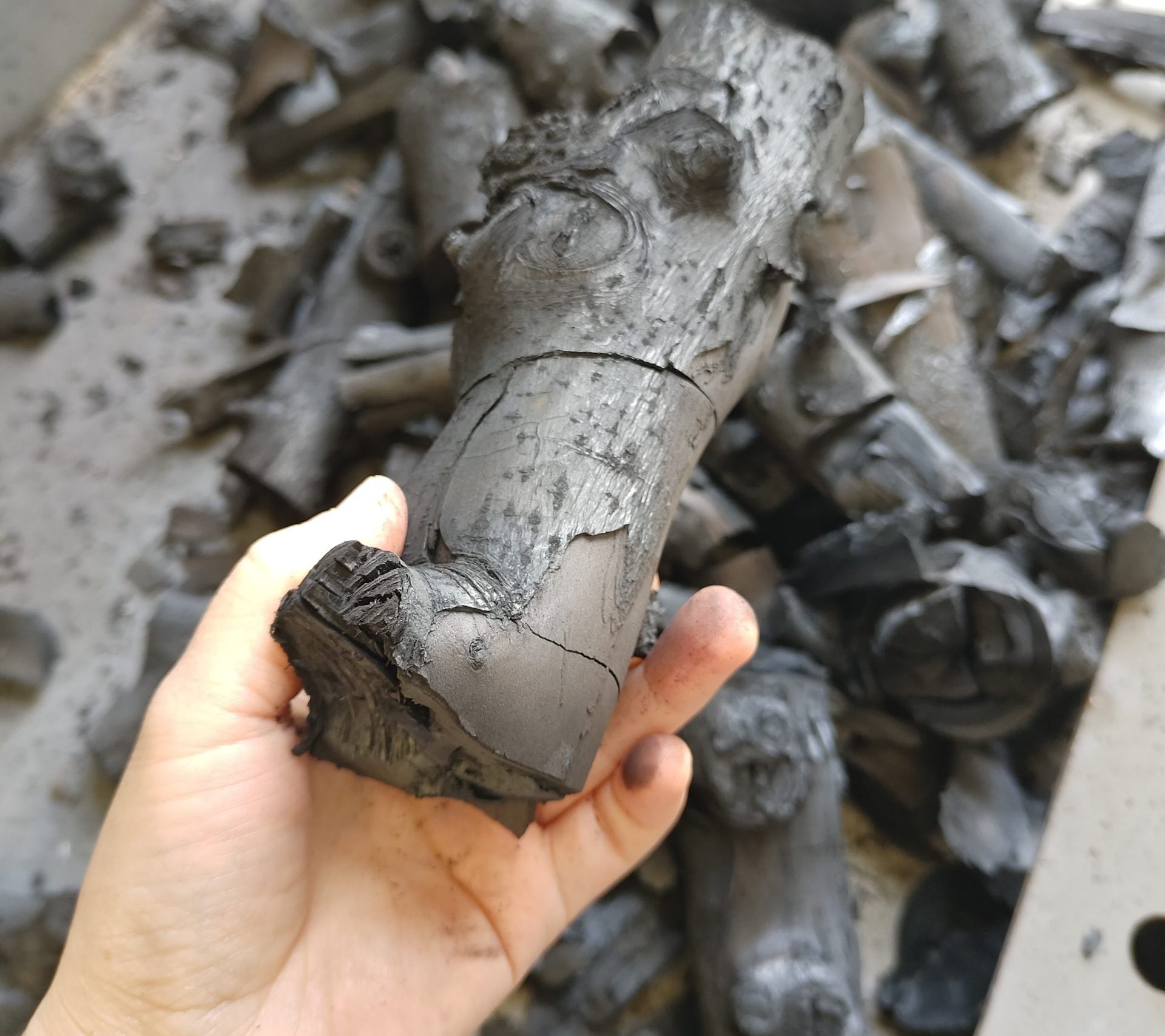
After completing the high-temperature holding phase, the heating was stopped and the furnace cooled down safely. Upon opening the door, the team verified that all wood sticks were fully converted into solid, high-purity charcoal without structural ash collapse or unburnt timber cores.
No Pre-Crushing Required: Handles long branches, raw logs, and bamboo directly, saving equipment investment on wood chippers.
Energy-Efficient Syngas Recycling: Reuses self-generated pyrolysis gas to fuel the heating process, cutting gas/fuel costs by up to 60%.
Flexible Capacity & Modular Design: Can be configured as single units or multi-furnace batteries to meet growing production needs.
Q: What is the average carbonization cycle time for wood sticks?
A: Depending on moisture content and stick diameter, a typical batch takes between 6 to 8 hours for heating and carbonization, followed by a controlled cooling period.
Q: Can this furnace process biomass other than wood sticks?
A: Yes. The horizontal carbonization furnace effectively processes coconut shells, bamboo poles, wood briquettes, palm kernel shells, and thick agricultural waste.
Get custom plant layouts, ROI estimates, and factory-direct pricing for our Horizontal Carbonization Furnaces.
Request a Custom Quote Today or contact our engineers at Eve@guoxinmachinery.com
