

Location: Guoxin Machinery Heavy Industrial Workshop
Testing Objective: To verify the processing efficiency, structural stability, and output quality of the continuous rotary drum carbonization kiln when handling high-fiber agricultural biomass (bamboo processing residues).
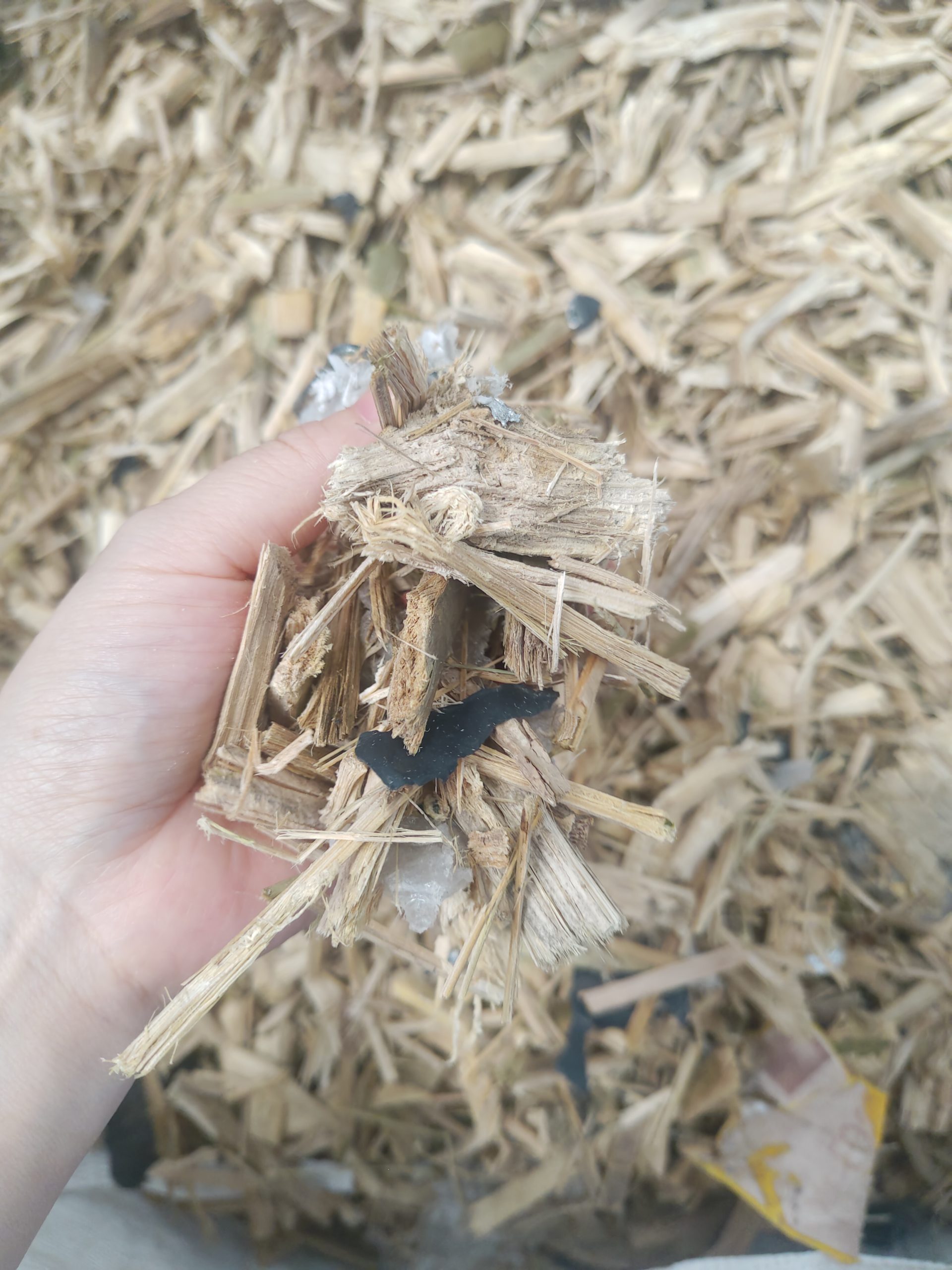
The test run utilized raw, crushed bamboo residues generated from local wood processing facilities. Bamboo is notorious for its rigid vascular bundle fibers and high moisture retention capabilities, making standard batch carbonization highly inefficient.
The input material consists of fibrous, irregularly split bamboo chips and shreds. The average moisture profile at intake was calibrated at approximately 15% to 18%, which falls perfectly within our standard single-drum feeding matrix without requiring extensive thermal pre-drying cycles.
During the active continuous pyrolysis testing phase, the system variables were logged via our master PLC panel to evaluate energy balances and structural heat retention. The steady-state processing parameters are compiled below:
| Pyrolysis Parameter Node | Target Setting | Actual Logged Matrix | Machine Response State |
| Pre-Heating Chamber Temp | 280°C – 320°C | 310°C | Stable Combustion |
| Core Carbonization Zone | 450°C – 550°C | 520°C | Complete Devolatilization |
| Rotary Drum Linear Speed | 1.5 – 3.0 r/min | 2.2 r/min | Uniform Retort Bed Moving |
| Syngas Recovery Ignition | Automated Draft | 100% Ignition | Zero External Fuel Consumption |
| Hourly Output Throughput | 800 – 1,200 kg/h | 950 kg/h | Continuous Continuous Cycle |
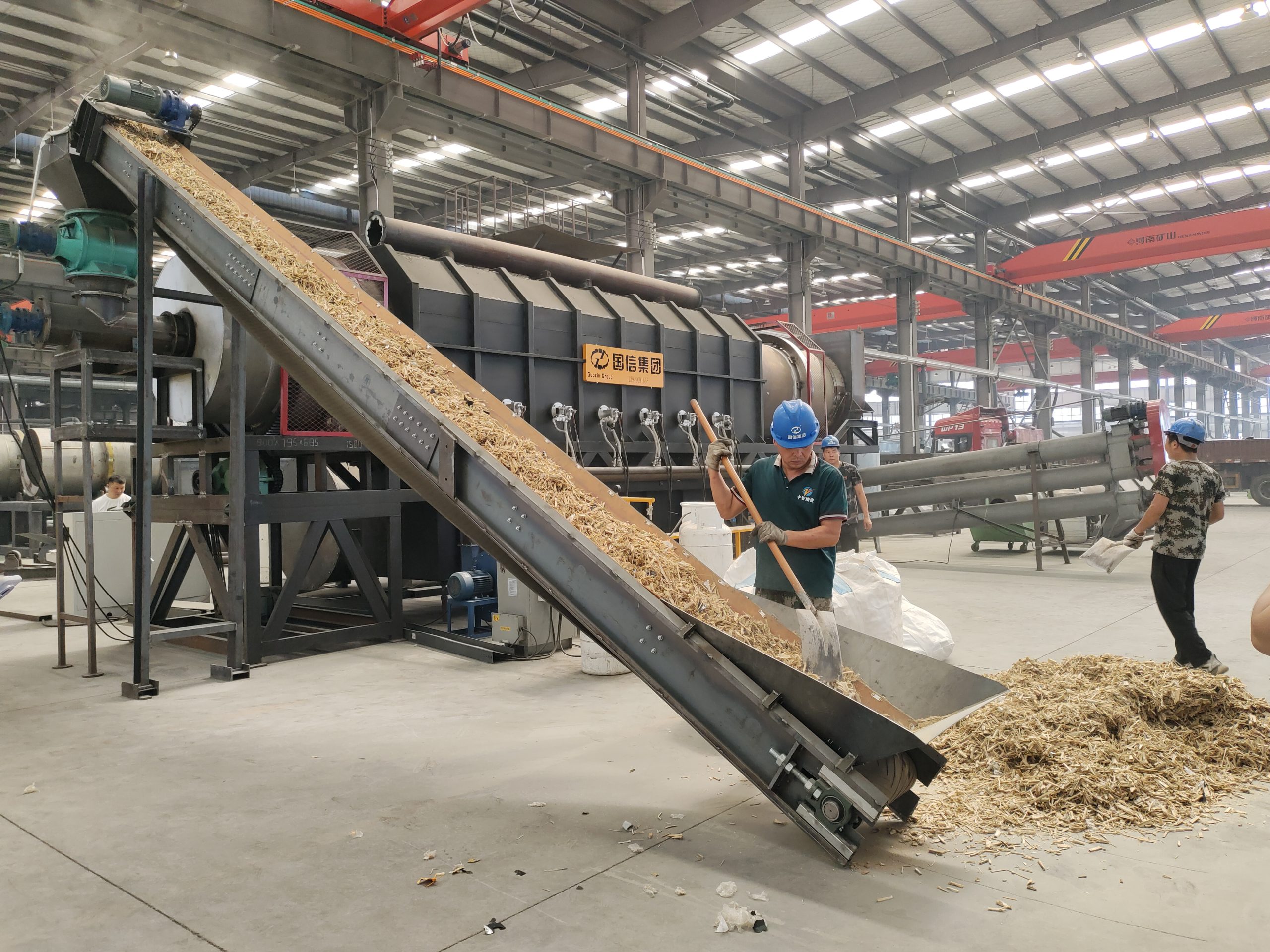
The raw bamboo fiber mass was managed via a heavy-duty mechanical logistics configuration to sustain structural negative pressure within the main drum retort.
Plant operators managed the continuous intake flow using an inclined, sealed cleated belt conveyor. The material is raised directly into the rotary airlock valve at the kiln head, preventing oxygen entry and securing high-efficiency anaerobic pyrolysis conditions.
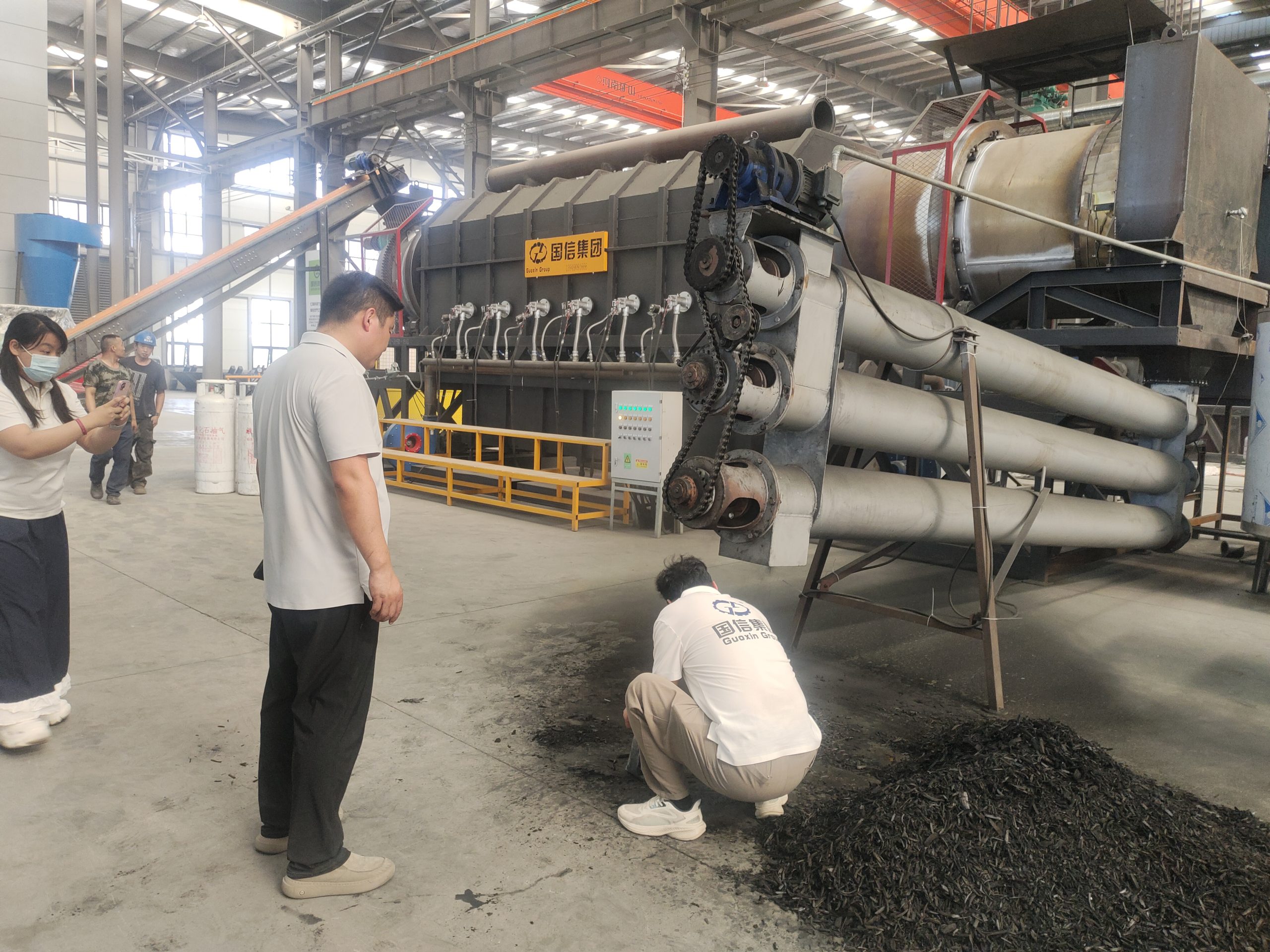
Once inside the high-temperature horizontal rotating matrix, the bamboo chips undergo flash volatalization, separating combustible syngas from the fixed carbon bones. The syngas is routed through dust collectors and fed back to the bottom burners as fuel.
The high-temperature bamboo charcoal exits the primary chamber and flows through a multi-tier water-cooled jacketed screw conveyor network. This system drops the biochar temperature down to below 45°C before atmospheric discharge, eliminating the danger of spontaneous ignition and ensuring immediate packing safety.
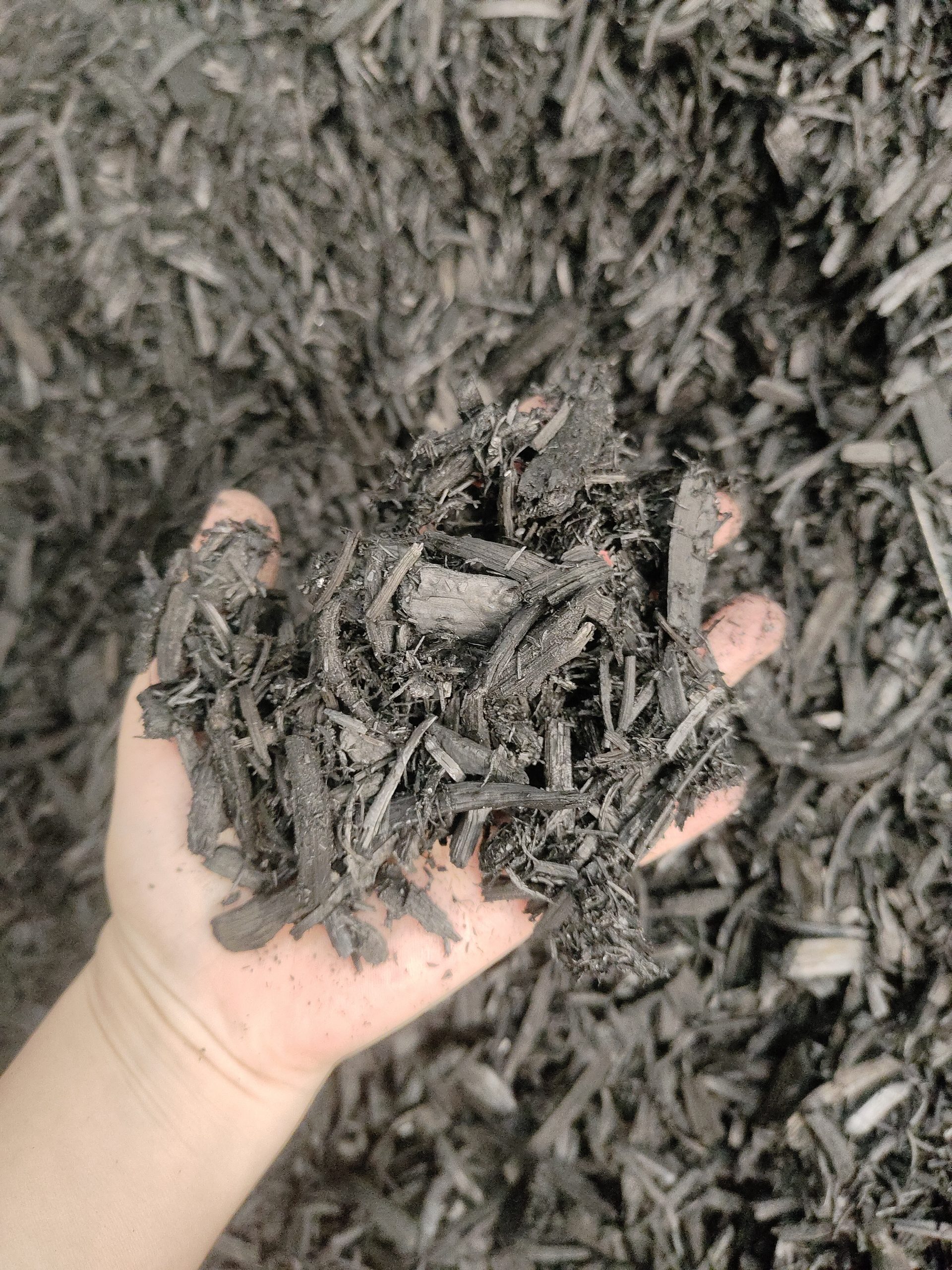
The resulting charcoal retains the structural profile of the original bamboo feedstock while achieving full carbonization and deep black uniform coloring.
The trial yielded exceptional metallurgical and structural results. The final bamboo charcoal fines show:
Complete Fixed-Carbon Fixation: No uncarbonized yellowish fibers remain in the center cores.
High Porosity Preservation: The natural vascular microscopic pathways of the bamboo are intact, rendering this specific output highly premium for soil amendment biochar applications and activated carbon base processing.
Zero Agglomeration: The continuous internal flights prevented the tar sticky phases from clumping the charcoal into giant slag matrices.
The July 3, 2026 trial run confirms that Guoxin’s continuous drum carbonization furnace successfully processes high-fiber bamboo chips with zero operational downtime, fully self-sustained gas recycling loops, and continuous, safe cooling output control.
