

In the metallurgical and chemical sectors, the accumulation of coke fines (dust) constitutes a significant loss of high-value carbon. These fines cannot be charged directly into blast furnaces due to airflow restrictions. This case study documents a recent test run at our facility, demonstrating the mechanical transformation of loose coke powder into standardized, high-density briquettes suitable for industrial use.
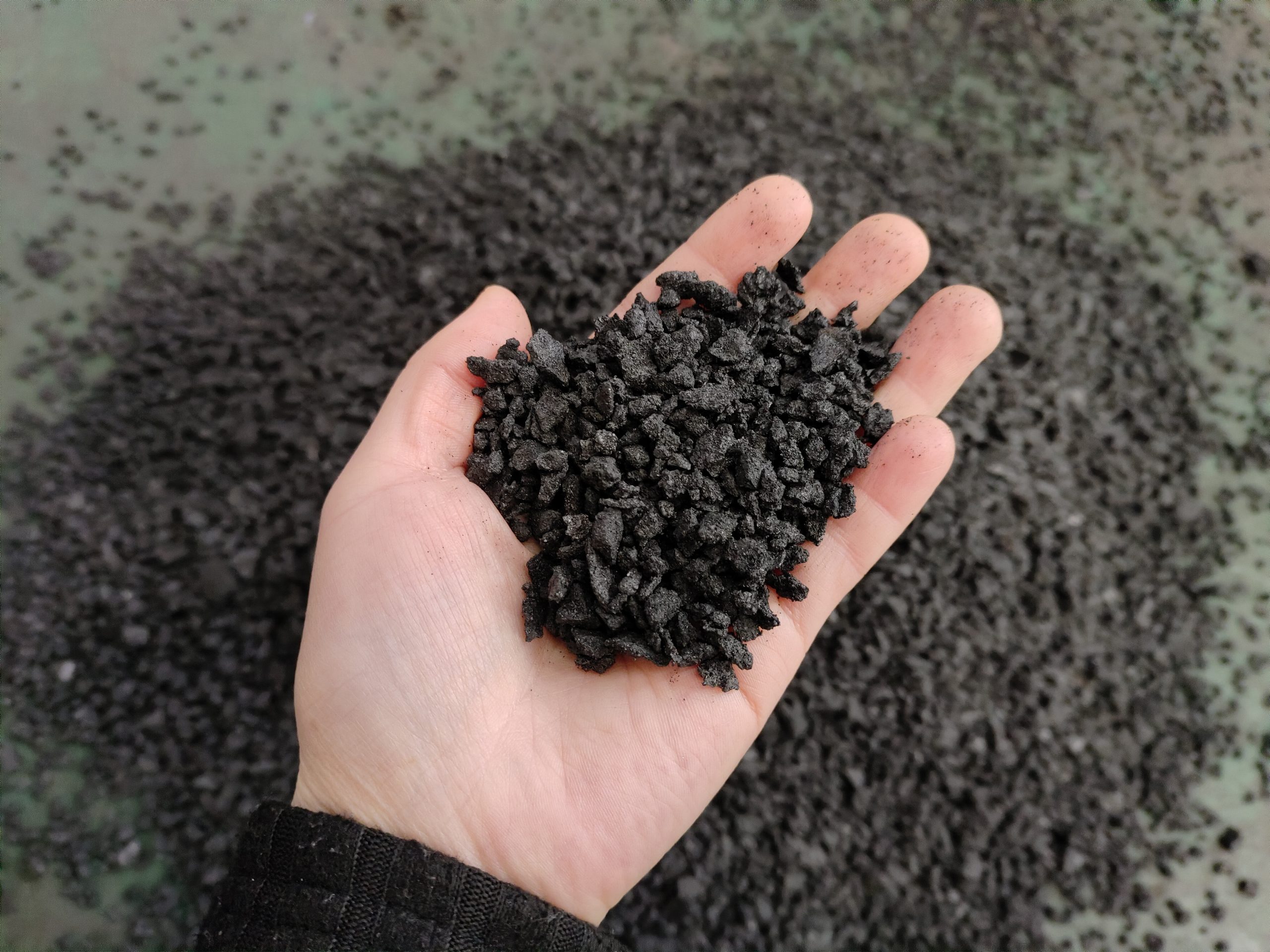
Figure 1
Coke powder, as shown in Figure 1, is characterized by high fixed carbon content but lacks natural plasticity. For successful briquetting, the material must reach a specific particle size distribution—typically ≤3mm—to ensure maximum contact area during the compression phase.
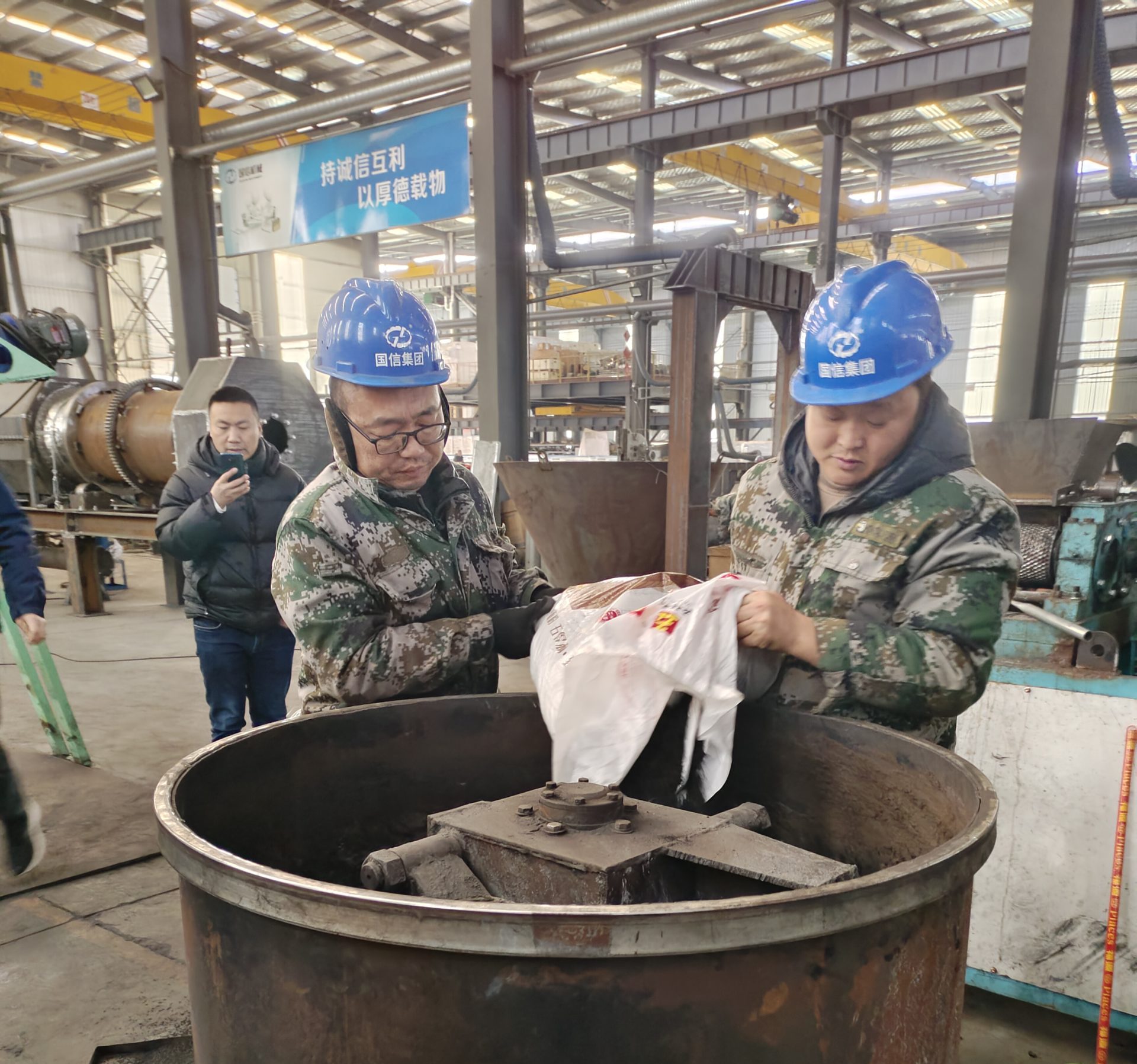
Figure 2
Because coke is chemically inert, a binder is required to act as a bridge between particles. In Figure 2, our technical team is seen adding a precise ratio of liquid binder and moisture to the coke fines.
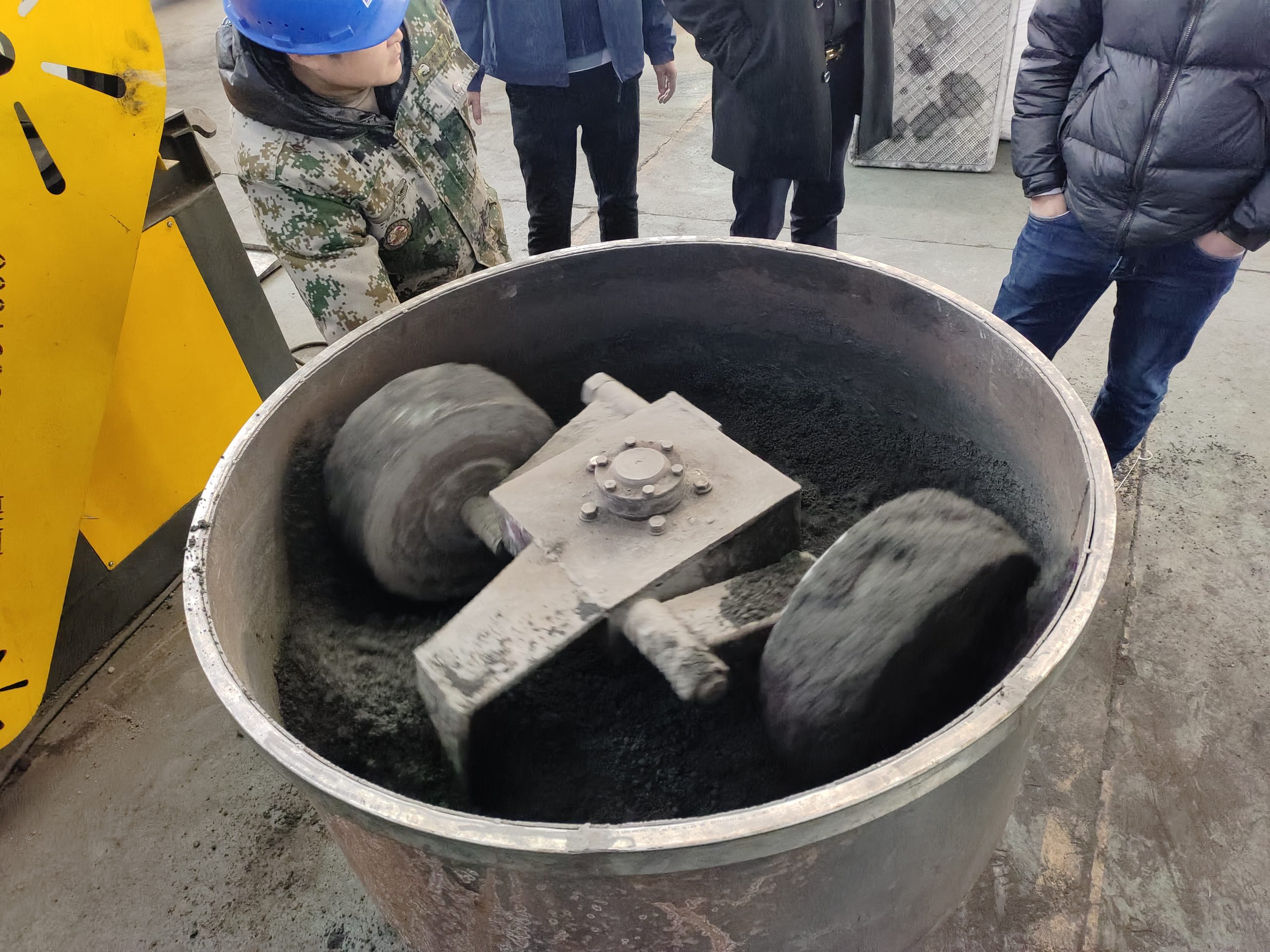
Figure 3
The mixture is then processed in an Edge Runner Mixer (Wheel Mixer), as documented in Figure 3. This equipment is selected for coke briquetting because it provides both intense mechanical shear and rolling compression. This dual action “activates” the binder and ensures it is distributed at the molecular level, which is critical for achieving a high Cold Crushing Strength (CCS) in the final product.
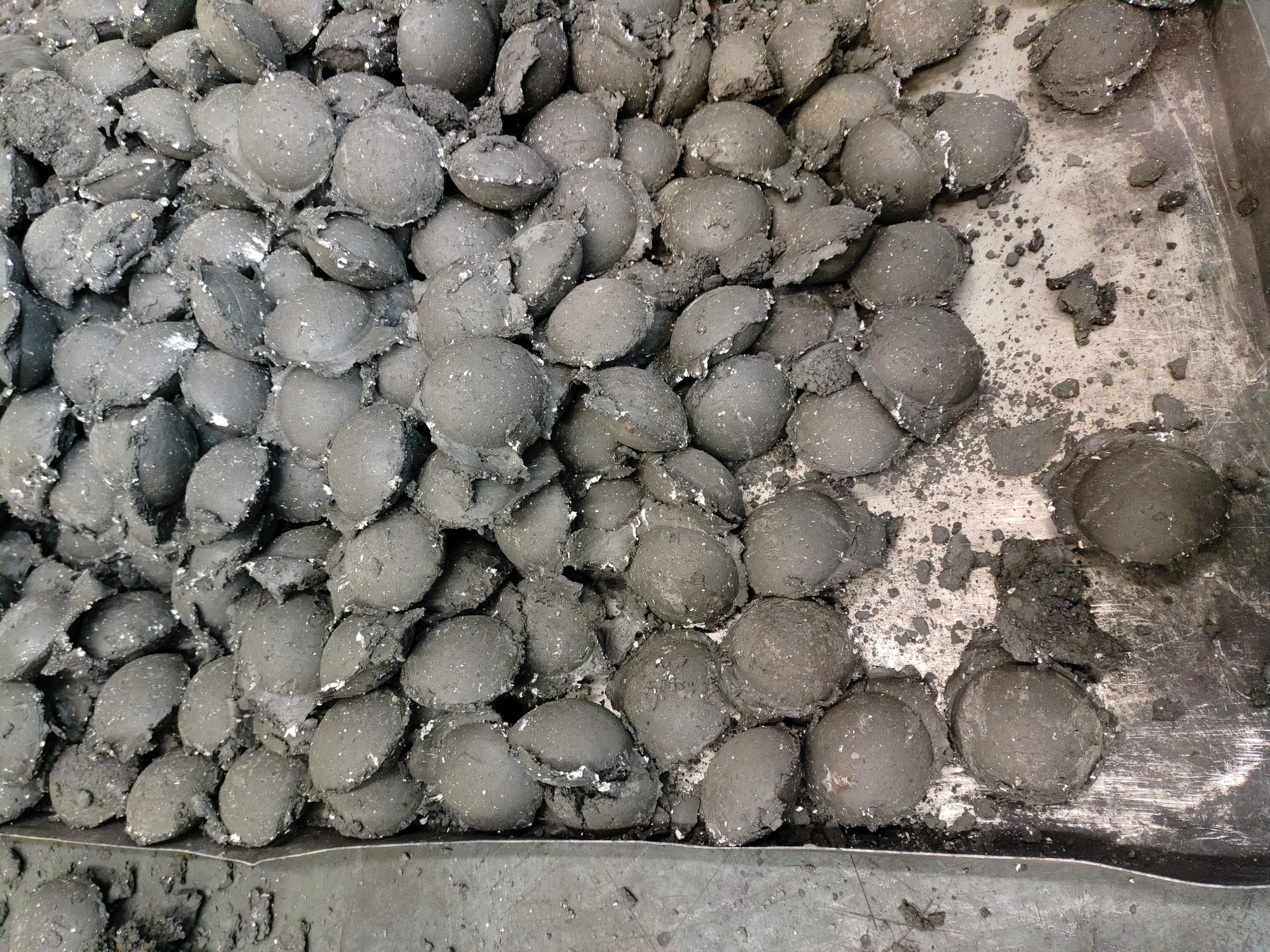
Figure 4
The homogenized mixture is conveyed to a Double-Roller Ball Press Machine. As seen in the output shown in Figure 4, the machine produces uniform, pillow-shaped briquettes.
Mechanical Logic: The hydraulic station provides constant tonnage, forcing the air out of the material and locking the carbon particles into a solid matrix.
Final Consistency: The resulting briquettes are smooth, high-density, and resistant to breakage during handling.
For high-capacity industrial plants, the coke briquetting line is often integrated with:
Upstream: If the raw coke fines are damp from storage, a Rotary Drum Dryer is utilized to stabilize moisture before the mixing stage.
Downstream: To “set” the binder and increase hardness for bulk transport, freshly pressed briquettes are transitioned to a Mesh Belt Dryer for controlled dehydration.
Q1: Why is a wheel mixer preferred over a paddle mixer for coke?
A: Coke particles are porous. A wheel mixer (edge runner) uses high-weight rollers to physically press the binder into the pores of the coke, whereas a paddle mixer only coats the surface. This leads to a significantly stronger briquette that won’t crumble in the furnace.
Q2: What is the ideal moisture for coke briquetting?
A: Typically between 10%–15%. If the moisture is too low, the binder cannot activate; if too high, the briquettes will “clump” in the roller molds and fail to discharge.
Q3: Can these briquettes withstand the weight of a blast furnace burden?
A: Yes. By optimizing the binder ratio and using high-tonnage hydraulic presses, we can achieve a CCS that allows the briquettes to be stacked in deep-bed furnaces without returning to dust.
