

Coconut processing is no longer limited to just fiber or just charcoal. Our integrated production line is engineered to maximize the economic value of the entire husk. By combining mechanical fiber extraction with thermal carbonization technology, this solution transforms raw husks into two distinct profit streams: industrial coir fiber and premium charcoal briquettes.
The process begins with the mechanical breakdown of the husk to separate high-strength fibers from the nutrient-rich pith (peat).
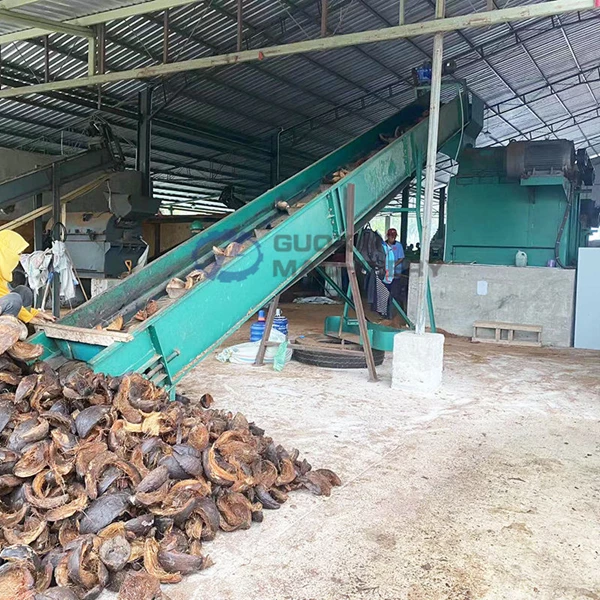
High-Efficiency Defibering: Raw coconut husks are fed into the Coir Extraction Machine. Rotating drums with specialized teeth strip the husks, separating long fibers from the internal pith.
Rotary Screening: The mixture passes through a Sieving System. Long fibers are collected for industrial use, while the smaller coconut pith (peat) and fine husks are screened out for the next stage.
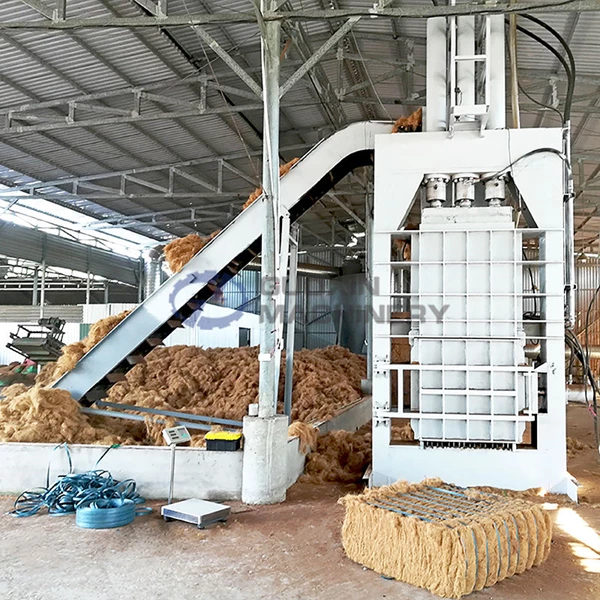
Hydraulic Fiber Baling: Extracted fibers are compressed into high-density bales using our Hydraulic Baling Press, optimized for space-efficient international shipping.
The true innovation lies in how we handle the “by-product.” Instead of discarding the coconut pith and husk fragments, they are redirected into our carbonization ecosystem.
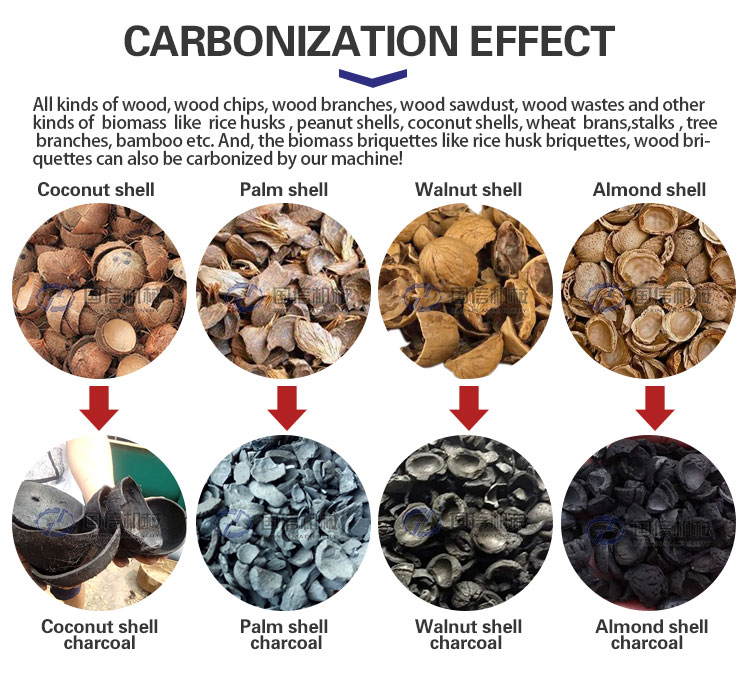
Continuous Carbonization: The screened pith and shell fragments are fed into the [Continuous Vertical Carbonization Furnace]. Through oxygen-free pyrolysis, the material is converted into high-fixed-carbon biochar.
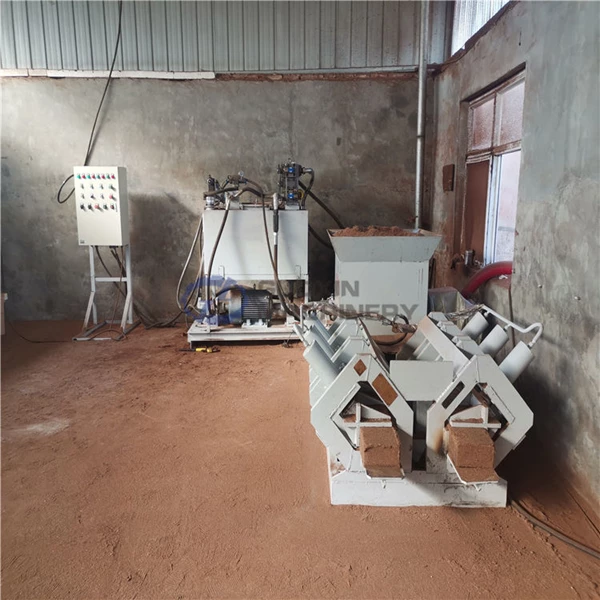
Precision Briquetting: The resulting carbonized pith is mixed with eco-friendly binders and processed through the [Coconut Shell Charcoal Briquette Machine] or [Balling Press], producing uniform shisha charcoal or industrial BBQ briquettes.
Q1: What are the primary uses for the extracted coir fiber?
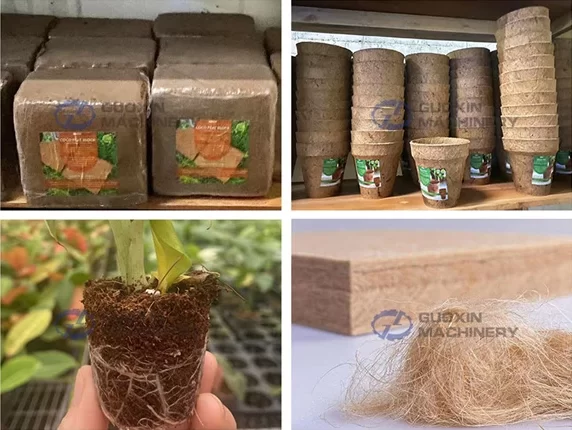
A: Extracted coir fiber is highly valued in the mattress industry, automotive upholstery, and for erosion control mats due to its high tensile strength and resistance to rot.
Q2: Can the coconut pith be carbonized directly after screening?
A: For optimal carbonization efficiency, we recommend passing the pith through a [Mesh Belt Dryer] if the moisture content exceeds 20%. This ensures a higher fixed-carbon yield in the furnace.
Q3: How much space does a fully integrated line require?
A: Our solutions are modular. A basic defibering-to-baling setup requires approximately 500-800 $m^2$, while adding a full carbonization and briquetting circuit typically scales to 1500+ $m^2$ depending on the desired hourly capacity.
When investing in a coconut processing line, the separation purity is key. Our rotary screening technology ensures that 95% of the pith is removed from the fiber, which prevents “ash contamination” in your charcoal production and ensures your fiber meets export-grade standards for international buyers.
